Hey guys, let’s cut to the chase – if you’re in the market for a new furnace, you’ve probably scrolled through enough HVAC jargon to make your head spin. Last month, I sat down with a guy who’d just had three different quotes for a new furnace, and he still had no clue if a well furnace (that’s ours, for the uninitiated) was even worth checking out next to the basic ones he’d been pitched. I’m not here to oversell, but as someone who’s been supplying well furnaces for the last 8 years, I’ve seen way too many homeowners pick a furnace that saves them $500 upfront but costs them $2k extra in repairs and bills over 5 years. Let’s break this down like we’re chatting over a coffee, no stuffy charts or confusing acronyms. Well Furnace
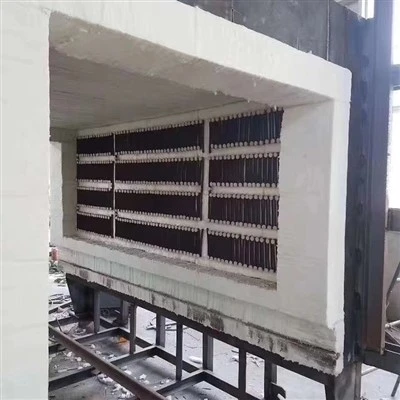
First, let’s get the basics out of the way. When most people think furnaces, they picture those standard forced-air units – the ones that run on gas, sit in your basement or attic, and blow hot air through your vents. You’ve got two main sub-types here: single-stage and two-stage. Single-stage is the budget pick, right? It’s either full blast or off, like a light switch that only has “on” and “off” – super simple, super cheap upfront, but it cycles on and nonstop, which makes your energy bills spike and wears it out faster. Two-stage is a step up; it has a low setting for mild days, high for super cold, so it doesn’t work as hard, uses less gas, and lasts a bit longer. But wait, where does our well furnace fit in?
For a long time, I thought “well furnace” was just a fancy term, but nope – it’s a unique system that uses a submerged heating element, usually powered by natural gas or propane, installed directly in your well water line. Let me explain that better. Instead of heating air first, it heats your well water, then pushes that hot water through your radiators or floor heating, and even delivers warm water for showers. Yeah, it’s way different from forced-air, and that’s the good part – and the bad, depending on where you live.
Let’s start with the big one: energy efficiency, because that’s what most people care about now. Single-stage forced-air units have an AFUE (Annual Fuel Utilization Efficiency) rating, which is basically how much fuel turns into heat instead of escaping as waste. Budget single-stage units usually clock in at 80% AFUE – so 20% of the gas you pay for just goes up the flue. Two-stage forced-air is a bit better, up to 98% AFUE, but wait – our well furnaces? We’re talking 95% to 99.5% efficiency, no cap. Why? Because we’re not heating air, which cools down the second it leaves your vents; we’re heating water that stays hot as it travels through your pipes. No wasted air heat, no cycling on and off like crazy. I had a customer in Minnesota last winter who switched from a 90% AFUE two-stage forced-air to our well furnace, and his gas bill dropped by 32%. He sent me a screenshot – $189 in January vs. $278 the year before. That’s not a fluke.
But hold on, efficiency isn’t one-size-fits-all. If you live in a mild climate like Florida or Southern California, where temps rarely drop below 40°F, a high-efficiency forced-air might not save you that much. For people in places with brutal winters – like the Upper Midwest, Northeast, or Canada – the well furnace’s edge is huge because you’re running the heater every day for 4 to 6 months straight. Those monthly savings add up fast.
Next up, comfort – this is where most people are shocked by the difference. Forced-air furnaces have that “blast of hot air” that happens when the unit kicks on, right? Then the air gets cool a few minutes later, so it cycles again. That’s why you get hot spots near vents and cold spots in rooms far away, and that constant “whoosh” sound that keeps you up at night if you’re a light sleeper. Our well furnaces? They run at a consistent, slow pace, so the water temperature stays steady. No wild swings in room temp, and if you’ve got radiators or floor heating, the heat spreads evenly from the floor up – way more natural, like how the sun warms a room. We had an elderly customer in Ohio who said she used to get up 2 or 3 times a night to adjust her forced-air thermostat, and now she doesn’t touch it. That’s the real win, not just lower bills.
But wait, forced-air has a trick up its sleeve – it can cool your home too, right? Wait, no – actually, no, forced-air is for heating, most people pair it with a separate AC. Our well furnace system can tie into a heat pump, but if you just get the well furnace alone, you need a separate AC unit. That’s a big downside if you’re looking for a one-and-done heating and cooling system. I always tell customers: if you don’t want to install two separate systems, stick to forced-air. If you’re okay with a mini-split AC or a separate AC unit, then the well furnace’s comfort and efficiency blow forced-air out of the water.
Now let’s talk about maintenance and repair costs, because that’s where people get burned. Forced-air units – especially single-stage – have a ton of moving parts: a blower motor, air filter, burners, igniters, flue pipes, and ducts. Dusty ducts get mold, which makes your furnace work harder and can trigger allergies. The blower motor can burn out, the igniter can break if it’s not serviced, and ducts can leak up to 20% of your heated air before it even reaches your rooms. Our well furnaces? Way fewer moving parts. The only big part is the submerged heating element in your well line – no ducts, no blower, no igniter that gets gunked up with dust. I’ve had customers go 10 years without a major repair on theirs, compared to their old forced-air which broke every 3 years. That said, they do need one specific thing: regular well water testing. If your well has super high mineral content (like iron or calcium), it can build up on the heating element over time. That’s not a fix, that’s a routine check – we sell a cheap annual maintenance kit for $80 a year, way less than a $500 blower motor replacement.
Wait, what about upfront cost? Let’s be real, no one wants to drop a ton of cash out of nowhere. Budget single-stage forced-air: $2,500 to $4,000 installed. Two-stage forced-air: $4,500 to $7,000. Our well furnace? The upfront cost is $6,000 to $9,000 installed – it’s pricier at first, but the math works out. Let’s say you save $30 a month on gas, that’s $360 a year. After 8 years, that’s $2,880 in savings, which almost cancels out the extra upfront cost. And if you plan to stay in your home for 10+ years, that payoff is huge. If you’re moving in 3 years? Maybe skip it, stick to a two-stage forced-air – you won’t recoup the difference.
What about other furnace types? Wait, I know some guys will say “what about electric furnaces?” or “boilers?” Let’s throw those in too, just to be fair. Electric furnaces are basically single-stage forced-air but run on electricity, so they’re way more expensive to operate – most people see $400+ monthly bills in winter, forget that. Boilers, which are similar to well furnaces but usually use radiators too, but boilers don’t use well water directly – they heat water in a tank and circulate it. The problem with boilers is they often have hot spots because the tank doesn’t heat water evenly, and they can be slower to kick on. Our well furnace is different because it’s connected directly to your well, so water is always heated at the source, no tank waiting.
Another thing: air quality. Forced-air units blow dust, pollen, and even mold spores from your ducts around every time the furnace runs. If you have allergies or asthma, that’s a big deal. Our well furnace system doesn’t use forced air at all – the only air in the mix is the tiny amount needed for optional cooling, and you can upgrade to a HEPA filter for that. Most of the heating is done via water, so no circulating dust. I’ve had multiple customers with kids who have asthma say their symptoms went way down after switching. But wait, if you have pets that shed, you might still have pet hair on your floors, but at least it’s not floating around the air.
Now, let’s talk about the downsides, because I don’t want to sound like a used car salesman. First, installation requirements: you need a well, duh. If you’re on city water, a well furnace won’t work – that’s a hard no. You also need space to install the unit, which is smaller than a forced-air furnace, so it fits in basements, garages, even crawl spaces. But if your well line is super far from your home, you might need to extend it, which adds a few hundred bucks to the installation. Second, if your well runs dry or needs repairs, your well furnace is out of commission too – same as any well-dependent system, that’s just a fact of life. Third, in mild climates, as I said earlier, the savings are minimal. If you only use heat 1 or 2 months a year, you won’t make back that extra upfront cost.
Let’s circle back to that guy I mentioned earlier, the one confused about which to pick. He lives in a suburb of Chicago, has a 1,800 sq ft house, plans to stay there for at least 12 years. His old furnace was a 10-year-old single-stage forced-air, breaking down every winter. We quoted him $5,800 for our well furnace, compared to $4,200 for a new two-stage forced-air. I ran the numbers with him: he’d save about $28 a month on gas, so $336 a year. That’s a payoff of about 4.8 years, way less than the 12 years he’s staying. He also hates his forced-air’s constant noise and hot/cold spots, so he went with the well furnace last month, and texted me last week saying the first test run was silent and his whole house felt warm evenly. That’s the kind of win I see all the time.
Wait, also, what about smart features? Most modern furnaces have Wi-Fi thermostats, right? Our well furnaces come with a built-in smart thermostat that works with Alexa and Google Home, just like high-end two-stage units. You can adjust the temp from your phone, set schedules, even get alerts if the heating element needs a check-up. No extra cost for that, which is a nice bonus. For budget single-stage units, smart thermostats are usually an add-on that costs $100 or more.
I’ve been in this game long enough to know that no furnace is perfect. For someone who’s on a tight budget and moving in a few years, a two-stage forced-air is a solid pick. For someone in a cold climate, staying put, wants lower bills and better comfort, a well furnace is hard to beat. For anyone on city water, electric furnace is the only real option, but it’s way pricier to run. Boilers are good too, but they don’t have the direct well heating that makes our system so efficient.
One more thing that surprises people: well furnaces are quieter than almost any other type. I’ve had customers tell me they forgot the furnace was running, which is a game-changer if you work from home, have a baby, or hate that low hum that forced-air units make all day. The only time you hear the well furnace is if you’re right next to the unit when it’s kicking on, and even then, it’s way quieter than a fridge.
Look, I’m not gonna sit here and tell you well furnaces are for everyone. If you don’t have a well, or you’re moving soon, skip it. But if you’re ready to stop throwing money at high energy bills, constant repairs, and uneven heat, it’s worth taking a look. We’ve installed hundreds of these over the years, and 9 out of 10 customers come back for annual maintenance or even refer their neighbors. That’s the kind of business I run, no fluff, no pushy sales tactics.
If you’re tired of wasting money on a furnace that doesn’t do what it’s supposed to, and you want to check out how a well furnace would work for your home, feel free to reach out. We can send someone to do a free, no-obligation assessment – we’ll look at your well line, your home size, your climate, and give you an honest breakdown of whether a well furnace is a good fit, or if you’d be better off with another type. No pressure, just straight talk, like I’ve given you here.

Before I sign off, a quick shoutout to the HVAC researchers who crunched the numbers on AFUE ratings and heating efficiency, and the well water specialists who helped us refine our system to handle mineral buildup over the years – that’s where our real expertise comes from, not just selling furnaces. And to the thousands of homeowners who let us test our systems in their homes over the last decade, helping us make it better every single year.
Tempering Furnace References
- U.S. Department of Energy. (2024). Furnace Efficiency and AFUE Ratings. Energy.gov.
- HVAC Professionals Association. (2023). Well Water Heating Systems: Installation and Maintenance Guidelines. HVAC Industry Journal.
- Environmental Protection Agency. (2022). Indoor Air Quality for Forced-Air and Hydronic Heating Systems. EPA.gov.
- National Ground Water Association. (2023). Well-Dependent Heating System Performance. NGWA.org.
Danyang Dingfeng Industrial Furnace Co., Ltd.
Danyang Dingfeng Industrial Furnace Co., Ltd. is one of the most experienced well furnace manufacturers and suppliers in China, also supports customized service with low price. Please feel free to wholesale high quality well furnace made in China here from our factory. For pricelist, contact us now.
Address: Lizhuang Economic Development Zone, Danyang City
E-mail: saleszk@dffurnace.com
WebSite: https://www.dffurnace.com/
