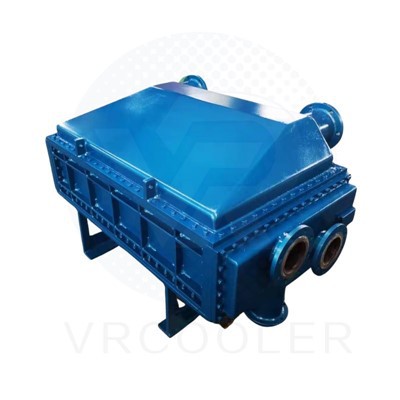
As a supplier of Sullair – IHI Compressor Coolers, I’ve witnessed firsthand the significant influence that altitude can have on the performance and functionality of these crucial components. In this blog, I’ll delve into the science behind the impact of altitude on Sullair – IHI Compressor Coolers, drawing on real – world experiences and industry knowledge. Sullair-IHI Compressor Cooler
The Basics of Compressor Coolers
Before we explore the effects of altitude, let’s briefly understand the role of compressor coolers. Sullair – IHI Compressor Coolers are designed to remove heat generated during the compression process. Compression of air is an adiabatic process, which means that the temperature of the air increases significantly as it is compressed. If this heat is not removed, it can lead to a variety of problems, including reduced efficiency, increased wear and tear on compressor components, and even system failures.
The cooler works by transferring the heat from the compressed air to a cooling medium, which is usually air or water. In air – cooled coolers, ambient air is used to absorb the heat, while water – cooled coolers use water as the heat transfer medium.
How Altitude Affects Air Density
One of the most fundamental ways in which altitude impacts Sullair – IHI Compressor Coolers is through its effect on air density. As altitude increases, the air density decreases. This is because the gravitational pull on the air molecules is weaker at higher altitudes, causing the air to spread out more.
The density of air is a crucial factor in the performance of air – cooled compressor coolers. The cooling capacity of an air – cooled cooler is directly related to the mass of air flowing through it. With lower air density at higher altitudes, the mass of air passing through the cooler per unit time is reduced. This means that the cooler has less air available to absorb the heat from the compressed air, resulting in a decrease in its cooling efficiency.
For example, at sea level, the air density is approximately 1.225 kg/m³. At an altitude of 3000 meters, the air density drops to around 0.909 kg/m³, a reduction of about 26%. This significant decrease in air density can have a profound impact on the performance of the compressor cooler.
Impact on Cooling Capacity
The reduced air density at higher altitudes leads to a decrease in the cooling capacity of air – cooled Sullair – IHI Compressor Coolers. Cooling capacity is measured in terms of the amount of heat that the cooler can remove from the compressed air per unit time.
When the cooling capacity is reduced, the temperature of the compressed air leaving the cooler is higher than it would be at lower altitudes. This can cause problems for the compressor system as a whole. Higher air temperatures can lead to increased internal pressures within the compressor, which in turn can cause mechanical stress on the compressor components. Over time, this can lead to premature wear and tear, and potentially costly repairs or replacements.
In addition, the efficiency of the compressor itself is affected by the temperature of the compressed air. Compressors operate more efficiently when the intake air is cooler. When the air leaving the cooler is warmer due to reduced cooling capacity at high altitudes, the compressor has to work harder to achieve the same level of compression, resulting in increased energy consumption.
Effects on Water – Cooled Coolers
While water – cooled Sullair – IHI Compressor Coolers are less directly affected by altitude than air – cooled coolers, there are still some factors to consider. At higher altitudes, the boiling point of water decreases. This is because the atmospheric pressure is lower at higher altitudes, and the boiling point of a liquid is directly related to the pressure exerted on it.
For water – cooled coolers, a lower boiling point means that the water used for cooling can reach its boiling point more easily. If the water boils, it can form steam bubbles, which can disrupt the flow of water through the cooler and reduce its heat transfer efficiency. This can lead to overheating of the compressed air and potential damage to the compressor system.
Adjustments and Solutions
As a supplier of Sullair – IHI Compressor Coolers, I often work with customers in high – altitude regions to find solutions to these problems. One approach is to increase the size of the air – cooled cooler. By increasing the surface area of the cooler, more air can come into contact with the hot compressed air, compensating for the reduced air density.
Another solution is to use a water – cooled cooler with a higher pressure rating. This can prevent the water from boiling at the lower atmospheric pressures found at high altitudes. Additionally, proper maintenance of the cooling system, including regular cleaning of the cooler fins and checking the water flow rate, is essential to ensure optimal performance.
Real – World Case Studies
I’d like to share a couple of real – world examples to illustrate the impact of altitude on Sullair – IHI Compressor Coolers. One of our customers in a mountainous region was experiencing frequent compressor failures. After investigating, we found that the air – cooled cooler was not able to effectively cool the compressed air due to the low air density at their high – altitude location.
We recommended upgrading to a larger air – cooled cooler. After the installation, the compressor’s performance improved significantly. The temperature of the compressed air leaving the cooler dropped, and the compressor was able to operate more efficiently, reducing energy consumption and preventing further breakdowns.
In another case, a customer using a water – cooled cooler at high altitude was facing issues with water boiling in the cooler. We advised them to install a pressure – regulating valve on the water – cooling system to maintain a higher pressure and prevent the water from boiling. This simple adjustment resolved the problem and improved the overall performance of the compressor.
Conclusion

In conclusion, altitude has a significant impact on the performance of Sullair – IHI Compressor Coolers. The decrease in air density at higher altitudes affects the cooling capacity of air – cooled coolers, while the lower boiling point of water at high altitudes can cause problems for water – cooled coolers.
Sullair-IHI Compressor Cooler However, with the right adjustments and solutions, these challenges can be overcome. As a supplier, I’m committed to working with customers to ensure that their compressor coolers operate effectively in any altitude. If you’re facing issues with your Sullair – IHI Compressor Cooler due to altitude or have any questions about our products, I encourage you to reach out to me for a discussion. We can explore the best solutions for your specific needs and ensure that your compressor system runs smoothly and efficiently.
References
- ASHRAE Handbook of Fundamentals. This comprehensive handbook provides in – depth information on thermodynamics, heat transfer, and fluid flow, which are essential for understanding the impact of altitude on compressor coolers.
- Sullair – IHI Compressor Cooler Technical Manuals. These manuals offer detailed specifications and operating guidelines for the compressors and coolers, including information on how altitude can affect their performance.
- Engineering textbooks on thermodynamics and fluid mechanics, such as "Thermodynamics: An Engineering Approach" by Yunus A. Cengel and Michael A. Boles. These textbooks provide the theoretical basis for understanding the physical processes involved in compressor cooling and the effects of altitude on these processes.
Changzhou Vrcooler Refrigeration Co., Ltd.
Changzhou Vrcooler Refrigeration Co., Ltd. is one of the most professional sullair-ihi compressor cooler manufacturers and suppliers in China, specialized in providing high quality aftermarket service. Please rest assured to buy high-grade sullair-ihi compressor cooler for sale here from our factory. For price consultation, contact us.
Address: No. 18-69,Changwu Zhong Road, Wujin district, Changzhou, Jiangsu
E-mail: info@vrcooler.com
WebSite: https://www.vrcooler.com/
