If you’ve ever stood in front of a hydraulic surface grinder that’s supposed to be your workhorse, only to have it stall mid-operation or drift off-course, you know how costly those movement issues can be. As a supplier of hydraulic surface grinders, I’ve spent countless hours on the shop floor with operators dealing with these exact problems—whether it’s a small delay that throws a batch of parts out of spec or a complete shutdown that costs a manufacturer hours of productivity. Troubleshooting these issues doesn’t have to mean calling a service tech right away; many problems are solvable with basic knowledge of how your grinder’s hydraulic system works and a methodical approach to checking components. Let’s walk through the most common movement issues, their root causes, and step-by-step fixes that you can apply today. Hydraulic Surface Grinder

First, it helps to remember that a hydraulic surface grinder’s movement relies on three core parts: the hydraulic pump, the control valves, and the cylinder that moves the worktable. The pump generates pressure, the valves direct that pressure to move the cylinder back and forth, and the cylinder translates that pressure into linear movement. When something goes wrong, it’s almost always in one of these three areas—though sometimes it’s a simpler issue, like a dirty filter or low fluid level, that’s easy to miss. Let’s start with the most frequent complaint: the worktable won’t move at all.
I see this problem all the time with new operators, especially right after they install a grinder or change the hydraulic fluid. The first thing you should check isn’t a broken part—it’s the fluid level. Hydraulic fluid is the lifeblood of the system, and if it’s too low, the pump can’t build enough pressure to move the cylinder. To check, make sure the grinder is turned off, the worktable is in the middle of its travel, and the reservoir is at room temperature (cold fluid is thicker, so low levels might not be as obvious when the machine is cold). If the level is below the “full” mark on the reservoir, add the recommended hydraulic fluid—never mix types, as different fluids have different viscosities that can damage the pump. Next, check the return line filter. A clogged filter restricts fluid flow, so even if the level is fine, the pump can’t push enough fluid to the cylinder. Most surface grinders have a spin-on or mesh filter in the return line; remove it, rinse it with clean hydraulic fluid, and replace it if it’s torn or too dirty to clean. If the filter was the issue, the worktable should move smoothly after you restart the machine. If not, the problem is likely with the pump.
Hydraulic pumps can fail for a few reasons, but the most common is wear from contaminated fluid. Small metal shavings or dirt in the fluid get caught between the pump’s gears or vanes, causing friction that reduces pressure. To check the pump, you’ll need a pressure gauge—most grinders have a port on the pump outlet where you can attach a gauge. Start the machine, set the control valve to move the worktable, and watch the gauge. If the pressure is 20% or more below the grinder’s rated pressure (usually listed in the manual), the pump is probably worn. For minor wear, flushing the entire hydraulic system can help: drain the old fluid, clean the reservoir thoroughly, and refill with new fluid. If flushing doesn’t bring pressure up, you might need to replace the pump’s seals or the pump itself. I’ve found that many manufacturers delay replacing worn pumps because they’re expensive, but a low-pressure pump doesn’t just cause movement issues—it also wears out other components, like the control valves, faster.
Another common issue is the worktable moving, but too slowly or unevenly. This is different from being completely stuck, and it’s often a problem with the control valves or leaks in the system. Control valves are what direct fluid from the pump to the cylinder, and over time, the spool inside the valve can get gummed up with contaminated fluid, or the seals around the spool can wear. If you notice the worktable creeping along at half its usual speed, try removing the valve’s cover and cleaning the spool with a soft cloth and isopropyl alcohol. Never use abrasive materials, as they can scratch the spool and cause more leaks. If the spool is smooth but still sticking, it might need a new seal kit. Uneven movement—like the worktable stopping for a second on one side of its travel—usually points to a leak in the cylinder or the lines connecting the valve to the cylinder.
To check for leaks, run the grinder through a full worktable cycle and watch for damp spots on the cylinder, lines, or reservoir. Small external leaks might just be a loose fitting; tighten it with a wrench, but don’t over-tighten, as that can crack the fitting. If the leak is inside the cylinder, it’s called internal leakage, and that’s a bit trickier to spot. Internal leakage happens when the piston seals inside the cylinder wear out, so fluid bypasses the piston instead of pushing the worktable smoothly. A simple test for internal leakage is to set the worktable in the middle of its travel, turn off the grinder, and close the control valve. If the worktable drifts more than an inch in 5 minutes, you have internal leakage. Fixing this usually means replacing the cylinder’s piston seals, which is a repair most in-house techs can do with the right seal kit from a supplier like me—no need to remove the entire cylinder from the grinder, which saves time.
Then there’s the issue of the worktable drifting or moving on its own when the grinder is turned off. This is a safety hazard, so it’s important to fix it right away. The main cause here is a stuck control valve. The valve’s spool is supposed to block fluid flow when the grinder is not in use, but if dirt or gum builds up, the spool can get stuck in a partially open position, letting fluid seep to the cylinder. To fix this, you can try cycling the control valve back and forth several times to loosen the spool, or if that doesn’t work, remove the valve and clean it as I mentioned earlier. Another less common cause is a faulty check valve—these are one-way valves that prevent fluid from flowing back to the pump, and if they’re stuck open, fluid can reverse through the cylinder and cause drift. Check the check valve in the pump outlet or the line leading to the control valve; if it’s dirty, clean it, and if it’s broken, replace it.
I’ve also seen operators mistake electrical issues for hydraulic problems. Sometimes, the grinder’s movement control is connected to a servo motor or a stepper motor that drives the hydraulic valve, and if the wiring is loose or the motor is faulty, the worktable won’t respond. A quick check here is to look at the electrical panel on the grinder—make sure all the connections are tight, and check the motor’s indicator light (if it has one). If the light is off, the motor might have a blown fuse or a tripped circuit breaker. This is a good first step before you start tearing into the hydraulic system, since electrical issues are often simpler and cheaper to fix.
No matter the issue, one habit I always recommend is regular maintenance. Hydraulic surface grinders don’t self-maintain, and small problems turn into big ones if you ignore them. Every 500 operating hours, change the hydraulic fluid and replace the return line filter. Every 1,000 hours, clean the control valves and inspect the cylinder seals. If you notice any changes in movement—even small ones like a slight delay or uneven speed—address them right away, don’t wait for the problem to get worse. I’ve had customers who waited to fix a stuck valve end up with a damaged pump and a $2,000 repair bill, when a $50 seal kit would have fixed it.
When I’m on a shop floor troubleshooting a grinder, I always start with the simplest checks first: fluid level, filter, loose fittings, then move to the valves, pump, and cylinder. That methodical approach saves time and prevents you from replacing parts that aren’t broken. It’s also important to use the right parts for your grinder—generic hydraulic filters or seal kits won’t fit as well, and they can cause more wear. As a supplier, I always make sure my customers get the exact parts they need for their model of grinder, because using the wrong parts is a common cause of repeated movement issues.
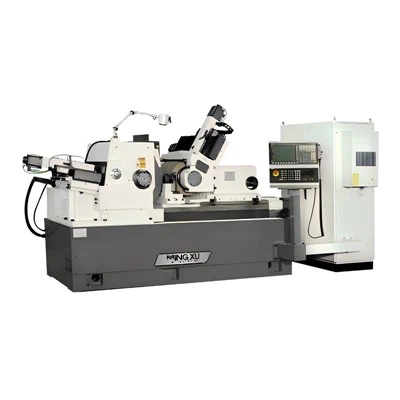
If you’ve tried all these steps and your hydraulic surface grinder is still having movement issues, don’t hesitate to reach out. Whether you need a part replacement, a system flush, or a full inspection, our team is here to help. We’ve worked with thousands of shops, from small job stores to large manufacturing plants, and we know how to get your grinder moving smoothly again, with minimal downtime. Let us help you keep your operation running efficiently—connect with our team to discuss your specific needs.
Surface Grinding Machine References
Hydraulic Surface Grinder Operation and Maintenance Manual. (n.d.). Manufacturer’s Technical Documentation.
Hydraulic System Troubleshooting Guide. (2021). Industrial Fluid Power Association.
Seal and Gasket Compatibility for Hydraulic Cylinders. (2019). Journal of Manufacturing Technology.
Wuxi Mingxu Machinery Equipment Co., Ltd.
As one of the most professional hydraulic surface grinder manufacturers and suppliers in China, we’re featured by quality products and good price. Please rest assured to buy the best hydraulic surface grinder for sale here from our factory. Also, custom service is available.
Address: No. 5-5 Jinke Wealth Plaza, Changjiang North Road, Xinwu District, Wuxi City, Jiangsu Province
E-mail: yingyingmxjd@163.com
WebSite: https://www.mingxu-china.com/
