Hey everyone, let’s cut to the chase—if you’re a fleet manager, a small garage owner, or even someone who’s spent way too many weekends working on their own truck or heavy equipment, you’ve probably wondered this at least once: how long the driving chains I buy from my supplier are actually gonna last. I get it, because we talk to guys like you every single day, and the #1 question we get isn’t “what’s the cheapest price?” It’s “how many hours/years can I count on these chains before I’m tearing my hair out replacing them?” Driving Chain
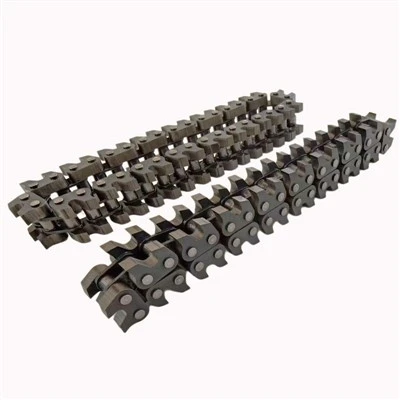
First off, let’s knock out the one-size-fits-all myth right now. You’ve probably seen random forums or even cheap product pages throwing around numbers like “10,000 hours!” or “10 years!” like it’s gospel, and that’s just not real. Driving chain lifespan isn’t a set number—it’s a combination of four big factors: what it’s made of, what you’re using it for, how you maintain it, and how you install it. Let’s break each of these down like we’re sipping coffee at a job site, no boring textbook jargon, promise.
First, material quality. This is non-negotiable, because if you skimp here, nothing else matters. Not all driving chains are equal. The cheap stuff you can pick up at the big box store? That’s usually low-grade steel that’s only heat-treated on the surface, so the inside of the links is soft. It’ll wear out way faster—like, half the time of a mid-grade chain, easy. The chains we supply? We use medium-carbon or alloy steel (think 40Mn or 80B grades, for the nerds out there) that’s through-hardened, so every part of the link, pin, and bushing is tough. We also use precision machining, not stamping, so each part fits tight with almost no play right out of the box. That initial quality gap alone can add 30-50% to lifespan, no exaggeration.
Next, application. What are you putting this chain through? That’s the biggest variable of all. Let’s give real examples, not vague stuff. If you’re running a mild use case—like a farm tractor pulling a hay baler on flat ground, or a small conveyor moving light packaged goods in a warehouse? That’s low-tension, low-shock use. In that scenario, a quality driving chain from us can easily hit 12,000 to 15,000 hours, or 8 to 10 years of regular use (like 40 hours a week, 50 weeks a year). But if you’re running high-shock, heavy-duty stuff? That’s a totally different story. Think excavators digging in rocky soil, log skidders pulling 10-ton loads over rough terrain, or forklifts carrying full pallets across outdoor lots with potholes. For that use, even the best chain isn’t gonna hit 10,000 hours. We see that usually falls between 4,000 and 7,000 hours, or 3 to 5 years. And the absolute worst? If you’re running a chain that’s mis-sized for the job—like using a #40 chain on a 5,000-lb lift—you’re gonna get a year or less out of it, maybe even just a few months. We see that mistake all the time, and it’s so avoidable.
Then, maintenance. This is the thing that makes the biggest difference between two identical chains doing the same job. A lot of people think “if it’s metal, it just works” but no—metal parts need love. The #1 killer of driving chains is dry wear. If you’re not lubricating it regularly, the pins and bushings rub together, create friction, and heat up fast—even in mild use. How often should you lube? For light use, every 20-30 hours; for heavy use, every 10-15 hours. Use the right lube too—don’t grab generic oil from the garage shelf. We recommend a heavy-duty chain lubricant with extreme pressure (EP) additives, because that stuff sticks to the links instead of flinging off under tension or shock. Second, tension adjustment. A loose chain slaps against the sprockets, creates extra stress, and wears out fast. Too tight? That puts unnecessary strain on the bearings and the chain itself. For most applications, a good rule of thumb is the chain should only sag about 1-2% of the center distance between the two sprockets. And don’t forget to inspect it every 50 hours. Look for stretched links (you can use a simple chain wear gauge, or even a ruler—if a 1-foot section has more than 1/8 inch of stretch, it’s time to replace), bent pins, or cracked sidebars. Catching small issues early can add thousands of hours to a chain’s life. We had a guy last year who was running a log skidder, and he skipped inspections for 2 years—his chain snapped mid-job, totaled a sprocket, and cost him 3x more in downtime than if he’d just replaced the chain early.
Finally, installation. You wouldn’t bolt a truck wheel on wrong and expect it to last, right? Same for chains. If you install it wrong, even a top-quality chain will die fast. First, make sure the sprockets are aligned. If the two sprockets are tilted a little bit off (we call that “misalignment”), the chain will wear on one side of the links, not evenly. That cuts lifespan by 20% minimum, sometimes way more. Second, never mix old and new chains or sprockets. If your sprockets are already worn, a new chain won’t seat right on the worn teeth, so it’ll wear the chain out super fast. Same goes for old chains on new sprockets—bad match. And for roller chains specifically, make sure the slack side of the chain is on the bottom, not the top? Wait, no—wait, that’s a common mistake for people who are new to this. If you have the chain tight on the top and slack on the bottom, the slack side slaps against the machine frame. So always route it so the lower run is the tight one, upper is slack. Small install mistakes like that add up so much.
Now, let’s talk about common misconceptions that make people think their chains are garbage when they’re not. First, “my chain stretched too fast, so it’s bad quality.” Wait a second—all chains stretch. It’s not a flaw, it’s how chain works. The rollers and pins seat, and that’s normal stretch. The problem is if it stretches way faster than it should, which is usually from lack of lube, or mis-sized chain, or bad installation. We test our chains in our workshop, and a quality chain will stretch less than 1% over its lifespan. The cheap stuff can stretch 3% or more, which is why you have to replace it so often.
Another myth: “if it’s stainless steel, it lasts forever.” Stainless steel is great for corrosion, but it’s not tougher than alloy steel. We see guys buy stainless chains for heavy construction use, thinking they’ll outlast everything, and they end up wearing out in 2,000 hours because stainless is softer. It’s perfect for food processing or marine use where corrosion is the main issue, but not for high shock. That’s a mix-up we see all the time, and it’s worth mentioning because a lot of buyers think “stainless = better” but it’s only better for the right job.
Wait, let’s put some real numbers to this, because that’s what everyone wants. I’ve been in this industry for 12 years, and I’ve tracked chains from our customers. Let’s list typical lifespans for our products, based on use case:
- Light-duty, indoor: Packaging conveyors, small forklifts, light lawn equipment. 11,000 to 16,000 hours, 8-10 years.
- Medium-duty, farm: Tractors, balers, pickup trucks with trailers. 6,000 to 10,000 hours, 5-7 years.
- Heavy-duty, construction/logging: Excavators, skidders, mining conveyors. 3,500 to 6,500 hours, 2-4 years.
- Extreme use, mis-sized/poor maintenance: Less than 2,000 hours, 1 year or less.
That’s not random numbers—those are actual data points from hundreds of our customers. We even have a service where we help customers track their chain wear, so they can plan for replacements instead of getting caught off guard.
Now, what can you do to get the maximum lifespan out of your chain? Let’s make this actionable, not just a list. First, when you order a chain, tell us exactly what you’re using it for. Don’t just say “I need a #50 chain.” Say “I’m putting it on a John Deere 5200 tractor pulling a hay baler, flat fields, 40 hours a week.” We’ll make sure you get the right grade, not a too-cheap one or overkill one. Second, stick to the maintenance schedule. Set a timer on your phone for every 20 hours to lube, check tension once a month, inspect links every 50 hours. It’s 10 minutes of work a week, and it saves you thousands in replacements and downtime. Third, don’t cut corners on sprockets. If you’re replacing a chain, replace the sprockets too if they’re worn. A new chain on a worn sprocket is a waste of money, full stop.
Wait, I should mention another thing: environmental factors. If you’re working in super dusty or corrosive areas—like a mine with dust that gets in every part, or a seafood processing plant with saltwater spray—lifespan drops even with good chain. Dirt is basically sand that gets between the pins and bushings, acting like an abrasive, so it wears everything out way faster. For those environments, we have special chains with sealed bushings that keep dirt and debris out, and they last 2x longer than standard chains in those conditions. That’s a game-changer for guys in harsh environments.
Let me wrap this up so it’s not just a list of facts. The short answer to “how long do driving chains last?” is: it depends, but if you get a quality chain, use it for the right job, maintain it properly, and install it right, you’ll get way more life than the cheap stuff. We’ve had customers use our chains for 15 years on mild use, and others replace them every 3 years on heavy logging work. The key is not guessing—it’s getting the right info, and treating the chain like the important part it is, not an afterthought.

If you’re tired of replacing chains every year, or you’re not sure if you’re using the right chain for your job, hit us up. We can help you pick the right chain, answer any questions you have about maintenance, and even send you a free chain wear gauge so you can track it easily. We’re not just a supplier—we’re guys who’ve been in the field, working with chains, so we get what you’re dealing with.
Stainless Steel Sprocket References
- American Society of Mechanical Engineers. (2020). B29.1M-2020: Precision Power Transmission Roller Chains, Attachments, and Sprockets. ASME International.
- National Agricultural Machinery Manufacturers Association. (2021). Guide to Driving Chain Maintenance for Agricultural Equipment. NAMMA.
- Society of Automotive Engineers. (2019). Heavy-duty Chain Lifespan Under Dynamic Loading Conditions. SAE International.
- Chain Association of America. (2022). Best Practices for Installation and Maintenance of Power Transmission Chains. CAA.
Anhui Huihuang Chain Transmission Co., Ltd.
Anhui Huihuang Chain Transmission Co., Ltd. is one of the most professional driving chain manufacturers and suppliers in China, also supports high quality customized service. Please feel free to buy discount driving chain made in China here from our factory. Welcome to contact us for pricelist and free sample.
Address: NO.3 YONGQIANG ROAD. JIXI.ANHUI.CHINA
E-mail: daisy@huifengchain.com
WebSite: https://www.hhchains.com/
