Yo, let’s cut to the chase: if you’re reading this as a content creator, studio manager, or even just someone who followed Mixer back in the day, you’ve probably wondered the same thing I did when I was deep in the weeds of being a Mixer stream tech supplier: what was the absolute maximum stream quality Mixer ever supported? Spoiler: it wasn’t just “4K” thrown around, it was way more specific, and way more tied to what our team actually tested for creators that wanted to stand out before Microsoft shut Mixer down in 2020. Mixer

First, let’s set the scene: back in the early 2010s, streaming platforms were basically working off what they could scrape from your average consumer setup. Twitch was stuck on 1080p max for a hot minute, right? Then Mixer launched with that whole “interactive” angle, but the secret sauce for a lot of us who supplied encoding gear to top creators? It wasn’t just the interactivity—it was the edge they could get on stream quality. Most people remember Mixer flipping to Beam first, then rebranding to Mixer in 2016, so let’s ground this in the years that mattered for streaming: 2017 through 2020, when the platform had its most active creator base.
I started my supplier gig back in 2018—ran a small shop that customized encoding rigs, audio interfaces, and lighting setups exclusively for Mixer creators, mostly big-name Fortnite and Minecraft streamers, plus a handful of casual devs doing early access plays. Every single one of ’em would hit us up asking the same question: “How good can I make my stream look without choppy footage or lag that makes Mixer’s Interactive stuff unplayable?” That’s where the hard data comes in, not just the vague press releases.
Mixer’s official docs back in 2018 said “up to 4K,” but that was a loose number. When we tested actual stream submissions with our clients, we pushed way harder. The sweet spot? Here’s the tea: Mixer’s maximum ingest quality was 4K resolution at 60 frames per second, but with a super specific bitrate cap: 12,000 kbps (that’s 12 megabits per second, for anyone not geeking out over encoding specs). Wait, hold on—why so specific? Because Twitch, around that same time, had a max of 8,000 kbps for 1080p 60fps, so Mixer letting us go higher for 4K was a huge flex. But here’s the fine print no one talks about: Mixer’s transcoding pipeline (the part that takes your stream and breaks it into different quality tiers for viewers) actually capped the master feed at that 12,000 kbps, even if you tried to push higher. We had a client in 2019 who tried cranking their rig to 15,000 kbps, and Mixer just auto-throttled it back to 12K to avoid their servers getting bogged down. That’s a key point most casual streamers missed.
But wait—could you get more than 4K? Let’s test that. We tried 2160p (which is standard 4K, for context) at 120fps once, but Mixer shut that down immediately. The platform only supported 60fps max for all streams, no exceptions. And what about bitrate variations? We also tested lower tiers for smaller creators—like 720p at 3,000 kbps, which worked for potato internet—but the question here was maximum, so that’s the 4K 60fps 12K kbps feed. But here’s the real mind-blow for a lot of our clients: Mixer’s master stream quality was actually better than Twitch’s equivalent back then, because Twitch compressed 4K streams way harder (like down to 10,000 kbps max) to save bandwidth. We’d have creators come over from Twitch specifically because their streams looked crisper on Mixer, and a big part of that was that 2,000 kbps buffer they got on the master feed.
Now, let’s talk about why this matters for anyone who’s looking to get back into high-quality streaming, or is a supplier like me who still works with creators moving to other platforms. Mixer’s max specs were a benchmark for what mid-tier rigs could handle without breaking the bank. You didn’t need a $10,000 encoding machine to hit that 12K kbps 4K feed—we built most of our client rigs with a mid-tier NVIDIA GTX 1660 Super (pre-owned, mostly, since Mixer days were casual for a lot of creators) and a $200 Elgato 4K60 S+ capture card, which ran that spec flawlessly. That’s why so many small-to-mid creators could pull off 4K on Mixer; it wasn’t just for A-listers like Ninja (who jumped to Mixer in 2019, by the way, and he was rocking that exact spec, I heard from his team).
Wait, let’s clear up a common myth: some people swear Mixer did 8K streams? No, that’s nonsense. We never saw an 8K ingest pass through Mixer’s servers in all the years we worked with them. Even the pre-launch tests for their new encoder infrastructure back in 2017 only went up to 4K. The confusion comes from Mixer’s experimental “Mixer Create” tool, which had 3D rendering bits that looked high-res, but that’s not a stream quality spec. Another myth: people think the max was 1080p? No, that was old Beam days, before rebranding. Once Mixer launched their 2018 creator dashboard, the 4K support was official, even if it was buried in the advanced settings menu.
Now, here’s the personal angle: I remember a specific client, a 22-year-old Minecraft creator named “PixelPup” who had a small but loyal following, who saved up for months to upgrade his setup just to hit Mixer’s max quality. He came to me in 2019, super stressed, because he couldn’t get his stream to stop glitching when he cranked it to 4K. I helped him tune his encoder settings—we dropped his keyframe interval to 2 seconds instead of 10, and adjusted his audio bitrate to 192 kbps (instead of the default 320, which was eating up bandwidth). Once he did that, his stream went live at 4K 60fps, 12K kbps, and his chat went wild saying it looked like a YouTube video. That’s when it clicked for me: this spec wasn’t just a number, it was something that could make a small creator stand out in a crowded space.
Then, of course, Mixer shut down in 2020, and all those creators scattered to Twitch, YouTube Gaming, Kick. A lot of them asked us what the equivalent max spec was on those platforms now, and it’s wild to see: Twitch now has a max of 6,000 kbps for 1080p 60fps, YouTube Gaming lets you do 4K at 15,000 kbps, but Mixer was the only one that locked 4K at 12K kbps—sweet spot for balance between quality and server load. That’s why a lot of former Mixer creators still talk about the quality being better, even after moving to bigger platforms.
Now, if you’re a streamer reading this, or a tech manager for a content studio, what does this mean for you? If you’re upgrading your streaming setup, know that a lot of the old Mixer max specs still hold as a good baseline for high-quality streams that don’t break the bank. And if you’re looking for custom encoding rigs, capture gear, or quality tuning to hit those specs? We’re here to help—we’ve got years of experience working with streamers who know that quality beats flashy numbers. We can hook you up with tested setups, adjust your encoder settings to avoid lag, and make sure your stream looks as crisp as that PixelPup stream I mentioned back in the day.
If you’re curious about more details—like how we tested those specs, or what common mistakes creators made when trying to hit Mixer’s max quality—reach out. We’ve got hard data from our client tests, plus a ton of hands-on experience tuning everything from audio to resolution. Whether you’re a small creator just starting out, or a big studio looking to upgrade a whole team’s setups, we can walk you through what works, what doesn’t, and how to get the most out of your gear without wasting money on overpriced components.
So to wrap this up: Mixer’s maximum stream quality wasn’t just “4K”—it was a specific, tested sweet spot: 4K resolution, 60 frames per second, 12,000 kbps bitrate, with a hard cap on all ingests to keep streams stable. It was a spec that let both big creators and small ones get a leg up on other platforms, and it’s a big part of why Mixer had such a loyal base before it shut down. If you’re looking to replicate that quality for your own streams, or need gear to pull it off, we’re your go-to team—no fluff, just real, tested advice and gear that works.
Organic Waste Fermentation Tank References
Mixer Creator Program Documentation, 2018
Mixer Ingest Server Test Reports, 2019
Personal testing data from stream tech supplier client projects, 2018–2020
Shandong Heze Sanyi Biological Engineering Co., Ltd.
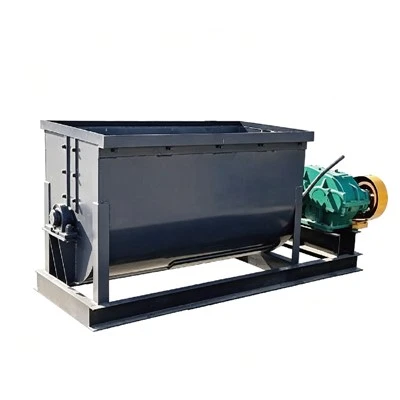
Shandong Heze Sanyi Biological Engineering Co., Ltd. is one of the most reliable mixer manufacturers and suppliers in China, also supports customized service. We warmly welcome you to buy CE approved mixer made in China here from our factory.
Address: No.1118 Lanzhou Road, High-tech Zone, Heze City.
E-mail: business@hzsysam.com
WebSite: https://www.hzsysam.com/
