Hey there! If you’ve ever walked past a construction site, you probably didn’t stop to think about the fabrics scattered around—stuff like tarps, filter cloths, or those weird protective sheets covering concrete. I’m not talking about the fancy upholstery or fashion fabrics you see in stores, though. I’m from a functional non-woven fabric supplier, and let me tell you, this stuff is way more than just disposable grocery bag material (that’s what I used to think back in the day, before I got into this game). A lot of people ask me: Can functional non-woven fabric actually hold up in construction? Spoiler alert—yes, it can, and it’s changing how we build things, one roll at a time. Functional Non-woven Fabric
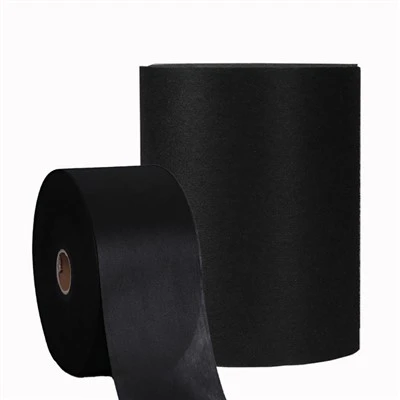
Let’s start with the basics, no jargon, I promise. Functional non-woven fabrics are made by bonding fibers together (think polypropylene, polyester, even recycled plastic sometimes) without weaving or knitting them. The “functional” part means they’re designed for a specific job, not just to cover something. Unlike regular woven fabrics, they’re lighter, faster to install, and can be tuned to do specific things—like block water, let air pass, stop dirt, or even kill bacteria. Construction folks love that because time = money on a job site, right? You don’t want something that takes hours to put up and falls apart before the project’s done.
First up: the big one for any outdoor build—geotextiles. Yeah, that’s what they call functional non-wovens in groundwork. I’ve seen these used for everything from highways to backyard patios. Let’s break it down: When you build a road, you’ve got soil under the asphalt. If the soil is soft (like clay or sand), the asphalt can crack or sink because the ground shifts. Geotextile non-wovens go between the soil and the gravel base. They act like a bridge—let the water drain through (no puddles under the road!) but keep the soil from mixing with the gravel. No mixing = no weak spots = a road that lasts longer. I remember a job last summer where a small town was repaving a local street; their old method used woven geotextiles, and it took two guys a full day to lay it. We supplied them with our lightweight non-woven geotextile, and two guys did it in four hours. They saved on labor, and when I checked back six months later, there were zero cracks in the repaved section. That’s the kind of win we live for.
Then there’s concrete work, which is super dependent on moisture. If concrete dries too fast, it cracks. Functional non-woven fabric works as a curing blanket here. Wait, I know—you’ve seen those old burlap blankets, right? They’re messy, they get moldy if you leave them out, and they take forever to get wet. Our non-woven curing fabric is different. It’s absorbent, so you spray it once, and it keeps the concrete moist for the whole curing period (usually 7 days). Plus, it’s UV-resistant, so it doesn’t fall apart in the sun mid-cure. A residential concrete contractor told me last year that switching from burlap to our non-woven cut his material waste by 30% because burlap would tear, and he’d have to buy more. The non-woven stuff, he said, lasted the whole job and could be reused for small projects later. That’s the kind of practical stuff that makes construction guys come back.
Don’t sleep on insulation either. Modern buildings need to be energy-efficient, and non-wovens are key here. Thicker functional non-wovens are used as thermal insulation in walls, ceilings, even under floors. Unlike fiberglass insulation, which can irritate skin, our polypropylene-based non-woven insulation is soft to handle, no itchy gloves required. It’s also got great air permeability—so the building can “breathe” a little, which prevents mold and mildew from growing inside walls. I’ve talked to a couple of green builders who use this stuff because it’s recyclable (a big plus for sustainable construction) and doesn’t off-gas chemicals into the air inside homes. That’s a huge selling point for homeowners now, right? People care more about indoor air quality than they used to.
Now, let’s talk about the tricky stuff—waterproofing and filtration for plumbing. Construction has a lot of hidden systems, like sewer lines and drainage pipes. Functional non-woven fabric acts as a filter around these pipes. For example, when you install a French drain (that’s the pipe with gravel around it to move water away from a foundation), you wrap the pipe in non-woven fabric. It lets water seep into the pipe but stops dirt and small rocks from clogging the pipe. No clogging = no water pooling around the foundation = no basement leaks. I had a plumber come to our warehouse once, and he said this saved him hours of unclogging pipes on job sites. He used to use regular woven fabric, which would let dirt slip through, so he had to clean the pipe every time. Our non-woven is tightly woven (not literally, but bonded with tiny fibers) so dirt can’t get through. Game changer.
Wait, but what about durability? Construction sites are rough—heavy equipment driving over materials, rain, sun, even chemicals from concrete. A lot of people ask me, “Will this stuff hold up when a skid steer runs over it?” It depends on the grade, but our heavy-duty functional non-woven fabric is made to withstand that. We test it for tensile strength (how much it can stretch before breaking) and puncture resistance (how easy it is to poke a hole in it). For jobs where equipment is moving over materials, we supply a thicker, higher-density non-woven that can handle that. I’ve seen one of these used as a temporary road mat on a muddy construction site—trucks drove over it every day for three weeks, and it didn’t tear. Way cheaper than laying down plywood sheets, which get wet and break after a couple days. That’s another cost-saver right there.
Of course, it’s not just the big construction projects. We supply to small contractors too—like people building a backyard shed or a patio. Our lightweight non-woven is perfect for landscaping fabric, which stops weeds from growing without blocking water. A lot of DIYers use it, and it’s way easier to install than mulch that blows away. It’s also reusable if you’re careful, so you don’t have to throw it away after one use. That’s something I love about functional non-wovens—they’re versatile, so they work for both a 100-story office building and a 10×12 shed.
Now, let’s get real about the downsides. No product is perfect. Functional non-woven fabric isn’t as strong as steel or thick concrete, so you can’t use it as a structural material. It also needs to be the right type for the job—use a geotextile meant for drainage as insulation, and it won’t work. Some cheaper non-wovens use low-quality fibers that break down fast in UV light, so you have to make sure you’re buying from a supplier that tests their materials. That’s why I tell people to skip the random cheap rolls online—they fall apart in a month. Buy from a supplier that stands behind their product, like us.
Another thing: sustainability. A lot of construction companies are switching to eco-friendly materials, and functional non-wovens can fit that. Many of our fabrics are made from recycled plastic bottles—we take plastic that would end up in a landfill or ocean, turn it into fibers, and bond it into non-woven fabric. Last year, we helped a construction company use 100,000 recycled plastic bottles for their project’s landscaping fabric. That’s a win for the planet and for their green building certification. Also, since our products are longer-lasting than alternatives (like burlap or disposable filters), they reduce waste on job sites. Less waste means less money spent on disposal, which is a big deal for contractors.
I’ve been in this business for 8 years now, and I’ve seen how functional non-wovens have gone from a “nice-to-have” to a “must-have” in construction. When I first started, most contractors stuck to traditional materials, but now they’re calling us before every job to ask what non-woven they need. It’s not just about replacing old stuff—it’s about doing construction better, faster, and cheaper. We’ve worked on residential homes, commercial offices, even a small dam repair a few years back. The dam used our non-woven fabric as a liner to prevent water seepage, and it’s still holding strong. That’s the kind of impact this stuff has.
If you’re a contractor, builder, or even a DIYer working on a construction project, don’t sleep on functional non-woven fabric. It’s not just a random sheet of fabric—it’s a specialized tool designed to make your job easier. Whether you need something to stop weeds, drain water, protect concrete, or insulate a wall, there’s a functional non-woven that fits.
At the end of the day, the best part of this job is helping people find the right material for their project. If you’re looking to upgrade your next construction job with functional non-woven fabric, or if you have questions about which type works for your needs, reach out to us to connect and start a conversation about how we can help. We’re here to give you the facts, not sales pitches, and make sure you get the right product for your project, no matter the size.
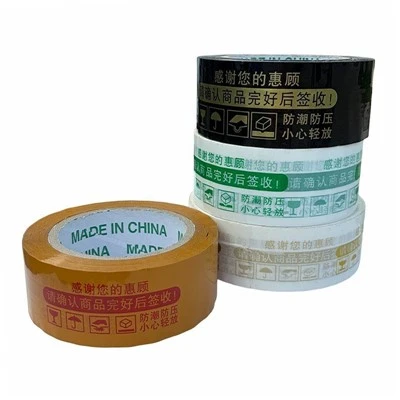
Color and Logo BOPP Tape References
- Handbook of Nonwoven Fabrics for Technical Applications, Wiley, 2019.
- Geotextiles in Construction: Design and Practice, CRC Press, 2021.
- Sustainable Building Materials: A Guide to Environmental Specifications, National Institute of Building Sciences, 2020.
- Functional Nonwovens: Properties and Applications, Textile Institute, 2018.
- Construction Industry Trends in Innovative Materials, Associated General Contractors of America, 2022.
Zhejiang Guowang Packaging Co., Ltd.
Zhejiang Guowang Packaging Co., Ltd. is one of the most professional functional non-woven fabric manufacturers and suppliers in China, featured by quality products and low price. Please rest assured to buy customized functional non-woven fabric made in China here from our factory. Also, pricelist is available.
Address: Youbu Town, Lanxi City, Zhejiang Province, China
E-mail: Nicole@guowangtape.com
WebSite: https://www.guowangtape.com/
