Hey there! As a supplier of Textile Flapping Machines, I often get asked about the automation level of these nifty devices. So, I figured it’d be cool to break it down for you all in this blog post. Textile Flapping Machine

Let’s start by understanding what a Textile Flapping Machine actually does. In the textile industry, the flapping process is crucial for a bunch of functions. It’s used to open up and clean textile fibers, remove impurities, and make sure the fibers are well – blended. This helps in creating a more uniform and high – quality textile product later on.
Now, when we talk about the automation level of a Textile Flapping Machine, it can vary quite a bit depending on the model and the manufacturer. In general, the automation of these machines can be classified into different levels, and I’ll walk you through each.
Basic Manual Level
At the most basic end of the spectrum, there are some older or more budget – friendly Textile Flapping Machines that operate at a very low automation level. These machines require a lot of hands – on work from the operators. For example, the operator has to manually load the textile materials into the machine. They also need to constantly monitor the speed of the flapping mechanism, adjust the settings for different types of fibers, and even manually control the flow rate of the materials through the machine.
It’s like they’re the conductor of a one – man band. They’ve got to do everything themselves. The advantage of these machines is that they’re usually cheaper to buy. You don’t have to shell out a fortune to get started in the textile business. But the downside? They’re labor – intensive. You need skilled workers to run them, and they’re not very efficient compared to the more automated models. Imagine having to adjust the settings every time you switch from one type of fiber to another. It’s time – consuming and can lead to inconsistent results.
Semi – Automated Level
Moving up the ladder, we’ve got the semi – automated Textile Flapping Machines. These are a big step up from the basic manual ones. With semi – automated machines, you start to see some tasks being taken over by technology.
For instance, many of these machines come with pre – set programs. You can select a program based on the type of textile fiber you’re working with. The machine will then automatically adjust the speed, the flapping intensity, and the material flow rate according to the pre – defined settings. This saves a lot of time and reduces the chances of human error.
However, there are still some manual tasks involved. The operator still has to load and unload the textile materials. And they need to keep an eye on the machine during operation. If something goes wrong, like a blockage in the material feed, they’ve got to step in and fix it. But overall, semi – automated machines are more efficient and can produce more consistent results. They’re a great option for medium – sized textile businesses that want to improve their productivity without going all – in on a fully automated system.
Fully Automated Level
The crème de la crème of Textile Flapping Machines is the fully automated ones. These bad boys are like the high – tech superstars of the textile world.
A fully automated Textile Flapping Machine can handle almost every aspect of the flapping process without any human intervention. It has advanced sensors and control systems that can detect the type of textile fiber being used. Based on this detection, it automatically adjusts all the necessary parameters, such as speed, intensity, and flow rate, in real – time.
The loading and unloading of materials are also automated. There are conveyor belts that can move the raw materials into the machine and take out the processed materials. These machines can also perform self – diagnostics. If there’s a problem, like a mechanical failure or a sensor malfunction, it can alert the operator immediately and even provide some troubleshooting suggestions.
The benefits of fully automated machines are huge. They’re extremely efficient, capable of processing large volumes of textile materials in a short amount of time. They also produce very consistent and high – quality results. But, of course, there’s a catch. These machines are expensive. They require a significant upfront investment. And they need a certain level of technical expertise to install, maintain, and operate. So, they’re more suitable for large – scale textile manufacturers who can afford the cost and have the resources to manage them.
Why Automation Level Matters
You might be wondering, "Why does the automation level of a Textile Flapping Machine even matter?" Well, there are a few reasons.
First of all, it affects productivity. As I mentioned earlier, more automated machines can process materials faster and with fewer interruptions. This means you can produce more textiles in less time, which can lead to increased profits.
Secondly, it impacts the quality of the final product. Automated machines can maintain consistent settings, which results in more uniform and high – quality textile products. This is especially important in the competitive textile market, where customers expect a certain level of quality.
Another reason is labor costs. Manual and semi – automated machines require more human labor, which can be expensive. Fully automated machines, on the other hand, reduce the need for a large workforce, saving you money in the long run.
Our Offerings
As a supplier of Textile Flapping Machines, we understand that different customers have different needs. That’s why we offer a range of machines with varying automation levels. Whether you’re a small – scale textile producer just starting out and looking for an affordable, basic manual machine, or a large corporation in need of a high – end, fully automated system, we’ve got you covered.
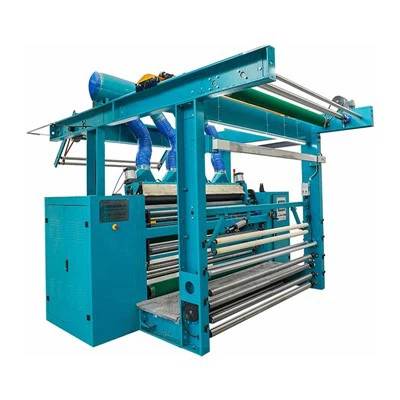
Our team of experts can help you choose the right machine based on your specific requirements. We also provide training and support to make sure you can operate the machine effectively. And if there are any issues down the road, our after – sales service will be there to assist you.
Contact Us for Purchase and Negotiation
Dehydration If you’re interested in learning more about our Textile Flapping Machines or want to discuss a purchase, don’t hesitate to reach out. We’re always happy to have a chat and see how we can help you take your textile business to the next level.
References
- Textile Machinery Handbook: A comprehensive guide on various textile machines and their operations.
- Journal of Textile Technology: Articles on the latest advancements in textile machinery automation.
- Industry reports on textile manufacturing trends and the role of automation in the sector.
Jiangsu Feng Te Technology Co., Ltd.
We’re well-known as one of the leading textile flapping machine manufacturers in China. With a professional production team, we are able to meet the needs of the majority of our customers. Please rest assured to buy discount textile flapping machine for sale here from our factory.
Address: No. 4 Zhanghong Road, Siying Industrial Park, Lianyungang City, Jiangsu Province, China
E-mail: frentejenny@foxmail.com
WebSite: https://www.jsfrente.net/
