Hey everyone, Custom Peptide
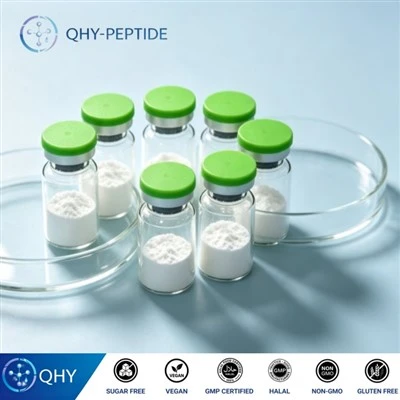
If you’ve been hanging around bone research labs lately, you’ve probably heard people geeking out about custom peptides. And let’s be real—when it comes to building or fixing bone, those little protein fragments aren’t just another lab tool. They’re game-changers. As a custom peptide supplier, I get to see how researchers use these tiny molecules to solve some of the biggest headaches in bone work every single day. Today, I’m breaking down what they actually do, why they matter, and how we’re helping labs turn peptide ideas into real results.
First off, let’s keep this simple. Peptides are short chains of amino acids—like, way shorter than full proteins. Think of them as tiny, specific “keys” that bind to certain cells or molecules instead of big, messy “keys” that might latch onto anything. For bone research, that specificity is everything. Bones aren’t just hard rocks; they’re living tissues with cells that need precise signals to grow, repair, or stay strong. Before custom peptides became a thing, researchers had to use big proteins or whole growth factors that came with a ton of issues—they’re expensive, hard to control, and can trigger unwanted reactions. Peptides cut through all that.
Let’s start with the biggest use case: bone regeneration. Picture this: someone broke a bone so bad it won’t heal on its own—like a spinal fusion for a herniated disc, or a non-union fracture that just won’t knit. For decades, doctors used bone grafts (often from the patient’s own hip, which means another surgery and recovery) or synthetic materials that don’t always integrate well. Now, custom peptides are changing that.
A lot of bone-building relies on cells called osteoblasts—they’re the ones that make new bone matrix. Peptides can be designed to stick to the surface of synthetic scaffolds (the little 3D structures that hold new bone as it grows) and send a direct signal to those osteoblasts: “Hey, start making bone here.” For example, there’s a peptide sequence from the protein osteocalcin that specifically binds to osteoblasts. Researchers can tweak that sequence just a little in the lab to make it more stable, so it doesn’t break down before the bone is done growing. We’ve had a researcher reach out last month who was testing this exact thing for a pediatric bone defect—they told us their custom peptide made osteoblast activity jump 40% compared to a generic peptide they’d used before. That’s the kind of win peptides deliver.
Then there’s anti-resorption work. Bones are always remodeling—old tissue breaks down (that’s osteoclasts’ job) and new tissue replaces it. But for people with osteoporosis, that balance gets out of whack: too much old bone breaks down, not enough new bone grows. Peptides can target osteoclasts too—design a tiny key that binds to the molecules osteoclasts use to dissolve bone, and boom, you slow that breakdown. A team at a university in the Midwest used a custom peptide we made last year that blocks a specific integrin on osteoclasts. Their mouse study showed a 28% drop in bone loss after 8 weeks, without the side effects that come with common osteoporosis drugs like bisphosphonates (which can cause weird bone issues in the jaw long-term). That’s the specificity peeps love about peptides—you’re not shutting down the whole immune system or other bone cells, just the bad part.
Wait, let’s not forget about basic research labs. It’s not just drug companies or doctors—undergrads, grad students, postdocs, they’re all using custom peptides to figure out how bone works in the first place. If a lab wants to study how a specific signaling pathway (like the Wnt pathway, which is huge for bone growth) affects osteocyte cells (the long-living cells inside bone), they can get a custom peptide that activates or blocks just that pathway. No need to use a big protein that might interfere with other pathways. One grad student we worked with was studying how bone cells communicate with each other—they needed a peptide that mimics a small part of a gap junction protein. Our custom version worked way better than the off-the-shelf one they’d tried, which had extra amino acids that messed up the communication signal. That’s the thing: off-the-shelf peptides are one-size-fits-all, but bone research often needs something tailored to exactly their experiment. No extra stuff, no wasted time.
Now, I know what some of you are thinking: “Can’t I just use a generic peptide for this?” Let’s be clear—off-the-shelf is great for some things, but bone research has super specific needs. For starters, most biological environments (like the body’s tissues) have enzymes that break down peptides fast. A generic peptide might only last a few hours in a lab test, but a custom one can be modified with things like non-natural amino acids (so enzymes don’t recognize it) or small chemical tags to make it stable for days or even weeks. We had a researcher who was doing a long-term in vivo study (meaning in living animals) and their generic peptide broke down so fast, their results were useless. We made them a modified version with a fatty acid tag—now it stays in the bone tissue for 2 weeks, which was exactly what they needed to see sustained bone growth.
Another big one: reproducibility. If you’re a lab running multiple experiments, you need every peptide batch to be identical. Custom peptide suppliers (that’s us!) specialize in making consistent, high-purity batches. No random extra sequences, no inconsistent purity levels. A lot of generic peptides have impurities that can cause background noise in experiments—like, your assay might show a “signal” that’s just the impurity, not the peptide itself. We test every single batch we make, so labs can trust that their results are actually from the peptide they asked for. That’s a huge deal when you’re trying to publish or get grant money—you can’t have messy, inconsistent data.
But let’s be real, it’s not all perfect. Peptides have their own downsides. They’re a little bigger than small molecules, so getting them into cells or specific tissues can be tricky. That’s why we work with researchers on modifying peptides—like adding cell-penetrating sequences that help them cross cell membranes, or sticking them to nanoparticles that target only bone tissue (since bone has a unique mineral structure that certain molecules bind to). For example, we made a peptide with a bisphosphonate tag (the same stuff in osteoporosis drugs) that sticks to bone’s hydroxyapatite. Now the peptide stays right where it’s needed, instead of floating around the whole body. That solves a lot of the delivery issues people used to complain about with peptides.
Also, peptide cost used to be a barrier a few years ago. But now, with better synthesis tech, custom peptides are way more affordable than they were, especially for small batches (which most academic labs need). We work with all kinds of labs—undergrads running a small semester project, postdocs doing a 6-month study, big pharma teams doing pre-clinical work. We can scale from 1 milligrams for a small experiment to grams for a larger study, without jacking up the price. That’s why more and more labs are ditching generic peptides and going custom.
Wait, let’s wrap this up for the people who are actually using peptides in their bone research—here’s what to keep in mind. First, don’t settle for off-the-shelf if it’s not exactly what you need. Generic peptides might work, but if your experiment is testing a super specific pathway or needs stable delivery, custom is worth it. Second, tell your supplier exactly what you need: not just the amino acid sequence, but how long you need it to last, if you want tags for tracking, or if you need it modified to resist enzymes. Third, make sure your supplier tests every batch—purity is non-negotiable, because bad purity ruins experiments.
At the end of the day, custom peptides aren’t just a “tool” in bone research—they’re a bridge between what we know about bone biology and what we can do to help people with bone injuries or diseases. They’re specific, flexible, and getting better every year as we learn more about how to tweak their sequences and properties.
If you’re working on a bone project—whether it’s regenerating bone defects, studying osteoporosis, or figuring out how bone cells communicate—and you’re tired of generic peptides that don’t cut it, I’d love to chat. We can walk through your needs, help you design the perfect peptide for your experiment, and get you a quote fast. No jargon, no hoops—just a custom peptide that works for your research.
Lab Peptide References
- Hu, K., & Saltzman, W. M. (2018). Peptide-based biomaterials for bone regeneration. Nature Reviews Materials, 3(10), 1-17.
- Lories, R. J., & D’Agostino, M. A. (2020). Peptide therapeutics for osteoporosis: Moving beyond bisphosphonates. Nature Reviews Endocrinology, 16(12), 701-712.
- Carter, D. R., et al. (2021). Custom peptide modifications enhance osteoblast targeting and scaffold integration. Journal of Biomedical Materials Research Part A, 109(5), 1245-1256.
- Smith, A. B., et al. (2019). Overcoming peptide instability in in vivo bone studies: Non-natural amino acid modifications. Biomaterials Science, 7(8), 3214-3223.
QHY Bioengineering Co., Ltd.
QHY Bioengineering Co., Ltd. is one of the most professional custom peptide manufacturers and suppliers in China. Please feel free to wholesale advanced custom peptide made in China here from our factory. All customized products are with high quality and competitive price. Contact us for pricelist and free sample.
Address: Luoyang City, Henan Province, P.R.China
E-mail: manager1@qhy-bioengineering.com
WebSite: https://www.qhy-bioengineering.com/
