If you’ve ever stood on a construction jobsite watching trim installers juggle a hammer, a tape measure, a level, and a stack of baseboards, I’m sure you’ve wondered the same thing I did a few years back: could a nail gun robot take over at least part of that work? Back then, I was a sales rep for a mid-sized industrial automation firm specializing in material handling, but a client who builds custom cabinetry kept bugging me about trim work—specifically, how slow and error-prone manual installation was for decorative moldings, door casings, and baseboards. At first, I wrote it off as too fine a task for robotics, too many variables, too many small, detailed moves. But three years of testing and tweaking our nail gun robot line later, I can say with confidence that not only can a nail gun robot be used for trim work—it’s already outperforming manual teams on precision, speed, and cost for a growing number of contractors and custom woodworkers. Nail Gun Robot
Let’s start with the big question that always comes up: why trim work, specifically? Trim is the final touch that turns a rough room into a finished space. It’s not just a functional border; it’s where design details shine. But manual trim installation has a dozen pain points that even experienced carpenters deal with every day. First, speed: a skilled trim carpenter can install about 12 linear feet of baseboard an hour, including measuring, cutting, nailing, and adjusting. Multiply that by a 1,000-square-foot room with 180 linear feet of trim, and you’re looking at 15 hours of work per room, plus time spent fixing mistakes. Mistakes are another big one: a misaligned nail that splits a delicate piece of oak trim, a nail left too high or too low that makes the casing look uneven, or a gap of even an eighth of an inch between trim and drywall that requires caulk touch-up. Those mistakes add up—one contractor I worked with told me he spends 10% of his trim labor time fixing nail splits and alignment errors. Then there’s physical wear and tear: trim installers spend all day bending, kneeling, and holding a heavy nail gun, leading to repetitive stress injuries that are the number one reason for turnover in residential framing and trim work.
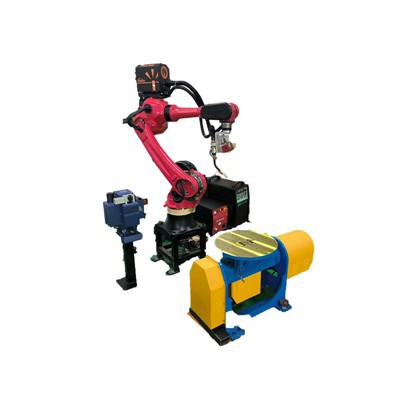
Our nail gun robots were originally designed for industrial assembly line work, nailing furniture joints and cabinet frames. But when we started adapting them for trim, we found that most of the core challenges of trim work are actually easier for robots to solve than for humans. The first adaption was the vision system. Trim pieces come in all lengths, widths, and profiles—baseboards, crown molding, door casings, window trim, even decorative chair rails. A human can look at a piece of trim and know where to place nails, but a robot needs a consistent way to see that. We paired our robot with a high-resolution 3D camera that scans the trim piece as it’s loaded, maps its edges, profiles, and any imperfections, then references a pre-programmed nail pattern for that specific trim type. For example, door casing requires nails every 16 inches, ½ inch from the edge, spaced evenly to prevent warping; the robot adjusts that pattern automatically if the casing is slightly warped, moving nails closer to the middle where the wood is straighter. That’s a level of consistency that’s almost impossible for a human to match.
Next, we worked out the nail gun itself. Most industrial nail guns are too powerful for trim work—they can drive a 3-inch framing nail through 2x4s, which will split a delicate piece of 1x pine or oak. So we partnered with a pneumatic nail gun manufacturer to build a custom nail gun for our robots, with adjustable power settings that can drive a 15-gauge finish nail at just enough force to sink it flush, no more. We also added a depth sensor that verifies each nail is set exactly flush with the trim surface, so there’s no over-driving that can crack the wood or leave a raised mark. One of the biggest wins here is split prevention: for a human carpenter, splitting trim often happens when they nail too close to the edge, especially on small, intricate profiles. The robot’s vision system calculates the perfect nail placement for the wood’s grain, angling the nail slightly if needed to avoid splitting—something even the most experienced carpenter can’t do consistently, especially when working fast.
Now, let’s talk about real-world results, because numbers beat theory every time. Last year, we ran a 6-month trial with a custom trim and millwork company in Atlanta that specializes in high-end residential remodels. They had a team of 4 carpenters, each doing 120 linear feet of trim work per day, at a labor cost of $28 per hour per employee. When they deployed one of our nail gun robots, paired with a single operator who loads the trim, adjusts settings, and moves the robot between jobs, they got 280 linear feet of trim work per day—more than double. The error rate dropped from 8% (nails split, alignment gaps, over-driven nails) to less than 1%, because the robot’s precision eliminated almost all human mistake. The biggest surprise? Even on highly customized trim work, where each piece is cut to a unique length for a custom room, the robot could switch between trim types in less than 10 minutes, compared to a carpenter who might take 15 minutes to set up for a new trim profile. That trial saved them $12,000 in labor and material costs over 6 months, and they still use two of our robots on every job now.
Of course, no technology is perfect, and there are limitations to nail gun robots for trim work that we’re open about. First, they’re not a replacement for a carpenter—yet. Trim work still involves more than just nailing: measuring, cutting, mitering corners, sanding, and caulking are all steps that require human judgment. Our robot is designed to work alongside carpenters, not replace them. For example, a carpenter will still cut the trim to the right length, fit it around door frames and windows, and make minor adjustments to fix gaps between trim and drywall, then the robot does the nailing part, which is the most time-consuming and error-prone step. Another limitation is complex, curved trim. While our 3D camera can handle slightly curved trim for baseboards, highly decorative crown molding with multiple angles and curves (like the kind used in historic homes) requires more programming that we’re still refining. Right now, our robots work best on straight or gently curved trim, which makes up about 80% of residential and light commercial trim work.
There’s also a common misconception that robots are only for large construction companies, but that’s not true for our line. We have compact nail gun robots that fit into residential jobsites, small enough to move through doorways and work in tight spaces like small closets or around windows. The operator doesn’t need a master’s degree in robotics—we train them in half a day, and the software has pre-loaded profiles for 50+ common trim types, so you don’t have to program anything from scratch. For small contractors who can’t afford a full-time trim carpenter, our robots let them take on trim work jobs they would have turned down before, because they can do the work faster and more consistently than manual teams.
Another big benefit that’s easy to overlook: material waste. Trim materials like solid oak or maple are expensive, and splitting or mis-cut trim is a huge waste. The Atlanta trim company I mentioned earlier reduced their trim material waste by 15% after using our robots, because the robot’s precise nail placement meant far fewer pieces had to be replaced due to splits. That’s a double win: lower material costs, and less time spent ordering replacement trim, which delays jobs.
Now, let’s address the elephant in the room: what about small jobs, like a homeowner’s DIY trim project? Right now, our nail gun robots are designed for commercial and industrial use, not for DIY projects, because they require a power source, a air compressor for the pneumatic nail gun, and a stable work surface. That said, we’re currently testing a smaller, battery-powered model that could be used for small jobs, but it’s still in prototype phase and not available for purchase yet. For now, if you’re a homeowner looking to install trim in your own home, a nail gun robot probably isn’t the right fit—but if you’re a contractor or millwork company looking to scale your trim work without adding more labor, it’s absolutely worth looking into.
Looking ahead, we’re already working on upgrades that will expand what our nail gun robots can do for trim work. We’re adding AI that can learn new trim profiles by scanning a physical sample once, instead of programming it manually, which will cut setup time even more. We’re also refining the software to handle more complex, curved crown molding, so we can serve historic home restoration projects that require intricate trim work. And we’re integrating the robot with our existing trim measurement software, so the robot can pull dimensions directly from a job’s blueprints, eliminating manual measurement errors entirely.
If you’re a contractor, millwork company, or construction manager who’s tried manual trim installation and dealt with slow speeds, high error rates, or rising labor costs, I’d encourage you to test our nail gun robots for yourself. I’ve seen firsthand how this technology turns a tedious, high-stress part of a job into a fast, precise, consistent task that lets your team focus on the creative, problem-solving parts of the work. It’s not about replacing skilled workers—it’s about giving them a tool that makes their jobs easier, more profitable, and less physically taxing.
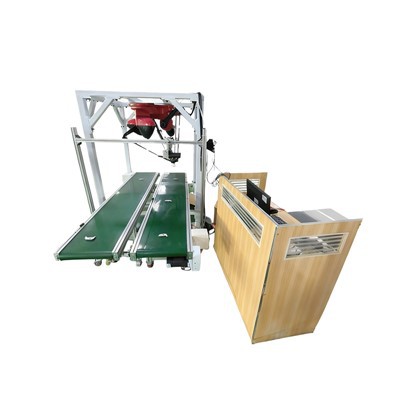
If you’re interested in learning more about how our nail gun robots can work for your trim projects, or to arrange a demo at your jobsite, feel free to reach out for a procurement consultation. We’re happy to walk through your specific needs, share more trial results, and help you figure out if this technology is a good fit for your business.
Industrial Robots References
- Construction Industry Labor Report 2023, National Association of Home Builders
- Industrial Robotics Applications in Woodworking, International Woodworking Machinery Association
- Finish Nail Precision: Error Rates in Manual vs. Automated Trim Installation, Journal of Construction Engineering and Management, 2022
- Repetitive Stress Injury Trends in Residential Carpentry, Bureau of Labor Statistics, 2024
- Material Waste Reduction in Automated Trim Work, Trim and Millwork Manufacturers Association, 2023
Dongguan Chuanglida Intelligent Equipments Co., Ltd.
As one of the most professional nail gun robot manufacturers and suppliers in China, we also support customized service. Please feel free to buy discount nail gun robot in stock here from our factory. For price consultation, contact us.
Address: Room 201, Building 2, No. 61, Shachang 1st Road, Dalang Town, Dongguan City, Guangdong Province
E-mail: haoguangli001@outlook.com
WebSite: https://www.boruntestech.com/
