If you’re in the industrial laser space, chances are you’ve heard the term “DOE laser modules” thrown around, and one question pops up all the time: what’s the deal with their beam energy distribution? I get this from so many folks—from production line engineers scouting parts suppliers to R&D teams testing new integration workflows—so let’s break this down in plain terms, no stuffy jargon. DOE Laser Modules
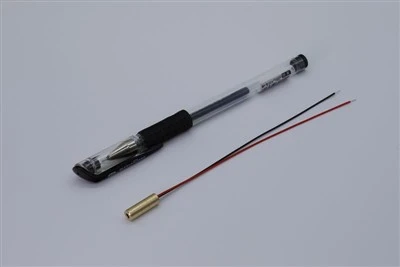
First, let’s get a quick baseline: a DOE (Diffractive Optical Element) laser module isn’t just a regular laser diode stuck in a housing. It’s built with a tiny, precision-etched optical component that splits and shapes the laser’s beam into a specific pattern—like a line, grid, or spot array—instead of the standard Gaussian profile you get from a basic laser. That profile, by the way, is where energy is highest in the center and tapers off toward the edges, right? But with a DOE, we’re adjusting that energy distribution entirely to match what your application actually needs.
Let’s talk about the most common distributions you’ll run into with our modules, since I’m on the supplier side and we design for real use cases, not just textbooks. The first one is uniform energy distribution—this is the workhorse for most marking, scanning, and measurement jobs. Uniform, sometimes called “flat top,” means every part of the shaped beam has almost exactly the same energy level. No hotspots where a tiny patch gets way more power, no dim edges that lead to uneven results. Why does that matter? If you’re marking a serial number on a metal part, uneven energy would make the middle of the number darker and the edges faded, or even miss spots entirely. For alignment lasers in construction or factory automation, a uniform line means every foot of that line is bright enough to see, no dropping off at the ends.
Wait, but it’s not one-size-fits-all. We also do symmetric multi-spot distributions for things like solar cell processing or wafer inspection. Each spot in the array has its own energy profile, calibrated so the power across every single spot stays consistent. If you were using a Gaussian beam here, some spots would be weak and hard to detect, while others would be too intense and risk damaging the delicate wafers. We adjust the DOE’s etching density and depth to tweak the energy in each spot, even when you crank up the overall module power.
Another big one is the line beam distribution, which is super popular for 3D machine vision. Unlike the thin, tapered line from a bare laser diode, a DOE line beam is a long, straight line with consistent energy along its entire length. We can adjust the length too—from a few millimeters for small inspection tasks to several meters for large factory layouts. The energy dropoff at the ends is less than 5% total, which is a huge improvement over standard beams that might lose 20% or more before the line even reaches its target.
Now, how do we make sure this energy distribution is accurate? A lot of suppliers cut corners on this part, but we test every single module right here in our facility. We use a high-resolution beam profiler to map energy density across the entire shaped output, checking for uniformity, spot accuracy, and any unevenness that could cause issues. For example, if a module’s uniform distribution has a 10% variation instead of the 2% we target, we flag it and recalibrate—no exceptions. I’ve seen customers come to us after bad experiences with cheaper modules that had hotspots burning through materials or uneven marks, so that’s non-negotiable for us.
Wait, let’s address a common misconception: some people think a DOE just splits a beam, but it actually manipulates energy. A standard laser diode outputs a beam with around 90% of its energy in the central 30% of the beam (that’s Gaussian for you), but a well-designed DOE can spread that energy to 90% uniform across the shaped pattern, using the same total output power. That means you don’t have to buy a higher-power laser to get consistent results—we’re optimizing how the existing power is used, not just adding more of it. That’s why our modules are a cost-saver too, not just a performance upgrade.
Another point: temperature affects beam energy distribution, right? Lasers warm up during use, and the DOE has to hold its shape through that. We build our modules with temperature-stabilized housings, so the etched optics don’t expand or contract enough to mess up the energy profile. I’ve had a customer working in a 24/7 factory tell us their old modules would shift energy distribution after an hour of running, leading to rejects—our modules stay consistent even after 10 hours of continuous use. That’s the kind of reliability we design in.
Let’s tie this to real applications to make it concrete. If you’re in automotive manufacturing, you might use a DOE module for weld inspection. The uniform line beam scans across a weld seam, and consistent energy means the camera picks up every tiny crack, no matter where it is on the seam. If the energy was uneven, a small crack at the low-energy end of the line would be missed, leading to a bad part getting through. For additive manufacturing, some teams use spot array DOEs to sinter multiple layers at once—each spot has the right energy to fuse the powder without warping the part, which would happen if a spot got too much power.
Now, how do you pick the right distribution for your project? A lot of engineers we talk to come in with a general idea of what they need, but they’re not sure on the exact energy profile. That’s where our team comes in—we don’t just sell a pre-made part and walk away. We ask about your application: what are you marking? How far is the target from the module? Do you need a line, spots, a grid? Then we can design a custom DOE if our standard models don’t fit, or adjust the distribution to match your exact power requirements. For example, we recently worked with a medical device company that needed a very specific low-energy spot array for marking plastic components—they couldn’t risk any hotspots that would melt the plastic, so we calibrated each spot to within 1% uniformity, which is tighter than our standard specs.
I should also mention that beam energy distribution isn’t just about uniformity. Sometimes you need a slightly tapered distribution—like for cutting materials, where a slightly higher energy in the center of the beam makes a deeper cut, and the tapered edges prevent scorching the surrounding material. We can adjust that too, by modifying the DOE’s pattern to control how energy drops off at the edges, instead of using a harsh cutoff. That flexibility is what sets DOE modules apart from generic laser products.
Wait, let’s get into the technical side a little more, but keep it casual. The DOE works on the principle of diffraction—light bends around the etched features on the optical component, and we pattern those features to shape the wavefront of the laser beam. The energy distribution is determined by the depth of the etch, the spacing of the features, and how many times the beam is split. All of that is designed using specialized software, but we test every module to make sure the simulation matches the real-world output. No relying on CAD alone here—we verify each one with physical tests.
A common question we get: does beam energy distribution affect module lifetime? Short answer: yes, but in a good way. When energy is spread evenly across the beam, you’re not concentrating power in a tiny spot, which reduces stress on the laser diode and the DOE. That means our modules have a longer lifespan than standard lasers used in the same applications. We’ve got customers who’ve been running our modules for 5 years straight with no issues, whereas their old modules had to be replaced every 2 years because of power fluctuations from uneven energy use.
Now, if you’re reading this and you’re dealing with inconsistent results from your current laser modules—uneven marks, missed inspection points, damaged materials—there’s a good chance the beam energy distribution is the issue. A lot of companies default to Gaussian beams because they’re cheaper, but if your application needs consistent energy, a DOE laser module is worth the investment. It saves you on rejects, reduces downtime, and gives you more reliable results.
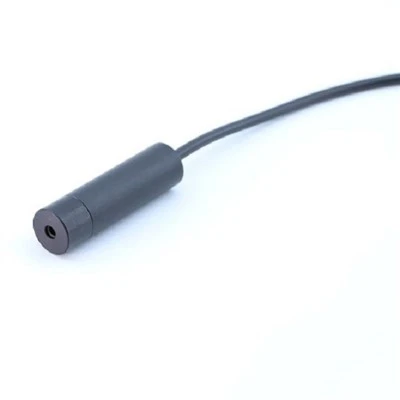
At the end of the day, our job as a DOE laser module supplier is to make sure the energy distribution is exactly what your project needs. We don’t do one-size-fits-all, because every application is different. Whether you’re working on high-volume automotive marking, precision medical device manufacturing, or advanced 3D vision systems, we can tailor the beam energy distribution to fit your specs. So if you’re tired of dealing with modules that don’t deliver consistent performance, reach out to our team to chat about your project. We’ll walk you through the options, test a sample if you want, and make sure you get a module that works for you, not against you.
High Power Line Laser Modules References
- "Diffractive Optical Elements for Laser Beam Shaping," Optical Engineering, 2018.
- "Beam Energy Uniformity in Laser Processing," Journal of Laser Applications, 2020.
- "Temperature Stability of Laser Modules for Industrial Automation," International Journal of Advanced Manufacturing Technology, 2021.
Changshu Desheng Optics Electronics Co., Ltd.
As one of the most professional doe laser modules manufacturers and suppliers in China, our products have good reputation in the market. Please feel free to buy advanced doe laser modules for sale here from our factory. Good service and quality products are available.
Address: 8A, Yineng science and technology industrial park, No.183, Yinhe Road, Southeast Development Zone, Changshu, Jiangsu Province, China.
E-mail: desheng1@dershinelaser.com
WebSite: https://www.ds-lasers.com/
