Hey folks, if you’ve ever worked with pneumatic systems—whether you’re a maintenance tech at a factory, a hobbyist building a custom automation rig, or someone like me running a pneumatic fitting supply shop—you’ve probably stumbled into that messy metric vs. imperial headache. Let’s cut to the chase: can you actually convert metric pneumatic fittings to imperial ones? Short answer… kind of, but it’s not as simple as grabbing a wrench and swapping parts. As a guy who’s dealt with this question a dozen times a day at the shop, let me break this down like we’re geeking out over a project in the back of the warehouse. Pneumatic Fitting

First, let’s get the basics straight: metric vs. imperial fittings aren’t just “different sizes”—they’re built on totally different threading standards and pressure profiles, which is why trying to cross them without checking the details is a one-way ticket to air leaks, failed machinery, or even safety hazards. I’ve had a customer bring in a broken line last month because he thought a 10mm metric fitting would screw into a 3/8” imperial port. Spoiler: it didn’t seal right, his packaging machine went down on a Friday night, and he lost $2k in downtime. Oops.
So why do people even ask this? Most pneumatic components come from either side of the Atlantic. Metric (like M threads, or BA threads) are standard for gear in Europe, Asia, and most of the world, while imperial (NPT, PT, or UNF threads) rule the U.S. and a few other places. If you’re mixing a metric hose with an imperial regulator, or replacing a worn fitting on an old machine that had imperial parts, converting feels like the easy fix. But here’s the thing: size labels (like 10mm vs. 3/8”) don’t line up exactly. A 10mm metric fitting’s thread diameter is close to 3/8”, but the pitch (that’s the number of threads per inch, or millimeters between threads) is totally different. 3/8” NPT has 18 threads per inch, while a common 10mm metric thread has 1.5mm pitch—way fewer threads per inch than imperial. Trying to force that together? You’ll strip the threads, and the seal will blow out.
Wait, but is there a “safe” way to do this? I don’t like saying “never,” because sometimes people are in a pinch. If you’re dealing with low-pressure, non-critical stuff—like a small airbrush setup or a hobby robot that doesn’t need consistent, high-volume air—you might get away with a barbed adapter. These are simple little fittings with a barb on one end to clamp a metric hose and a threaded end to screw into an imperial port, or vice versa. But even here, don’t skimp on the clamp. I’ve seen folks use a zip tie to hold the hose on a barb, and that came loose mid-project, coating their workbench in compressed air. For anything above 150 PSI (your standard industrial pneumatic line), barbed adapters are a hard no—they can blow off under pressure, which is dangerous.
For higher-pressure applications, the only real “conversion” is using a transition adapter that’s specifically designed for both metric and imperial standards. These aren’t just a random chunk of metal with two threads cut on each end—they’re precision-machined to match the exact thread profile of both the metric and imperial parts. A lot of people I talk to don’t realize that NPT threads (imperial) taper, while many metric threads are parallel. That taper is what creates the seal when you wrap Teflon tape around it, so if you screw a parallel metric fitting into a tapered imperial port, you’re not getting a proper seal—no matter how tight you crank it. Transition adapters fix that by matching both the taper and thread pitch for both sides. But here’s the catch: you can’t just grab any 10mm to 3/8” adapter. You have to check the exact thread type. For example, a metric M14x1.5 fitting isn’t the same as a 1/2” NPT—even though their sizes are close. Mixing those up is another leak waiting to happen.
Let me give you a common example: a lot of workshop compressors in the U.S. use 1/4” NPT ports, while metric hoses from European brands often have 8mm or 10mm metric fittings. If you need to connect a 10mm hose to a 1/4” NPT port, you can’t just guess—you need a transition adapter that’s rated for the pressure of your compressor. I always tell my customers to bring a sample of the old fitting or a photo of the port and hose before they buy an adapter. That saves them the hassle of returning something that doesn’t fit, and prevents mistakes.
Another big mistake I see: ignoring pressure ratings. Pneumatic fittings are rated for a maximum pressure, and that’s tied to their build, not just their size. A metric fitting rated for 200 PSI might look identical to an imperial 200 PSI fitting, but if you force a lower-rated metric fitting into a higher-pressure imperial port, it can crack under pressure. I had a customer last year who swapped a $5 low-pressure metric fitting into a 250 PSI line—when it blew, it damaged his assembly line’s sensor, which cost him way more than the part would have. Always check the pressure rating on every part, no matter what “conversion” you’re doing.
Wait, what about push-to-connect fittings? Those are super popular for their ease of use—you just push the hose in and it locks. Can you convert metric push-to-connect to imperial? Again, same rules apply. Most push-to-connect fittings are either metric or imperial, but there are transition push-to-connect adapters that fit both. For example, a 10mm metric hose can connect to a 3/8” imperial port via a push-to-connect transition. But even here, don’t just grab any push-to-connect adapter—make sure it’s for the exact thread and hose size you’re working with. Some cheap adapters have loose tolerances, so the hose can slip out under pressure. Stick to reputable brands, which I obviously sell (wink), because the last thing you want is a hose slipping while you’re troubleshooting a robot.
So let’s wrap this up: should you convert metric to imperial pneumatic fittings? If you’re working on a low-pressure, non-critical hobby project, a barbed adapter might work (just don’t use zip ties). If you’re doing industrial work, a precision transition adapter designed for both standards is your only safe bet. If you’re ever unsure, stop guessing and ask someone who knows—like the guys at a pneumatic fitting shop. I can’t tell you how many times a customer has walked in with a weird mix of parts, and I point out a tiny thread difference they never would have noticed on their own.
One more pro tip: keep a few sample fittings around your shop. I have a drawer with M5, M6, M8, M10 metric fittings and 1/8”, 1/4”, 3/8” imperial ones, so when a customer brings in a part, we can match it up right there. That saves time, saves money, and prevents headaches.
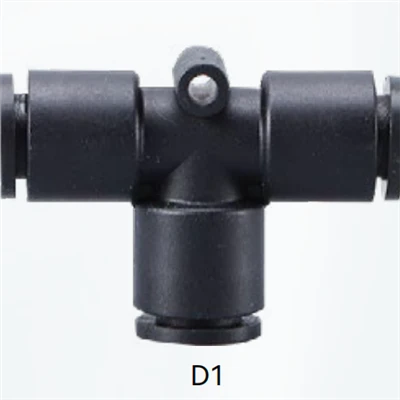
If you’re working on a pneumatic project, or you need help figuring out the right conversion for your parts, don’t stress—just reach out. We’ve helped hundreds of customers sort out metric vs. imperial mix-ups, and we can hook you up with the right adapters or parts to get your system running smooth. No guesswork, no overpaying, just the right fit for your needs.
Valves References:
- Pneumatic Fitting Thread Standards, Compressed Air Challenge.
- Pressure Ratings for Pneumatic Components, Occupational Safety and Health Administration (OSHA).
- Push-to-Connect Fitting Installation and Compatibility, Pneumatic & Hydraulic Institute.
Yuyao Eshiong Pipe Fittings Technologies Co., Ltd.
Yuyao Eshiong Pipe Fittings Technologies Co., Ltd. is one of the most professional pneumatic fitting manufacturers and suppliers in China. With abundant experience, we warmly welcome you to wholesale bulk customized pneumatic fitting at competitive price from our factory. If you have any enquiry about free sample, please feel free to email us.
Address: No.263,North Yangshan Village, Lishan, Ditang Subdistrict, Yuyao ,Ningbo ,Zhejiang
E-mail: sales@trosung.com
WebSite: https://www.eshiongcn.com/
