If you’ve ever stood next to a box dryer in our warehouse, you’ve probably noticed that weird, soft whir it makes—way different from the harsh roar of a industrial oven. I get it, if you’re just here to get your parts dried fast, that whir might sound like a random side effect, not something that actually gets the job done. But let’s be real, convection is the whole reason our box dryers (and all good ones, tbh) don’t just heat metal or plastic evenly—they dry it right, no sticky spots, no half-dried corners, no wasting energy on hot air that just sits there. And as someone who’s been selling box dryers for 12 years, I’ve learned most folks don’t really get how it works… until their last dryer left a batch of goods warped or half-wet. So let’s break this down, no fancy lab jargon, just what actually happens inside that metal box when you hit start. Box Dryer

First off, let’s cut the biggest myth: a box dryer isn’t just a big hot box. If that were the case, you’d just stick your parts in a sealed metal cabinet with a heater and call it a day. But sealed = stagnant air, and stagnant air is the worst for drying. Think about when you hang clothes to dry outside: the sun heats the wet fabric, but the wind blows the damp, cool air off the shirt, right? That’s convection—movement of air carrying heat and moisture, not just heat sitting still. Our box dryers aren’t reinventing the wheel here, but we’ve tuned the convection so it’s not like a random box fan blowing a little hot air; it’s structured, so every part of your load gets the same treatment.
Let’s walk through the inside of one of our standard box dryers, the kind most small to mid-sized manufacturing shops use. The main parts you care about for convection are three things: the heater unit (usually tucked in the back bottom corner, not hanging somewhere useless), the ductwork that feeds hot air, the circulation fan (that’s the whir you hear), and the vent that pulls damp air out. Here’s the step-by-step that happens every time a cycle runs, no exceptions.
When you dial in a temperature (say, 120°F for plastic injection parts, which is what most folks use for that), the heater kicks on first, right? It doesn’t just blast heat into the box. It heats a small reservoir of air first. That’s where the circulation fan comes in. The fan pulls that pre-heated air from the heater and sends it through ducts that run along the sides and top of the box, not just straight down on your parts. Wait, why not straight down? If you blow hot air right on the top of a stack of trays, the top layer dries fast, but the bottom of the stack stays wet. Ductwork along the walls forces the air to circulate around the entire load, so every tray, every part, even the tiny gaps between parts, gets hit with consistent, moving warm air.
Now, the big part: how convection actually moves moisture away. Wet parts have tiny water molecules stuck to their surfaces, right? When warm air hits those molecules, it gives them energy to turn from liquid to vapor—evaporation, plain and simple. But here’s the catch: air can only hold so much moisture before it’s “full,” like a sponge soaked with water. If that full, damp air stays around your parts, no new evaporation can happen. That’s why we need a vent, and another part of convection: the suction fan (wait, yeah, there’s two fans, not one—most people miss that). The suction fan pulls that damp, moisture-laden air out of the box, usually from the top, right where warm air rises (science nerds call that buoyancy, we just call it “warm air goes up, duh”). As soon as that damp air is pulled out, the circulation fan pushes fresh, warm, dry air in to take its place. That’s the cycle that repeats every 10 seconds, every minute, for the whole drying time—and that’s what makes convection so effective. Without that constant air movement, your parts would just sit in a cloud of damp air, never fully drying.
Wait, let’s test this with a real example. Last year, a customer brought us a batch of 500 small rubber seals for automotive sensors. He was using a cheap box dryer from a big box store, and half the seals came out with a sticky, thin layer of moisture in the crevices where the seal meets the metal tray. He thought he needed a hotter temperature, so he cranked the cheap dryer up to 150°F, but that just made the edges warp. We swapped him for one of our mid-sized box dryers, ran the same cycle: 125°F, 45 minutes. When he opened it, every seal was perfect. Why? Let’s tie that back to convection. The cheap dryer only had one fan, blowing hot air straight down from the top. The crevices in the seals trapped damp air, and no air movement got in there to pull it out. Our dryer has the side ductwork and the two fans: circulation pushes air through the tiny crevices, suction pulls the damp air right out. Same temp, same time, way better result. That’s convection working for you, not against.
Now, you might be thinking: “Cool, but why does this matter for my shop? Why not just get a dryer with more power?” I get the temptation—more watts = faster dry, right? No, not really. Convection is about efficiency, not just power. If your dryer’s convection is bad, you’re wasting 30-40% of the energy you put into it, because half the hot air is just sitting there, not doing any drying. Let’s do the math: if you run a 5,000 watt dryer for 8 hours a day, that’s $20 a day in electricity, easy. If your convection is off, you’re throwing $8 a day straight out the vent with the damp air you’re pulling out. Good convection cuts that waste down to 10% max, so you’re saving money every month, not just drying your parts.
We’ve also tweaked our box dryers’ convection for different types of loads, because one size doesn’t fit all. If you’re drying small, dense parts (like metal fasteners), you want air to move fast, so we adjust the duct openings to push more air through tight gaps. If you’re drying thin, delicate parts (like printed circuit boards, or food-grade packaging films), you want slower, gentler convection—too much fast air can blow parts around, or cause uneven drying that makes films curl. That’s the thing most generic box dryer vendors skip: they build one convection setup for every load, and it doesn’t work for anyone. We spent 2 years testing different duct sizes and fan speeds with 100+ local shops, and landed on three adjustable convection settings, built right into the control panel. No need for aftermarket mods, no need to call a tech to rework the ducts—just hit a button, and the convection adjusts for your load.
Wait, let’s clear up another confusion: forced convection vs. natural convection. Natural convection is when air moves on its own, because warm air rises and cool air sinks. That works for super small loads, like drying a few shirts on a rack, but for industrial loads—say, 10 trays of 500 parts each—natural convection is way too slow. You’d be waiting hours for them to dry, and even then, half would be wet. Forced convection, which is what our box dryers use, is that fan-driven, controlled movement we talked about. It’s not just faster; it’s consistent. Natural convection can have dead zones in the middle of the box, where air doesn’t circulate. Forced convection eliminates those dead zones, which is why we can guarantee even drying across every tray.
I’ve seen too many shops waste thousands of dollars on dryers that don’t get convection right, just because they didn’t understand what makes a good box dryer work. Last month, a guy from a local injection molding shop came to us, frustrated because his old dryer was wasting parts—every batch, 5% got warped or sticky, and he was throwing them out. He showed us his old dryer, and we opened it up: the fan was mounted right in the center of the box, so all the hot air was blowing on the middle tray, and the corners had zero air movement. That’s not a convection system, that’s a hot air sprinkler. We swapped him for our standard box dryer, and in his first run, the defect rate dropped to 0.5%. He saved enough in part waste in the first month to cover the difference between his old dryer and ours. That’s not a sales pitch; that’s the real stuff convection does.
Now, let’s talk about what to look for when you’re picking a box dryer, specifically about convection, so you don’t get stuck with a dud. First, check how many fans it has. If it only has one fan, that’s a red flag. You need at least two: one to push hot air around (circulation fan) and one to pull damp air out (exhaust fan). One fan can’t do both—if it’s blowing air, it’s not pulling it out, so damp air just hangs around. Second, look for ductwork that’s not just in the middle. Ducts along the sides and top of the box mean air reaches all the gaps between trays, not just the center. Third, adjustable fan speed. If you’re drying different things—metal, plastic, food-grade stuff—you need to be able to tweak how fast the air moves. No adjustable speed, no flexible convection.
At the end of the day, convection is the unsung hero of the box dryer. It’s not the big heater, it’s not the digital control panel, it’s the constant, targeted movement of warm, dry air that gets your parts dry, saves you money, and keeps your defects low. I’ve been doing this for long enough to know that a lot of people don’t ask the right questions when they’re buying a dryer, so they end up with something that sounds good on paper but doesn’t work for their shop. That’s why we built our box dryers around that convection system, tested it with real shops, and kept it simple enough that you don’t need a degree in engineering to use it.
If you’re tired of throwing away half your dried parts, or your electricity bill is through the roof because your dryer’s wasting hot air, or you’re waiting twice as long as you should for your load to dry, let’s chat. We can walk through what your shop needs, talk through your common loads, and even show you a demo of how our convection system works with your type of parts. No pressure, no pushy sales talk, just straight answers about how a box dryer should actually work. That’s what we’ve always done, and it’s why so many local shops have stuck with us for years.
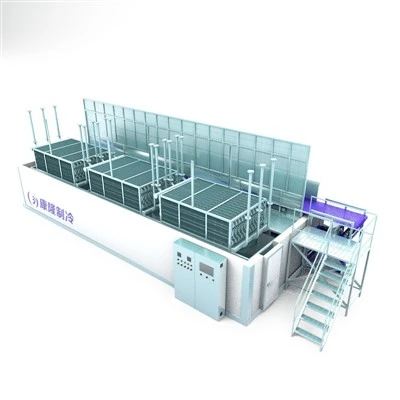
If you have any questions about convection, our box dryers, or what would work for your specific needs, just reach out to connect with our procurement team to discuss.
Blanching Machine References
- ASHRAE Handbook: HVAC Systems and Equipment, Chapter 12: Industrial Drying Processes
- Perry, R.H. & Green, D. (1997). Perry’s Chemical Engineers’ Handbook, 7th Edition, Section 12: Convective Heat Transfer
- Industrial Drying Technologies Journal, 2021: "Convection Efficiency in Small-Scale Industrial Box Dryers"
Shaoxing Kanglong Rerrigeration and Fanner Equipment Co., Ltd.
As one of the most professional box dryer manufacturers and suppliers in China, we’re featured by quality products and good service. Please rest assured to wholesale advanced box dryer made in China here from our factory. Also, custom service is available.
Address: No.1,Lide Road,Shangpu Industry
E-mail: info@iqffreezercn.com
WebSite: https://www.iqffreezercn.com/
