If you’re in the industrial game, you’ve probably heard the word “automation” thrown around more times than you can count. From assembly lines to water treatment plants, almost every piece of gear now has some kind of automated twist. But let’s get real—what about solenoid valves? I’m not just some random guy writing this; I’ve been supplying solenoid valves for over a decade, so I get the questions people actually ask. Every week, a engineer or plant manager hits me up with the same thing: “Can solenoid valves even be automated?” The short answer? Duh, they already are. But let’s break this down like we’re chatting over a coffee, no stuffy jargon, no fake corporate fluff. Solenoid Valve
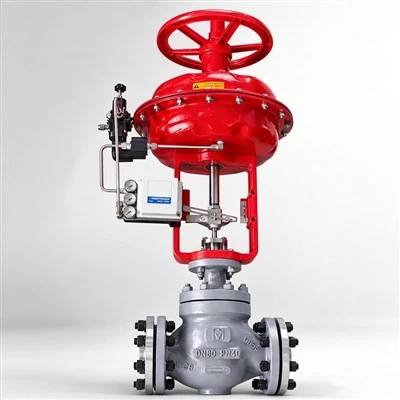
First, let’s start with what a solenoid valve actually does, just to make sure we’re on the same page. It’s that little (or not so little) device that controls fluid or gas flow—think water, air, oil, whatever. Instead of twisting a handle or flipping a manual switch, a solenoid uses a magnetic coil to push a plunger, which opens or closes the valve. That’s the basic build. Now, automation is basically hooking that device up to a system that tells it when to open or close, no human needed. So when you stack those two, you get a solenoid valve that runs itself, not just waits for someone to flip a switch.
I’ve seen this play out in every industry you can name. Take municipal water treatment plants, for example. A few years back, a city engineer reached out because their manual valves were costing them thousands in labor just to check and adjust flow rates 24/7. We automated their line of 2-inch general-purpose solenoid valves, hooked them up to their SCADA system (that’s the industrial control network everyone uses) and sensors that monitor water pressure and purity. Now, if the sensor detects a spike in contaminants, the system sends a signal to the valve—boom, it shuts off that section automatically, no one has to be on-site at 2 a.m. That’s automation, and it works way better than manual labor for repetitive, round-the-clock tasks.
Another big one: manufacturing, especially packaging lines. If you’ve ever bought a bag of chips or a soda can, that package probably got filled with an automated solenoid valve. Let’s say a soda line is cranking out 1,200 cans an hour. A manual valve would never keep up—someone would burn out switching handles back and forth in a minute. We supply 12V DC solenoid valves for these lines, wired to a programmable logic controller (PLC)—the brain of industrial automation. The PLC tells the valve when to open for 0.5 seconds to fill a can, then close before the next one comes down the line. It’s precise, it’s fast, and it doesn’t make mistakes (well, not usually—if the valve is a dud, that’s on us, but that’s why we test every one before it leaves our shop).
Wait, but some folks push back, right? They say, “Solenoid valves are just on/off—can they do more than basic automation?” Yeah, they can. A lot of people don’t know there are proportional solenoid valves, not just the standard on/off ones. Proportional valves let you adjust flow rate gradually, not just open or all the way shut. That’s perfect for things like heating and cooling systems in large buildings, or chemical mixing processes where getting the exact right ratio matters. I had a client in the pharmaceutical space a year ago—they needed to mix a specific concentration of cleaning solution for lab equipment. We supplied proportional solenoid valves hooked up to a flow meter; the system tells the valve to open 30% for one liquid and 70% for another, adjusts on the fly if the ratio is off. No human has to stand there and measure, no wasted materials. That’s not just “automation”—that’s precision automation, and it’s where a lot of folks miss the boat.
Now, let’s talk about the practical side of automating a solenoid valve, because it’s not just slapping a wire on it and calling it done. First, you need to match the right valve to the automation system. Not every solenoid valve works with every controller. For example, a 110V AC valve might not play nice with a low-voltage PLC that runs on 24V DC. That’s where we come in—we don’t just sell you a box; we ask about your setup, your power source, what you’re trying to automate. Do you need it to work in a wet environment? We’ve got IP65-rated valves that can handle being splashed with water, no problem. Do you need it in a food processing line, where washdowns are non-negotiable? We have corrosion-resistant, food-grade solenoid valves that pass all the safety checks. Skipping that step is how people end up with a valve that doesn’t work with their system, or breaks after a month because it’s not built for their environment.
Then there’s wiring and integration. A lot of clients think “automation” means plug-and-play, but it’s a little more involved than that. You’ve got to run the right wiring, make sure the voltage is consistent, set up the logic in the controller so the valve triggers at the right time. We don’t just dump valves on a pallet and ship them—we have folks on our team who help with that first step, even if it’s just a quick call to walk you through hooking up the wiring. Last quarter, a small shop was trying to automate their paint mixing line and couldn’t get the valve to sync with their sensor; our tech support hopped on a call, walked them through adjusting the signal settings, and they had it running an hour later. That’s the kind of support that matters, not just a price tag.
Another thing people forget: reliability. When you automate a system, you can’t afford a valve that quits mid-cycle. I’ve seen clients go cheap on solenoid valves, try to hook up a no-name part to their automated line, and end up with a shutdown that cost them $10,000 in lost production. We build our valves with heavy-duty coils that can handle millions of cycles, seals that don’t degrade in hot or cold temperatures, so they keep working 24/7, no breaks. That’s why our clients come back—they know we’re not selling a cheap part; we’re selling a part that won’t mess up their automation system.
Wait, but is there a limit to how much you can automate a solenoid valve? Let’s be honest, no. The technology keeps moving. We just started carrying smart solenoid valves, which have built-in sensors that tell you when they’re about to fail—no more guessing if a valve is stuck open or worn out. You can hook these up to your maintenance system, and it’ll send an alert like, “Valve #7 in line 3 needs to be replaced in 30 days” before it breaks and causes a shutdown. That’s predictive automation, and it’s the next big thing. A food processing plant we work with is testing these right now—they’re cutting their unplanned maintenance time by 40%, just by swapping out old valves for smart automated ones.
Now, let’s circle back to that original question: “Can solenoid valves be automated?” Let’s rephrase that for real life—“Should I automate my solenoid valves, and how do I do it without messing up?” Because a lot of people think automation is only for big companies, but it’s not. Even small operations, like a car repair shop with a parts washer, or a farm with an irrigation system, can automate solenoid valves and save time and money. No more staying late to turn on the sprinklers, no more wasting water because a manual valve was left open. That’s the biggest win here—automation with solenoid valves doesn’t have to be some fancy industrial thing; it can be simple, practical, and save you cash.
I know, I’m biased, but I’ve seen the difference. A client in Oregon runs a small water bottling facility; they switched to automated solenoid valves last year, cut their labor costs for line checks by 60%, and reduced their product waste by 15% because the valve fills bottles to the exact right level every time. That’s not a sales pitch—that’s a real result. Another client, a landscaping company, automated their drip irrigation system with low-cost automated solenoid valves; they don’t have to drive out to each property every morning to turn the water on, they just set a schedule on their phone, and the valves do the rest.
But here’s the thing: automation only works if you pick the right solenoid valve. Generic, off-the-shelf valves might work for a basic on/off task, but if you need precision, durability, or integration with your existing system, you need a valve built for automation. That’s where we come in. We’re not the big-box store that sells you a random valve—we’re the supplier that knows the ins and outs of automated systems, that can help you pick the right valve for your job, that stands behind it when something goes wrong.
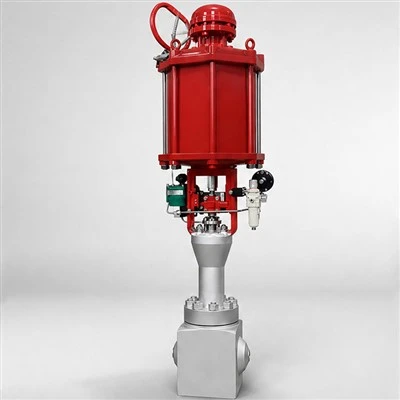
At the end of the day, solenoid valves were always meant to be automated. They’re the perfect bridge between a manual, human-controlled process and a smart, automated system. You don’t need a engineering degree to make it work, you just need the right valve and a little guidance. If you’re stuck trying to figure out how to automate your valves, or if you’re just not sure which type is right for your setup, reach out. We’ve helped hundreds of folks from small shops to large plants get their automation up and running smoothly. Don’t let guesswork or cheap parts mess up your process—let us hook you up with a solenoid valve that works for your automated system.
Solenoid Valve References
- Industrial Automation Handbook, International Society of Automation (ISA)
- Solenoid Valve Technology for Automated Fluid Control, Journal of Industrial Engineering, 2022
- Predictive Maintenance for Automated Valves, Manufacturing Engineering Association Report, 2023
Shandong Yuhong Valve Co., Ltd.
Shandong Yuhong Valve Co., Ltd. is one of the most professional solenoid valve manufacturers and suppliers in China. With abundant experience, we warmly welcome you to wholesale high quality solenoid valve at competitive price from our factory. Good service and punctual delivery are available.
Address: Intersection of Chuangye Avenue and Huanghe Road, Zhangdian District, Zibo City, Shandong Province
E-mail: info@yuhong-valve.com
WebSite: https://www.yh-controlvalve.com/
