When I first started as a hydraulic valve block supplier back in 2012, I’d sit in my workshop every Friday listening to fellow machinists grumble about why their quotes kept getting rejected. Half the time, it boiled down to one question no one wanted to ask out loud: why does one hydraulic valve block cost $120, and another identical-looking one right next to it cost $450? For years, I thought price differences came down to nothing more than brand markup or a seller trying to pad their margins. Then I spent three years working with my design engineers and fielding calls from construction, agricultural, and mining equipment operators who’d scrap whole machines because their valve blocks failed mid-job. That’s when I realized the price of a hydraulic valve block isn’t just a number—it’s a reflection of every small, often overlooked decision that goes into making it. Let me break down the factors that actually shape that price, from the raw metal in your block to the tolerances that keep your excavator or farm tractor running. Hydraulic Valve Block
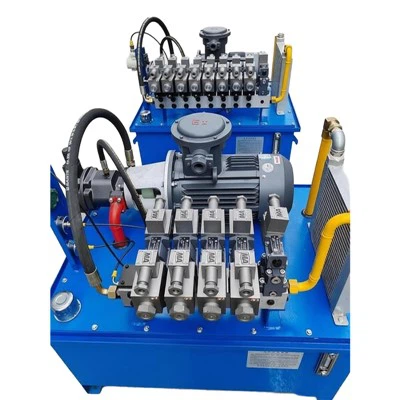
First and foremost, the base material. I can’t tell you how many times a customer will call and say, “I need a valve block for a 50-ton dump truck—just make it cheap.” Back in 2014, we tried that: we got a batch of cast iron from a supplier that cut corners on the graphite content, thinking it would save 15% on material costs. Three weeks later, a construction company called us screaming because 12 of their valve blocks had cracked after just 80 hours of operation, leaking hydraulic fluid all over a job site in the Texas heat. Cast iron is the most common base material for valve blocks, but not all cast iron is the same. Gray cast iron, the cheapest option, works fine for low-pressure applications like small lawn mowers or light forklifts, where pressure tops 2,000 PSI. But for high-pressure systems—think 5,000 PSI or higher, which you’ll find in mining drills, large excavators, and hydraulic presses—you need ductile cast iron (also called nodular cast iron) or even aluminum for applications where weight matters, like aerospace or mobile equipment. Ductile iron has graphite nodules that make it 3 times stronger than gray cast iron, and it costs about 40% more upfront. For customers who insist on cutting material costs, we’ll offer gray cast iron blocks for low-pressure jobs, but I always make sure to explain the tradeoff: a $80 gray cast iron block might need to be replaced twice as often, so over a year, it’s actually more expensive than a $120 ductile iron block that lasts 5 years. That’s a calculation too many buyers miss when they’re only looking at the initial price tag.
Next, machining tolerances. Let’s picture a hydraulic valve block: it’s a solid block of metal with dozens of drilled holes, passages, and ports that carry hydraulic fluid from the pump to the cylinders and motors. If one hole is even 0.001 inches wider than it should be, fluid leaks, and if a passage is misaligned by that same tiny amount, the valve won’t operate at full pressure. Precision machining isn’t cheap, but it’s what separates a block that works for a week from one that works for a decade. We work with a team of CNC machinists who specialize in hydraulic components, and we have three levels of tolerance we offer. The standard tolerance, which we use for small, low-volume blocks for light equipment, is ±0.002 inches. That’s good enough for applications where pressure doesn’t swing wildly, but for high-pressure industrial systems, we hold ±0.0005 inches. To put that in perspective, a human hair is about 0.003 inches wide—so we’re holding tolerances that are less than a sixth of a hair. The tooling and inspection equipment needed for that tight tolerance costs us about $10,000 more per machine than the standard setup, and that gets passed on to the customer. I recently had a customer who tried to source a valve block from an overseas supplier that advertised “low prices”; when the block arrived, they measured the port holes and found they were off by 0.004 inches. It leaked so bad that their excavator’s arm wouldn’t lift, and they ended up paying twice to replace it. That’s the risk of cutting corners on tolerances—even a tiny deviation can lead to huge downtime costs.
Then there’s the complexity of the design and the number of functions it needs to perform. A basic hydraulic valve block for a small forklift might have two valves, two ports, and a few simple passages. It’s quick to design, quick to machine, and takes a couple of hours of setup time. But a valve block for a modern construction excavator can have 8 to 12 valves, integrated pressure reliefs, flow control valves, and even integrated electronic sensors to monitor temperature and pressure. Those blocks require custom engineering, 3D modeling, and test runs to make sure every component works in sync. Last year, we worked on a custom block for a new line of farm tractors: it had 10 separate hydraulic circuits, including one for the front loader, one for the rear PTO, and one for the hitch system. The design took our engineering team 6 weeks to finalize, and machining required 12 different setups, compared to 2 setups for a basic block. The end price was three times higher than a standard block, but the farmer who bought it said it cut his maintenance time in half because he didn’t have to connect multiple separate valves. I always tell customers: if you can get a modular valve block that lets you add or remove functions later, it will save you money upfront. But if you need a custom block with integrated functions, the extra engineering and machining time will always reflect in the price.
Surface finish and coating are another factor that most buyers don’t think about until their valve block starts corroding. Hydraulic systems are exposed to all kinds of environments: salt on coastal construction sites, fertilizer dust on farms, and harsh chemicals in industrial facilities. A raw cast iron block will rust within a few weeks if it’s exposed to moisture, and rust particles can clog the tiny passages in the valve, leading to expensive repairs. We offer three types of finish: black oxide, zinc plating, and hard anodizing (for aluminum blocks). Black oxide is the cheapest, it’s a thin chemical coating that prevents surface rust and costs about 10% extra on top of the base block price. Zinc plating is thicker, better for harsh outdoor environments, and adds about 25% to the price. Hard anodizing, which we use for aerospace and offshore applications, is the most durable, resistant to corrosion and wear, and adds 50% or more to the cost. I once had a customer who bought a cheap, uncoated valve block for his dredge boat, which works in saltwater. Six months later, the block was so corroded that the ports were clogged, and he had to replace the entire hydraulic system. The extra cost of a zinc-plated block would have saved him thousands in downtime and repairs. That’s a cost that’s easy to overlook, but it’s one of the biggest reasons a valve block’s price varies so much.
Testing and compliance standards are non-negotiable for us, and they add to the price, but they’re worth every penny. A lot of small suppliers skip third-party testing to cut costs, but that’s a risk I won’t take. Every valve block we manufacture goes through two levels of testing: first, a pressure test where we run it at 125% of its maximum operating pressure to make sure it doesn’t leak or crack, and second, a functional test where we cycle the valves hundreds of times to check for smooth operation. For customers in industrialized countries, we also test for compliance with ISO 4413, the standard for hydraulic systems, and NFPA T3.6.7, which sets tolerance and performance requirements for hydraulic components. Third-party testing can cost us $50 to $200 per block, depending on its size and pressure rating, but it gives our customers peace of mind that their block will perform as advertised. Last year, a customer called us after a competing supplier sold him a valve block that failed a pressure test at half its rated pressure. That supplier didn’t offer any testing, so the customer lost a $10,000 batch of parts when the valve failed. For us, the extra cost of testing is just part of doing business—we’d rather charge a little more up front than have a customer deal with a catastrophic failure later.
Let’s not forget the volume of the order. Back when we first started, we only sold small batches of custom blocks, and every order required a setup fee for machining, programming, and inspection. But once a customer places a large order—say 50 or 100 blocks—we can spread the setup costs across more units, which lowers the price per block significantly. For example, a custom valve block for a small OEM might cost $220 per unit for a 10-unit order, but if they place a 100-unit order, that same block drops to $150 per unit, because we don’t have to re-program the CNC machine or reset the tooling as many times. We also offer bulk discounts for repeat customers, which is why most of our long-term clients are OEMs that place quarterly orders. I always tell first-time customers that if they can team up with another small business in their industry to place a joint order, they’ll get a much better price than ordering a small batch alone. That’s a trick I learned early on when a group of small construction companies pooled their orders to get a lower price, and it worked out for everyone.
Wait, there’s one more factor that’s hard to quantify, but it’s just as important: lead time and after-sales support. If a customer needs a valve block in 48 hours because their machine is down on a job site, we have to prioritize their order, shift our machinists’ schedules, and use faster shipping, which adds a 20% to 30% rush fee. On the flip side, if a customer orders 4 weeks in advance, we can schedule their block during our regular production runs, which keeps costs down. We also offer after-sales support, like helping customers troubleshoot a valve block that’s not working, or modifying a block for a new application. Some suppliers don’t offer any support after the sale, so if a customer has a problem, they’re on their own. For us, that support is part of our price—we have a team of hydraulic experts who are on call 24/7 to help our customers, and that’s a service that costs time and money, but it’s what keeps our customers coming back. Last month, a customer called us at 2 a.m. because their mining drill had a faulty valve block, and we got a replacement shipped to their site the next day, so they only lost half a shift instead of a full day. That extra service is worth the small premium we charge for rush orders.
At the end of the day, the price of a hydraulic valve block isn’t about overcharging—it’s about covering all the work that goes into making a component that will keep your equipment running, not just for a few months, but for years. I’ve seen too many customers cut corners on material, tolerances, or finish to save a few bucks, only to end up paying way more in downtime, repairs, and replacements. If you’re shopping for a hydraulic valve block, don’t just look at the bottom line. Ask about the material, the tolerances, the testing, and the lead time. If a quote seems too good to be true, it probably is—someone is skipping a critical step to offer that low price. We’ve been in this business for over a decade, and our goal isn’t just to sell valve blocks—it’s to help our customers avoid the headaches that come with faulty hydraulic components.
If you’re looking for a reliable hydraulic valve block, whether it’s a standard off-the-shelf part or a custom design for your specific equipment, we’re here to help. We can walk you through every factor that affects the price, and make sure you get a block that fits your needs and your budget, without cutting corners on quality. Reach out to our team to discuss your project and get a personalized quote.
Industrial Hydraulic Systems References:
- Hydraulic Institute. (2020). ANSI/HI 4.4-2020 Hydraulic Valve Blocks: Design and Performance Standards.
- Nelson, T. (2018). Cost Analysis of Hydraulic Component Manufacturing: Balancing Material, Machining, and Testing. Journal of Hydraulic Engineering, 144(6), 04018032.
- Occupational Safety and Health Administration (OSHA). (2021). Hydraulic System Safety: Preventing Failures and Downtime.
- American National Standards Institute (ANSI). (2019). NFPA T3.6.7-2019: Performance Requirements for Hydraulic Valve Blocks.
Wuhu Zhongye Fluid Equipment Co., Ltd.
We are one of the most experienced hydraulic valve block manufacturers and suppliers in China, specialized in providing high quality customized products. Please feel free to wholesale bulk durable hydraulic valve block in stock here from our factory. Contact us for quotation.
Address: No. 2, Hexing Road, Sanshan District, Wuhu City, Anhui Province
E-mail: zhongyehydro20@163.com
WebSite: https://www.zhongyehydro.com/
