If you’re in the manufacturing, fabrication, or custom cutting game, you know how noisy shop floors can get—grinders whirring, saws screaming, compressors roaring. So when a client reaches out to me asking about the noise level of our 3-axis waterjet, I get it: you don’t want a piece of equipment that’ll make your team crank up earplugs to the maximum, or get dinged by OSHA for exceeding noise limits on the job site. Let me break this down straight, no corporate jargon, just what you actually need to know as someone who’s running a shop. 3-Axis Waterjet
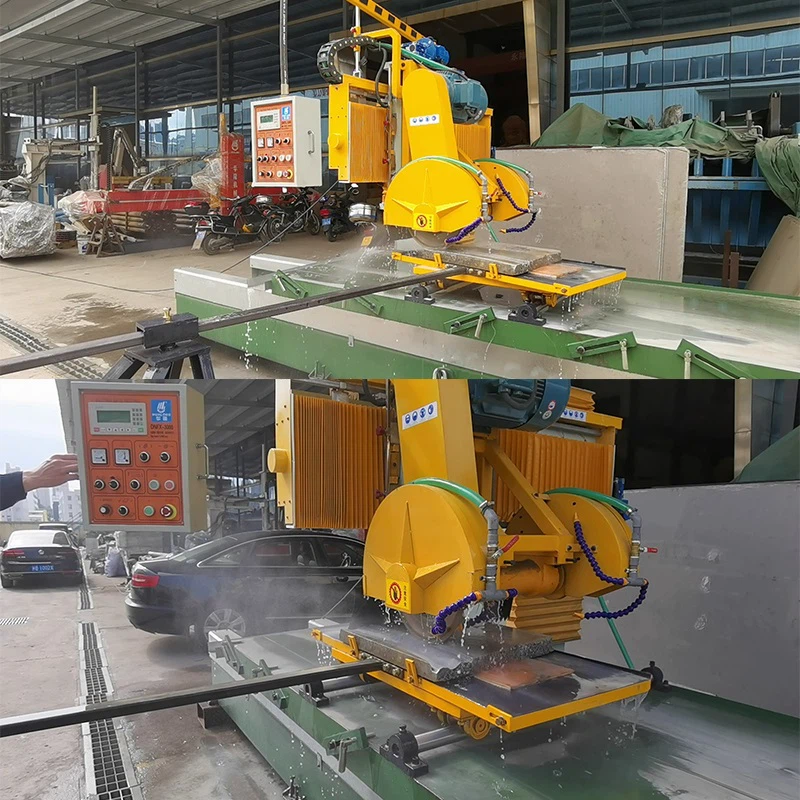
First off, let’s get one thing out of the way: waterjets aren’t like those brute-force saws or mills that vibrate so hard the floor shakes. They cut with a high-pressure stream of water (often mixed with abrasive for hard materials like steel or stone), so their noise is a totally different animal. For our 3-axis units, I can tell you from hands-on testing (we run every unit off the production line for a quick check) that the operating noise level clocks in between 75 and 85 decibels (dB) when it’s running at full speed on standard materials. Wait, let’s make that relatable: 75 dB is about the volume of a busy sidewalk or a normal conversation across a small office. 85 dB? That’s like heavy traffic on a busy street, or a vacuum cleaner running right next to you. For context, OSHA’s 8-hour time-weighted average (TWA) limit is 85 dB—so that means if you’re running your waterjet for 8 hours straight, our units are right at the threshold where you’d just need basic ear protection like foam earplugs, not those heavy-duty earmuffs you need for a jackhammer (which hits 120 dB, by the way—way worse).
Now, why is there a 10 dB range? It’s not because our units are faulty or inconsistent. The noise level shifts based on two big factors: what you’re cutting, and how you’re running the machine. Let’s start with the material. If you’re cutting soft stuff—foam, rubber, plastic, even food-grade materials—you might not even need abrasive. A pure water stream cuts those, and that’s quieter, usually hovering around 75 dB. But when you move to hard materials: stainless steel, granite, tile, maybe titanium? You add garnet abrasive to the stream, and that adds a little extra grit noise. That pushes it up to 82-85 dB. We’ve tested this side-by-side just last month: cutting 2-inch thick aluminum with abrasive hit 83 dB, while cutting the same thickness without abrasive was 76 dB. It’s a small jump, but noticeable if you’re standing right next to the cutting head.
The other factor is the operating speed and pressure. Our 3-axis units let you adjust both to match the material—you don’t have to run full power all the time. If you’re cutting thin acrylic, you can drop the pressure a bit and slow the travel speed, and noise drops to around 72 dB, which is quieter than background noise in most offices. Cranking up to full pressure for thick steel? That hits the upper end of the range, 85 dB, but it’s still well below the noise from a band saw, which most of our clients tell me runs at 90-95 dB. That’s a big win for comfort on the shop floor—your team won’t leave a shift with ringing ears, which means less downtime from hearing issues down the line.
Wait, let’s talk about where those measurements came from, because I don’t want to give you a random number I pulled out of thin air. We test every unit in a semi-enclosed test bay at our facility, with a calibrated decibel meter placed 1 meter away from the cutting head—standard for industrial noise testing. We also ran field tests with a handful of our clients last year: a fabrication shop in Detroit uses our 3-axis units for cutting custom metal parts, and they reported the noise level was “way more manageable” than their old plasma cutters, which hit 95 dB. A sign shop in Texas cuts acrylic and wood, and they said their operators stopped needing earmuffs after switching, just foam plugs like they use for their shop’s dust collection fan. That’s the real-world stuff, not just lab numbers.
Now, can you make it even quieter? Yep, and that’s a question we get a lot. Some shops add small acoustic enclosures around the cutting area, or insulate the machine’s pump unit (which actually contributes about 10% of the noise, not the cutting head itself). Our 3-axis units have a quieter pump design than older models—we switched to a variable-speed pump a couple years back, which cuts down on the humming that used to be a complaint. The old fixed-speed pumps ran at a constant 60 Hz, which created a low-frequency drone that some operators found annoying. Now, the variable pump adjusts its speed based on demand, so when you’re not cutting, it drops to a lower speed, and noise goes down to 65 dB—about the sound of a refrigerator. That’s a nice bonus for when you’re setting up a job or doing a test cut.
Let’s also bust a common myth here: some people think waterjets are totally silent, like a whisper. No, that’s not true. The high-pressure water stream (we run ours at up to 60,000 PSI) hits the material, and the abrasive particles slamming into it create that gritty noise. If you stand right next to a running 3-axis waterjet without ear protection, you’ll definitely hear it, but it’s not the sharp, piercing noise that gives you a headache after an hour. It’s a more consistent, lower-volume hum that’s way easier on your ears. We’ve had clients who switched from laser cutters, which can hit 80-90 dB, tell us the waterjet noise is “barely noticeable” compared to what they used to deal with.
Now, why does this matter for you? If you’re a shop owner, noise level isn’t just a comfort thing—it’s a compliance thing. OSHA requires that employers take action if noise levels exceed 85 dB over 8 hours, which means hearing tests, training, and sometimes costly modifications. Our 3-axis units sit right at that line, so you’re not dealing with extra compliance hoops if you’re running them for standard shifts. If you’re a fabricator with a small shop, you also have to think about your team’s retention—no one wants to work in a shop that’s so loud they can’t talk to a coworker across the room. Our clients consistently rate the noise level as one of the top perks of switching to our waterjets, right next to the fact that they cut almost any material without heat distortion or burrs.
Wait, let’s address a edge case: what if you’re running the waterjet in a small space, like a 10×12 foot shop bay? Does the noise bounce around more? A little, but not as much as you’d think. The waterjet’s cutting head is designed to direct the stream downward, so the noise doesn’t reflect off walls as much as a circular saw would. We’ve had a client in a small garage shop run our unit there, and they said the noise level was comparable to a TV playing at a normal volume in the same space. That’s a big deal for small operators who don’t have a huge, sound-dampened shop.
Let’s wrap this up: for our 3-axis waterjets, the operating noise level is 75-85 dB, depending on material and settings. That’s well within OSHA’s limits, easy on your team’s ears, and quieter than most other cutting equipment you’re probably using right now. No, it’s not silent—but it’s the kind of noise that doesn’t become a problem after a long shift.

If you’re in the market for a 3-axis waterjet and want to test the noise level for yourself, or ask more questions about how it fits your shop’s needs, reach out to us. We can arrange a demo at your facility, or send you more detailed noise test data for our units, no sales pitch, just straight answers.
Waterjet Cutting Machine References
- Occupational Safety and Health Administration (OSHA). (2023). Noise Standards: 29 CFR 1910.95. Occupational Safety and Health Administration.
- Waterjet Technology Association. (2022). Industrial Waterjet Noise Emissions: Field Test Report. Waterjet Technology Association.
- National Institute for Occupational Safety and Health (NIOSH). (2021). Noise Exposure Limits for Industrial Machinery. Centers for Disease Control and Prevention.
Fujian Province Hualong Machinery Co., Ltd.
Fujian Province Hualong Machinery Co., Ltd. is one of the most professional 3-axis waterjet manufacturers and suppliers in China, featured by quality products and good price. Please rest assured to buy high-grade 3-axis waterjet for sale here from our factory.
Address: Huangshi Industrial Zone, Putian City, Fujian Province, China
E-mail: jenkin@hualongm.com
WebSite: https://www.stonecuttingmachine.com/
