If you’ve ever held a neatly bundled set of wires inside a laptop, car dashboard, or medical device, you’ve probably never stopped to think about the work that went into turning loose, messy conductors into a reliable, precise wire harness. As a supplier of fully automatic wire harness machinery, I get asked this question all the time: how exactly does this equipment do the seemingly complex task of wire piercing? It’s not some black box magic—it’s a carefully calibrated, step-by-step process that takes what used to be a tedious, error-prone manual task and turns it into consistent, high-quality work that modern manufacturing demands. Fully Automatic Wire Harness Machinery

Let’s start with a quick reality check. Before fully automatic wire harness machinery existed, piercing wire terminals was done by hand. Workers would hold a stripped wire in one hand, a metal terminal in the other, and use a handheld tool to push the terminal’s metal tines through the wire’s conductor. It was slow, inconsistent, and prone to mistakes—like tines that didn’t pierce all the way, or wires that shifted mid-process, leading to loose connections that would fail once the product was in use. For high-volume industries like automotive, where a single car has over a hundred wire harnesses, manual piercing just wasn’t feasible. That’s where our machinery fills the gap, and understanding its piercing process is key to seeing why it’s transformed wire harness manufacturing.
First, let’s break down what “wire piercing” actually means in this context. It’s the act of creating a permanent, electrical connection between a stripped wire’s conductor and a crimp terminal (or sometimes a PCB contact) by forcing sharp metal tines on the terminal through the conductor’s strands, then deforming those tines to grip the wire tightly. The goal isn’t just to push the tines through—it’s to make a gas-tight, corrosion-resistant connection that won’t come loose, even after thousands of flex cycles or exposure to extreme temperatures. That’s why our machinery’s piercing process is so precise; even a 0.1mm off adjustment can mean the difference between a reliable connection and a costly failure.
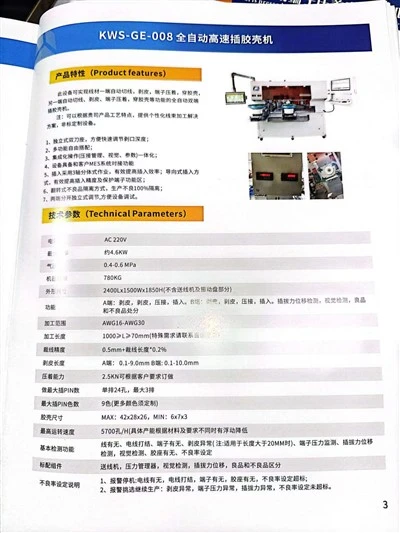
Now, let’s walk through the piercing process step by step, just like I’d explain it to a new customer visiting our workshop. It all starts with the wire preparation, because you can’t pierce a wire that’s not ready. Our machinery first feeds a spool of wire (the diameter, insulation type, and conductor material are all programmable) to a precision stripping station. This isn’t the old-fashioned blade stripping that can nick or leave uneven insulation ends—we use laser stripping or servo-controlled blade stripping, which removes insulation exactly where we need it, leaving a clean, 5-15mm stripped conductor (the length is adjustable based on terminal and application). Once stripped, the wire is held securely in a set of pneumatic grippers that lock it in place within 0.02mm of accuracy—no shifting, no slippage, not even when the piercing force is applied.
Next comes the terminal handling. Terminals come in all shapes and sizes—from tiny 0.3mm tines for consumer electronics to heavy-duty 5mm tines for industrial equipment. Our machinery uses a vibratory feeder bowl that sorts and aligns terminals, feeding them one by one into a terminal crimping and piercing head. The head is tooled for a specific terminal type, so it never mixes up parts—if a terminal is misaligned or damaged, a sensor rejects it immediately, no exceptions. That’s a key quality control step; I’ve seen too many manufacturers use cheap feeders that jam or feed bad terminals, leading to scrap and downtime. Our system catches those issues before they even reach the piercing station.
Now we get to the actual piercing step, and this is where the machinery’s engineering shines. Once the terminal is positioned directly above the stripped wire, the crimp-pierce head lowers at a precisely controlled speed and force. This isn’t a hard, sudden smash—it’s a gradual, monitored motion. First, the terminal’s guide sleeves lower to hold the sides of the stripped wire steady, preventing the wire from bending or shifting as the tines make contact. Then, the sharp tines begin to penetrate the conductor. The speed here is critical: if the head lowers too fast, the tines can skip over the conductor strands, leaving them only partially pierced. If it lowers too slow, friction between the tines and conductor can create excess heat, damaging the wire’s insulation or even breaking thin strands. Our servomotor-controlled heads adjust speed in real time based on feedback from force sensors—they can detect when the tines first make contact with the conductor, then adjust the rate to ensure clean penetration every time.
As the tines pierce the conductor strands, they don’t just go straight through—they deform slightly. The design of the terminal’s tines is engineered to bend inward as they pass through the conductor, creating a mechanical interlock. For solid-core wires, this means the tines pierce the core and spread slightly to grip it tightly. For stranded wires, which are more common in most harnesses, the tines pierce through multiple strands, cutting small notches in them to create a massive surface area for electrical connection. This is way more reliable than manual piercing, where a worker might only get two or three strands, but our machinery can get every tine into a dozen or more strands, depending on wire size.
Once the tines are fully engaged, the head moves to the crimping stage—wait, yes, piercing usually happens right alongside crimping, not as a separate step. A lot of people confuse the two, but piercing is the act of creating the initial electrical connection, and crimping is the final deformation that locks the terminal and wire together. Our machinery does both in a single stroke, which is why it’s so efficient. After piercing, the crimp jaws close around the terminal’s barrel, squeezing it around the wire’s conductor (and sometimes the insulation, depending on the terminal type) to create a second layer of security. The force for both piercing and crimping is programmable, so customers can adjust it for different wire and terminal combinations—for example, a thin 24-gauge wire needs far less force than a thick 10-gauge power wire.
But here’s the part I love most: our machinery doesn’t just do this blindly. It has a full suite of quality sensors that monitor every step of the piercing process, because even the best equipment needs checks. A load cell measures the force applied during piercing—if the force is too low, that means the tines didn’t pierce all the way, and the part is rejected. If the force is too high, that could mean the wire is damaged or the terminal is wrong, so the machine stops to alert an operator. There are also vision sensors that take a quick image of the pierced connection to check for things like bent tines, uneven crimps, or loose strands. This level of quality control is why our machinery is used in automotive and aerospace, where a single bad connection can lead to a safety hazard.
I should also mention the adjustments we make for different wire types, because piercing isn’t one-size-fits-all. For aluminum wires, which are softer than copper, we adjust the piercing speed to be slower to prevent the tines from breaking through too far and damaging the wire. For insulated wires with special coatings (like PTFE, which is common in medical devices), we use a different set of terminal tines that are designed to pierce through the coating on the wire’s conductor without leaving residual coating material that would interfere with the connection. For stranded wires, we can even adjust the tine depth to avoid over-piercing and breaking strands, which is a common issue with manual piercing that leads to high scrap rates.
A common question I get from potential customers is: how does this compare to soldering or manual crimping? The short answer is that piercing with our automatic machinery creates a more reliable connection in less time, with lower scrap. Soldering is prone to cold joints and can damage wire insulation if done incorrectly, while manual crimping and piercing are slow and inconsistent. Our piercing process creates a mechanical and electrical bond that’s resistant to vibration, temperature changes, and corrosion—qualities that are non-negotiable for industries like automotive, where wires are exposed to engine heat and road vibration for decades.
Let me give you a real example, because numbers help. A small automotive harness manufacturer I work with was manually piercing terminals for their door control harnesses, producing 500 harnesses a day with a scrap rate of 8%. After switching to our fully automatic machinery, their scrap rate dropped to 0.5%, and their production capacity went up to 2,000 harnesses a day. That’s not just a small improvement—that’s the difference between being able to fulfill a big contract and missing a deadline. The savings on scrap alone paid for the machinery in less than six months.
But it’s not just about speed and cost. Our machinery also reduces human error, which is a huge benefit in industries with strict regulatory requirements, like medical devices or aerospace. Those industries require documentation for every step of production, and our systems log every piercing force, crimp force, and inspection result for every single harness. That means when a customer gets a recall or needs to trace a faulty part, we can pull the exact data from the machinery to show exactly how the harness was made. It’s not just good manufacturing—it’s good quality assurance.
Now, I know some small manufacturers might look at this process and think, “That’s way too complicated for my operation.” But that’s the thing about modern fully automatic wire harness machinery: it’s designed to be adjustable and easy to program, even for people who don’t have a background in electrical engineering. Our machines have a user-friendly touchscreen interface where you can input wire type, terminal type, and production volume with a few taps. It takes less than five minutes to switch between producing a laptop harness and a heavy-duty industrial harness, which means small, flexible manufacturers can compete with large-scale operations without needing a team of engineers.
Of course, no process is perfect, and there are still challenges we work to address. For example, very fine wire (smaller than 30 gauge) can be tricky to pierce, because the tines can easily bend or break the thin conductor. That’s why we’ve developed specialized terminal tooling for fine gauge wires, with sharper, thinner tines that pierce the conductor without damaging it. We also work with our customers to test their specific wire and terminal combinations before they purchase a machine, so we can adjust the machinery to meet their exact needs. That personalized support is part of what makes us different from big, impersonal equipment suppliers.
At the end of the day, the piercing process for fully automatic wire harness machinery is all about balance: balance between precision and speed, between force and finesse, between automation and quality control. It’s not about replacing human workers—it’s about giving them tools that let them do their jobs better, faster, and with less waste. A good wire harness is the backbone of almost every electronic product we use, and the machinery that makes those harnesses is the unsung hero of modern manufacturing.
If you’re a manufacturer looking to upgrade your wire harness production, or if you have questions about how fully automatic piercing can improve your quality, reduce scrap, and increase capacity, I’d encourage you to reach out for a conversation. Every operation is different, and we work with each customer to tailor our machinery to their specific needs—whether you’re a small shop producing custom harnesses or a large facility making high-volume automotive parts. We’re not just selling equipment; we’re helping you build better, more reliable wire harnesses for your products.
Automatic Wire Twisting and Tinning Machine References
- TWI. (2021). Advances in Wire Termination Technology for Electronic Assembly. TWI Ltd.
- Society of Automotive Engineers (SAE). (2020). Standard for Wire Harness Connection Reliability in Automotive Applications. SAE International.
- Industrial Robotics Association (IRA). (2022). Fully Automatic Wire Processing Machinery: Performance and Quality Metrics. IRA.
- International Electrotechnical Commission (IEC). (2019). IEC 60352-2: Connectors for Electrical and Electronic Equipment – Part 2: Insulation Displacement Connectors. IEC.
Suzhou Keweisi Electronic Technology Co., Ltd.
Address: Yunchuang road No.221, block C, Haibo tech park,Suzhou, P.R China.
E-mail: wenwei200982@126.com
WebSite: https://www.szkowas.com/
