If you’ve ever dabbled in high-heat industrial processes—think furnace operations, metal melting, or even aerospace component testing—you’ve probably worked with graphite rods. They’re workhorses for a reason: excellent thermal conductivity, low thermal expansion, and resistance to most corrosive environments. But a question I get all the time, especially from new clients or folks testing out a setup for the first time, is “What’s the absolute max temp a graphite rod can take?” It’s not a one-size-fits-all answer, and as someone who’s been supplying graphite rods for over a decade, I’ve seen too many projects go off the rails because someone guessed wrong on this number. Let’s break it down, no jargon overload, just real talk from a supplier who’s stood behind their product through countless high-temp runs. Graphite Rod
First off, let’s get the base case out of the way. In a perfect, inert environment—no oxygen, no reactive gases, just a static atmosphere like argon or nitrogen—graphite can hang in there up to around 3,000°C (that’s 5,432°F, for the Americans reading this). That’s basically the melting point of most common metals; steel melts at ~1,538°C, copper at ~1,085°C, so a graphite rod at that temp is still solid, no warping, no breaking down. But here’s the catch: almost no industrial process operates in a perfect inert space 24/7. Even small leaks, or trace amounts of air in a furnace, change everything fast. Graphite reacts with oxygen at temps as low as 400°C, but that reaction ramps up exponentially above 600°C. At 1,000°C, even a tiny bit of oxygen will start eroding the rod, eating away at its structure until it’s brittle and fails—sometimes in just a few hours, sometimes in a day, depending on oxygen levels.
Wait, but what if it’s not air? What if you’re working with something reactive, like hydrogen or methane? That changes things too. In reducing atmospheres, graphite is actually pretty stable at high temps, but if you’re using it in something like a vacuum, that’s a whole other factor. Wait, no—vacuum is actually fine too, right? Yeah, in a high vacuum (10^-5 torr or lower), graphite can go past 3,000°C without issue, because there’s nothing to react with. But if the vacuum is worse—higher pressure—then you might get sublimation, where the solid graphite turns straight to gas without melting. At ~3,600°C, graphite’s sublimation point, even in a vacuum that’s not perfect, it starts to break down slowly. So that’s another upper limit to watch for, depending on your vacuum level.
Now, not all graphite rods are the same. I can’t stress this enough—you wouldn’t use a 2-dollar plastic fork for a commercial kitchen, and the same goes for graphite rods. The quality, purity, and manufacturing process make a huge difference in how much heat they can take. For example, our high-purity isostatic graphite rods are made by pressing graphite powder under extreme pressure, heating it to nearly 3,000°C to remove impurities like ash and metal oxides. Those rods can handle closer to that 3,000°C inert temp, because there’s nothing inside them to melt or react at lower temps. On the flip side, lower-grade extruded graphite rods, which are cheaper for low-heat projects, have more impurities. Those impurities will start to break down at temps below 2,000°C, so their max temp is more like 1,800-2,000°C, and even that’s pushing it. I’ve had a customer try to use a cheap extruded rod in a furnace running at 2,200°C, and it crumbled in 20 minutes—total waste of money. They could’ve saved themselves the hassle by grabbing a higher-purity rod from the start.
Another thing: thermal cycling. A lot of people test a graphite rod at a steady high temp, but what if you’re heating it up and cooling it down over and over? Like, a furnace that runs 8 hours a day, cools to room temp, then heats back up again. Graphite has low thermal expansion, so it’s better than most materials for cycling, but every time you heat and cool, it puts stress on the rod’s structure. If you’re doing multiple cycles, you might need to drop your max temp a bit. For example, if you’re doing 100+ cycles, a high-purity rod that can do 3,000°C steady might only handle 2,700°C reliably, because repeated expansion and contraction can cause microcracks that get worse over time. That’s not a flaw in the product—it’s just how materials work. I always tell clients to factor in their operating cycle, not just peak temp, when picking a rod.
Let’s talk about common use cases to make this concrete. If you’re melting aluminum, which tops out at ~700°C, you can use a basic extruded graphite rod, no problem. It’ll last months. If you’re melting steel, you need something higher purity, max temp around 1,800°C, because even at 1,500°C, you want the rod to hold up. If you’re doing aerospace testing, like testing a heat shield material in a 2,800°C furnace, you need a premium isostatic rod, fully inert atmosphere, or you’ll be replacing it every run. I even had a client working on a plasma cutting project, where the temp hits ~2,500°C—they used our high-purity rods, and they’ve been running for 6 months without a failure. That’s the kind of match that works.
Now, what happens if you go over the max temp? It’s not just “it melts.” In air, if you push graphite past ~1,000°C with oxygen present, it will oxidize, forming carbon monoxide and carbon dioxide, so the rod will shrink, get pitted, and become brittle. Eventually, it might even burn through entirely— I’ve seen a small graphite rod turn to ash in a furnace that sprung a small air leak at 1,200°C, that was wild. In vacuum, if you go past 3,600°C, it sublimates, so the rod will slowly thin out over time. That’s a slower failure, but still not something you want—you don’t want your heater element or support structure turning to gas mid-process.
Wait, are there any myths I should clear up? A lot of people think graphite can take unlimited heat, but no—even at 3,500°C, it starts to react with most common refractories, like alumina, so you can’t just put a graphite rod next to an alumina brick at that temp. The reaction will cause both materials to break down. Another myth: all graphite rods are the same. We get calls all the time from people who bought rods from a random online supplier, and they’re surprised when they fail. We test every batch of our rods to confirm their purity and heat resistance, so you know what you’re getting, not a cheap knockoff.
So, how do you figure out the right max temp for your project? Let’s walk through the steps, which I use with every client who reaches out. First, confirm your atmosphere: is it inert (argon, nitrogen), reducing (hydrogen), vacuum, or air? If it’s air, max temp drops way down, to around 900-1,000°C, no exceptions. If it’s inert or vacuum, you can go higher, but still check the rod’s purity. Second, what’s your operating temp? Don’t pick a rod that’s rated exactly for your peak temp—add a 10-15% buffer. Furnaces can have hot spots, temp swings, so a buffer keeps you from pushing the rod too hard. Third, are you doing thermal cycling? If yes, knock 10-15% off that max temp to account for stress. Fourth, what’s your project budget? High-purity is more expensive, but it lasts way longer than cheap rods, so it’s almost always a better value in the long run.
I’ve learned this stuff the hard way, too. Early on, when I first started supplying rods, I sold a batch of low-purity rods to a startup doing a 2,200°C vacuum furnace run. They followed the number they found on a random forum, used the cheap rods, and they failed halfway through their first test. They were furious, and rightfully so—they lost a day of production, had to remelt their test material. We ended up replacing their rods for free, and that’s when I realized how important it is to be honest about the limits, not just sell someone the cheapest product. Now, I always ask clients detailed questions about their setup, not just “what temp do you need?” because that’s how you avoid mistakes.
Another thing to consider: impurities in your process. If you’re working with sulfur, silicon, or other reactive elements, those can react with graphite at lower temps than oxygen. For example, silicon starts reacting with graphite at ~1,400°C, so if your process has silicon fumes, your max temp is going to be lower, no matter the atmosphere. I had a glass manufacturing client a few years back—glass has a lot of silica, so their graphite rods only lasted at ~1,200°C, even though their furnace ran at 1,500°C. That’s a case where the material being processed changes the rod’s max temp, not just the furnace’s internal temp.
So, to wrap this up, the short answer is: in an ideal inert or vacuum environment, a high-quality graphite rod can withstand up to ~3,000°C, but in real industrial conditions, that number drops a lot, depending on atmosphere, rod quality, thermal cycling, and process impurities. The worst case, in air, it’s ~1,000°C max, no exceptions. The key is matching your rod to your specific setup, not just grabbing a number off the internet.
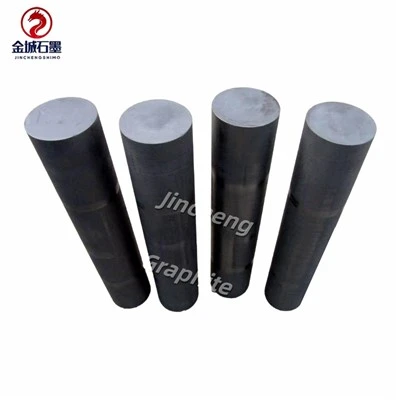
If you’re gearing up for a project and you’re not sure which rod is right, or you’ve had a rod fail on you and want to avoid that next time, reach out. I’ve helped hundreds of clients pick the right graphite rods for their high-heat processes, from small lab setups to large industrial furnaces. We can walk through your atmosphere, temp, cycle, and process to find a rod that fits your needs, no guesswork, no wasted money. Just let me know what you’re working on, and we can connect to work out the details.
Graphite Block References
- Society for Mining, Metallurgy & Exploration. (2015). Graphite Properties and Applications in High-Temperature Environments.
- United States Department of Energy. (2018). High-Temperature Material Handbook: Graphite for Industrial Furnaces.
- Carbon Graphite Manufacturers Association. (2021). Thermal Stability of Isostatic vs Extruded Graphite Rods.
- NASA Technical Reports Server. (2019). Sublimation Behavior of Graphite in High Vacuum Environments.
Huixian Jincheng Abrasive Mold Factory
As one of the most professional graphite rod manufacturers and suppliers in China, we have world-leading production equipment and strong manufacturing capabilities. Please rest assured to buy durable graphite rod for sale here from our factory. Quality products and reasonable price are available.
Address: Mengzhuang Town, Huixian City, Henan Province
E-mail: graphite.jc@gmail.com
WebSite: https://www.graphite-jc.com/
