If you’ve ever spent time optimizing industrial ventilation systems in warehouses, manufacturing plants, or large commercial spaces, you know that pairing the right components is everything. As a supplier of industrial fan regulators, I get dozens of questions every week from plant managers, electrical contractors, and maintenance teams asking a variation of the same thing: “Can my existing fan motor work with a new regulator? Or will I run into compatibility issues down the line?” It’s a valid concern—mismatched parts don’t just lead to frustrating downtime; they can shorten motor lifespan, spike energy bills, or even create safety hazards on the job site. Industrial Fan Regulator
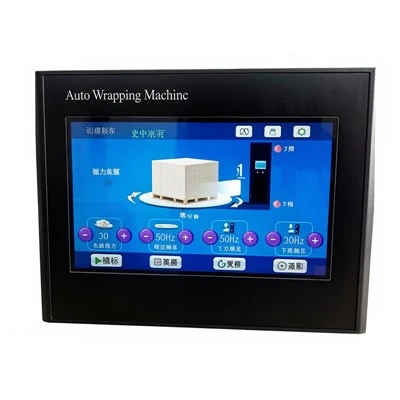
Let’s break down exactly where compatibility problems between industrial fan regulators and motors come from, how to spot them before installation, and what we do as a supplier to prevent these issues for our customers.
First, it’s important to understand that not all industrial fans and motors are the same. Unlike small home ceiling fans that rely on universal voltage regulators, industrial applications run on a wide range of AC power types: single-phase, three-phase, variable frequency drives (VFDs), and even older capacitor-start motors common in heavy machinery. The regulator you choose has to match both the power rating of your motor and its internal design, otherwise you’ll run into problems.
The most common compatibility issue we see is voltage and amperage mismatch. Industrial fan motors are rated for specific voltage ranges—most 3-phase industrial motors run on 208V, 240V, or 480V, while single-phase motors for smaller extraction fans often run on 120V or 277V. Regulators are built to handle a maximum continuous amperage draw, and if your regulator is rated for, say, 5 amps but your motor pulls 7 amps at startup, you’re not just going to get weak airflow—you’ll risk overheating the regulator windings. I remember one customer a couple years back, a maintenance manager at a steel processing plant, tried to swap a old rheostat regulator he’d used for a smaller vent fan onto a 15-horsepower cooling motor. The rheostat’s max amperage was only 6 amps, and within an hour of running at medium speed, the regulator burned out, took half the motor’s control circuit with it, and shut down a section of the plant’s cooling system for 12 hours. That’s the kind of downtime nobody wants, and it all came down to a simple mismatch in amperage and power rating.
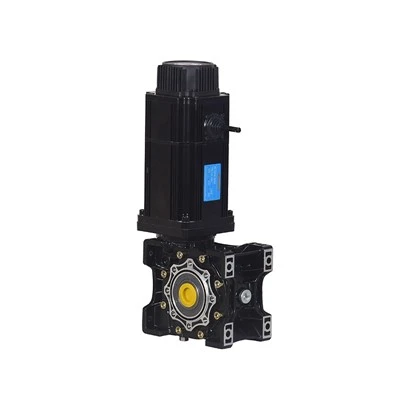
Next up is motor type compatibility. This is where things get a little more technical, and where a lot of people miss the mark when picking a regulator. For a long time, the go-to regulator for industrial fans was the autotransformer or tapped regulator, which works by switching between different voltage taps on a transformer to adjust fan speed. That works great for constant-speed induction motors, the most common type in industrial use. But if you’re using a newer electronically commutated motor (ECM) or a VFD-controlled motor, a standard autotransformer regulator won’t work at all. ECM motors rely on precise pulse-width modulation (PWM) signals to adjust speed, and standard regulators will send inconsistent voltage that can throw off the motor’s control board, leading to erratic speed or even total motor failure. VFDs, meanwhile, are designed to adjust frequency as well as voltage, so a regulator that only adjusts voltage won’t give you the efficiency benefits a VFD motor is made for. We had another customer, a food processing plant, who installed new ECM exhaust fans and tried to use old tapped regulators he had in storage. Within two weeks, three of the five motors had error codes, and the manufacturer told him the regulators were causing the problem. We ended up replacing those regulators with PWM-compatible models, and he’s had zero issues in the two years since.
Another less talked about but extremely important compatibility factor is regulation method and efficiency. Older rheostat-style regulators, which work by dissipating excess power as heat, are sometimes used for small motors, but they’re terrible for compatibility with modern high-efficiency motors. They waste up to 30% of the energy you put into them as heat, which not only raises your utility bills but also creates heat buildup near the motor. If your motor is mounted in a dusty, high-temperature area like a foundry or a chemical plant, that extra heat from a rheostat can add up to reduced motor lifespan. Modern industrial regulators, especially the solid-state ones we supply, use phase-angle control or PWM, which are way more efficient and work with almost any motor type as long as you match the electrical specs. But even here, there’s a catch: phase-angle control can introduce harmonic distortion in the power line, which can interfere with sensitive equipment nearby, like PLCs (programmable logic controllers) in manufacturing lines. That’s something we always warn customers about—if your plant has a lot of electronic controls, we’ll recommend a line reactor or shielded regulator to reduce harmonic interference.
So how do you avoid these compatibility problems in the first place? From our experience, it boils down to three key steps before you even order a regulator. First, get the full specs of your motor: voltage rating, amperage draw (both full load and startup), motor type (induction, ECM, VFD, etc.), and any special requirements like harmonic limits. Don’t just guess based on the fan’s size—we’ve seen too many people assume a 10-horsepower fan needs a specific regulator, only to find out the motor is 3-phase while the regulator is made for single-phase. Second, check the regulator’s own specs against that motor data. Make sure the regulator’s voltage range matches your motor’s, its amperage rating is at least 120% of the motor’s full-load amperage (to account for startup spikes, which can be 2-3 times the full-load current), and it’s designed for your motor’s regulation method. Third, if you’re mixing new and old equipment, talk to someone who knows industrial regulators and motors—don’t rely on generic online guides, because industrial settings have a lot of variables.
As a supplier, we don’t just sell regulators and ship them out. We’ve built our business on making sure customers don’t run into compatibility issues, which is why we do a few things differently. First, we provide a free motor compatibility check for every customer. You send us your motor’s specs, or even a photo of the nameplate, and we’ll walk you through what regulator will work, what to avoid, and even flag any potential issues with your existing system. Second, all our regulators are categorized by motor type—so if you have an ECM motor, you can filter our inventory just for ECM-compatible regulators, no guessing. Third, we offer 24/7 technical support for installation and troubleshooting, because we know even the best-installed systems can have questions pop up, especially in industrial settings where downtime costs thousands of dollars an hour.
Of course, no system is perfect. There are edge cases where even a matched regulator and motor can have issues. For example, if your motor is damaged or has a worn bearing, a good regulator won’t fix the noise or vibration that might make you think the two are incompatible. Or if your plant’s power supply has inconsistent voltage, that can cause a regulator to malfunction even if it’s paired with the right motor. That’s why we always tell customers to treat the regulator as part of a whole system, not just a separate component. A good system check should include testing the power supply, inspecting the motor for wear, and making sure all wiring is properly sized for the amperage.
At the end of the day, compatibility problems between industrial fan regulators and motors are almost always avoidable with a little due diligence. The biggest mistake we see is people grabbing the cheapest regulator they can find for their fan, without checking specs, and ending up paying for repairs, replacement parts, and downtime that’s way more than they saved upfront. As someone who’s worked in this industry for over a decade, I’ve seen first-hand how a wrong pairing can derail operations, but I’ve also seen how the right pair can cut energy costs by 20-30% and extend motor lifespan by years.
If you’re not sure about the compatibility between your existing motor and regulator, or you’re upgrading your ventilation system and need to pick the right parts, feel free to reach out to our team to discuss your requirements.
Stretch Wrapper Control System References
- Miller, J. (2020). Industrial Motor and Control Compatibility: A Practical Guide. Industrial Press.
- National Electrical Manufacturers Association (NEMA). (2019). Standards for Adjustable Speed Drives and Fan Motor Compatibility. NEMA Publications.
- Energy Star. (2021). Best Practices for Industrial Ventilation System Efficiency and Component Matching. U.S. Environmental Protection Agency.
- Patel, R. (2018). Harmonic Distortion in Industrial Power Systems: Impacts on Regulator and Motor Performance. IEEE Transactions on Industrial Electronics.
Wuxi Rstar Electric Co., Ltd.
With abundant experience, we are one of the most professional industrial fan regulator manufacturers and suppliers in China. Welcome to wholesale bulk customized industrial fan regulator at competitive price from our factory. If you have any enquiry about quotation, please feel free to email us.
Address: 9th Floor, Building 9, Shengfeng Lianzhi Valley, No.67 Zhujiang Road, Xinwu District, Wuxi City
E-mail: rstarbz@163.com
WebSite: https://www.rstar-wx.com/
