Hey there, thanks for swinging by! If you’re here because your flame retardant gloves feel way too big right now – maybe you ordered a bulk pack that’s slightly off, or a pair you grabbed for a shift ended up way roomier than expected – I get it. As a supplier of these gloves, I’ve fielded this question a lot from folks on job sites, warehouse teams, even folks using them for home projects (don’t worry, we’re all about that practical use too). The thing is, shrinking flame retardant gloves isn’t the same as throwing your regular cotton work gloves in the dryer on high heat. Mess this up, and you might just kill the flame retardant protection – which is basically the whole point. So let’s break this down the right way, no fluff, no sketchy hacks that’ll leave you with gloves that fit like a second skin but can’t do their only job. Flame Retardant Gloves

First, let’s get one thing straight: flame retardant (FR) gloves aren’t made of your average fabric. Most of our stock – and a lot of industry-standard FR gloves – use materials like Kevlar, Nomex, modacrylic blends, or even treated leather with FR coatings. Each of these reacts differently to heat and moisture, so your go-to “boil them and blast in the dryer” trick might work for one type and ruin another. Before you even touch any method, check the care tag on your gloves. I know, I know – half the time those tags get torn off on the job site, but if yours still has it, that’s your cheat sheet. Skip anything that says “dry clean only” or “do not expose to high heat” – those are non-negotiable.
Now, let’s talk about when you actually need to shrink ‘em. If you’re a worker who’s grabbing gloves for a 10-hour shift, oversized gloves are a safety hazard. Think about it: you’re handling hot metal, sharp tools, or electrical wires, and your fingers slip because the gloves slide around. That’s how you get a burn or a cut. Or maybe you bought a pair for personal use – like for a backyard fire pit or welding as a hobby – and they’re so big you can’t grip a trowel or a welding rod properly. No judgment, we’ve all gotten excited over a deal and ended up with the wrong size. The goal here is a snug fit, not so tight you can’t move your fingers – you still need dexterity, just no extra room for slip-ups.
Let’s start with the most common, safest method for fabric-based FR gloves (the ones made of Nomex, modacrylic, or Kevlar blends). This is the one I recommend for 80% of the gloves we supply, because it’s low-risk if you do it right. Here’s the step-by-step, no surprises:
-
Prep the gloves first. Don’t just throw ‘em in the water. Take a damp cloth and wipe off any surface grime – oil, dust, whatever – because that can affect how the material shrinks and might even mess with the FR coating. If they’re super dirty, hand-wash them with a mild detergent (no bleach, no fabric softener – those break down FR properties fast) and rinse thoroughly. Lay them flat to air dry a little first, so they’re damp all over but not dripping wet.
-
Heat the water just right. You don’t need boiling water – that’s too hot, it can cause the fabric to warp or even melt in spots. Fill a pot (or a bucket, if your gloves are big) with water that’s between 140°F and 160°F. How to check that? If you stick your hand in, it’s hot enough to make you pull back a little immediately, but not so hot you can only hold it for a second. That’s the sweet spot.
-
Submerge and hold for 5-10 minutes. Drop the gloves in, make sure they’re fully covered. Don’t leave them in longer than that – overheating the fabric can break down the FR chemicals embedded in it, which is the last thing we want. While they’re soaking, gently squeeze them a few times to make sure the water gets into all the nooks (wrist cuffs, finger tips).
-
Remove and shape immediately. Pull the gloves out with tongs (no bare hands, that water’s hot!) and lay them on a clean, flat surface. This is the make-or-break step. Stretch them gently to the fit you want – pull the fingers out to the length you need, cinch the wrist cuff a little if it’s too loose. Once they’re shaped the way you want, prop them up or drape them over something so they dry in that exact shape. Don’t just leave them crumpled – they’ll shrink unevenly and end up lopsided.
-
Dry with low heat if you want a little extra shrink. If after air drying they’re still a touch too big, you can pop them in the dryer on the lowest heat setting – no high heat, no permanent press. Check them every 5 minutes because even low heat can overdo it. For most fabric FR gloves, this will give you just enough extra snugness without ruining the protection.
Now, what about leather FR gloves? Those are a different ballgame. Leather FR gloves are usually treated with a fire-retardant coating, so you can’t use hot water on ‘em – it’ll strip that coating right off, and the leather might shrink so much it becomes unwearable. For leather FR gloves, the method is way gentler:
-
Dampen lightly with lukewarm water. Mix a little mild soap (like dish soap, nothing harsh) in a bucket of lukewarm water, then wring out a clean cloth so it’s just damp, not wet. Wipe the entire surface of the gloves, focusing on the areas that are too loose – the back of the hand, the wrist, the finger gaps.
-
Shape and air dry slowly. Once they’re damp, shape them the way you want (pull the fingers, cinch the wrist) and let them air dry in a cool, shady spot – no direct sunlight, no heaters. The gradual drying will make the leather shrink just enough to fit snugly, without damaging the FR coating. If you speed it up with heat, the leather will crack, and the FR protection is gone. I’ve seen this happen way too many times – a guy tried to dry his welding FR gloves on a space heater, and by the end of the shift, the coating flaked off, and he got a small burn. Don’t be that guy.
Wait, are there any methods you should never use? Let’s get that out of the way first, so you don’t mess up your gloves. First, no high-heat dry cycles (like tumble dry on high, or even hair dryers on hot – that’s too localized, it melts the fabric and ruins FR). Second, no boiling water – like I said, that breaks down FR chemicals. Third, no bleach, fabric softeners, or harsh detergents – those coat the fabric and block the FR properties, so if you get a spark, the glove won’t protect you. Fourth, don’t soak FR gloves for more than 10 minutes, no matter the material – overexposure to heat or moisture weakens the FR treatment over time.
Also, let’s talk about how much you can expect to shrink. It’s not like your old cotton hoodies that shrink two sizes. For fabric FR gloves, you’ll usually get 10-15% shrink – that’s enough to take a large to a medium, or a medium to a small. For leather, it’s a little less, like 5-10%, because leather’s more delicate. If your gloves are more than a full size too big, this might not work – you’re better off exchanging them for the right size. I always tell folks, it’s not worth risking safety for a pair that’s slightly too big, but if it’s just a little loose, these methods work great.
Now, a few pro tips from someone who’s been in this game for years (literally, I’ve tested these methods on all sorts of FR gloves to make sure they work):
- Test on an old pair first, if you have ‘em. If you’ve got a beat-up FR glove that’s too far gone, test the shrinking method on that to see how the material reacts. That way, you don’t ruin a good pair.
- If you’re working with Kevlar gloves, they’re pretty tough, but still skip high heat. Kevlar doesn’t melt easily, but the FR coating on it can break down, so stick to the 140-160°F water method.
- After you shrink ‘em, let them sit for a day or two before using them. Sometimes the material settles a little more after drying, so if they feel just right right after drying, they might get even snugger once they’re broken in.
- Don’t wash them too often after shrinking. FR gloves only need washing when they’re dirty – frequent washing can wear down the FR coating over time. If they’re just dusty, a quick wipe-down with a damp cloth is enough.
I know how frustrating it is when you get FR gloves and they don’t fit right. Whether you’re a contractor outfitting a whole crew, a hobbyist who grabbed a bulk deal online, or someone who just ordered the wrong size for a home project, we get it. Safety’s non-negotiable, and a proper fit is part of that. If you’ve tried these methods and still aren’t happy with the fit, or you need help figuring out what size works best for your FR gloves, feel free to reach out. We’re here to help with sizing, care tips, and picking the right gloves for your needs – no pressure, just honest advice from someone who’s been supplying FR gloves for years.
Wait, quick recap to make sure you don’t miss anything: Fabric FR gloves (Nomex, modacrylic, Kevlar) = hot water soak (140-160°F), 5-10 mins, shape while damp, low heat dry if needed. Leather FR gloves = light dampening with lukewarm water, shape slowly, air dry cool. Never use high heat, boiling water, or harsh chemicals. If they’re too big by more than one size, exchange ‘em.
Oh, and one more thing: I’ve had customers tell me that after using this method, their gloves fit better than the original size sometimes. Because when you first get FR gloves, the material’s a little stiff, so you might think they’re too big, but after shrinking and breaking in, they’re just right. But don’t count on that – measure your hand before ordering to avoid the hassle, but if you’re stuck with a pair that’s slightly off, these steps work.
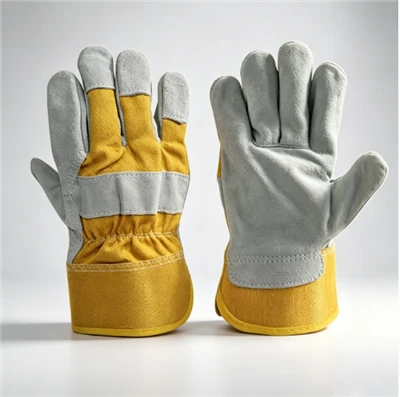
Whatever you do, don’t cut corners on the safety part. The whole point of FR gloves is to stop burns, so ruining that protection with a bad shrinking hack is never worth it. We’d rather you have a pair that fits and works than a pair that looks good but can’t do its job. If you need help picking the right size, or have questions about care, just reach out. We’re here for you.
Insulating Gloves REFERENCES
- National Institute for Occupational Safety and Health (NIOSH). "Flame-Resistant Clothing and Gloves: Care and Maintenance Guidelines." 2022.
- ASTM International. "Standard Specification for Flame-Resistant Gloves for Occupational Use." ASTM D6413-21, 2021.
- DuPont. "Care and Handling of Nomex and Kevlar Flame-Resistant Apparel." Technical Bulletin, 2020.
- Leather Industries of America. "Best Practices for Treating FR-Coated Leather Work Gloves." Industry Report, 2021.
Shanghai Haokuo Security Technology Co., Ltd.
With abundant experience, we are one of the most professional flame retardant gloves manufacturers and suppliers in China. We warmly welcome you to wholesale premium flame retardant gloves in stock here and get free sample from our factory. All customized products are with high quality and low price.
Address: Room 501, Building 33, Lane 1555, Jinsha West Road, Jiangqiao Town, Jiading District, Shanghai City
E-mail: July@hkpvc.com
WebSite: https://www.hkglove.com/
