If you’ve ever used a drafting chair that glides across a tile floor with a gentle nudge, or a industrial conveyor line that moves 50-pound cartons without a single squeak, you’ve interacted with a low-friction mechanism. As a mechanism supplier who’s worked with these systems for 12 years, I can tell you that low friction isn’t just a “nice to have” — it’s the core of performance in everything from medical device hinges to automotive assembly lines. Too many people think low friction is just about “smooth parts,” but there’s a deliberate, science-driven process behind how these mechanisms operate, and getting it right separates a mechanism that lasts 10,000 cycles from one that fails in 1,000. Mechanism

Let’s start with the basics: friction is the resistive force between two surfaces moving against each other. For a mechanism to be low-friction, we’re not eliminating friction entirely — that’s impossible — we’re minimizing the parasitic force that wastes energy, causes wear, and generates unwanted noise. A low-friction mechanism operates by coordinating four key elements: surface preparation, lubrication (or lack thereof, in precision cases), load distribution, and tolerance control. I’ll break each down with real examples of projects I’ve worked on, because theory without context is useless.
First, surface preparation. This isn’t just polishing — it’s a multi-step process tailored to the materials involved. Last year, we supplied a linear guide mechanism for a semiconductor inspection tool, where even a 0.1 micron surface irregularity would contaminate a silicon wafer, ruining a $50,000 batch. For that, we used hardened stainless steel (grade 440C, which resists corrosion and wear) and ran the contact surfaces through centerless grinding, then a chemical mechanical polishing (CMP) process that removed all micro-burrs. The result was a surface roughness of Ra 0.02 microns — so smooth, the human eye can’t see any peaks or valleys. Compare that to a standard machined part, which usually lands at Ra 1.6 microns or higher. Those tiny peaks are where friction is generated: when two surfaces slide, the peaks catch on each other, creating shear force and heat. By smoothing them down, we cut that shear force by over 90% for that mechanism.
But surface prep works hand in hand with material selection. If you pair a steel shaft with a cast iron bushing, even a polished steel shaft will still have high friction because cast iron is porous and doesn’t distribute load evenly. That’s why we use self-lubricating composite materials — like PTFE-filled bronze or carbon graphite — for sliding components in most low-friction mechanisms. These materials have tiny PTFE or graphite particles that act as built-in lubricant; when the two surfaces slide, the particles transfer to the mating surface, creating a thin, slippery film that reduces friction without needing constant external lubrication. I remember a client in the packaging industry who was using standard plain bearings that required weekly oiling, leading to messy downtime and product contamination. We swapped their bearings for PTFE-filled bronze ones, and their maintenance costs dropped by 75% because the mechanism never lost its built-in lubrication.
Next, load distribution. A low-friction mechanism can’t exist if the load is concentrated on a single small area. If you have a linear bearing with a 100-pound load sitting on just one ball, that ball will deform over time, creating high friction points and premature wear. Instead, we distribute the load across multiple contact points. For the semiconductor linear guide, we used a recirculating ball bearing system with 12 balls spaced evenly along the rail, so the 200-pound inspection head’s load is spread across all of them. Even for smaller mechanisms, like the hinge on a portable ultrasound machine, we design the pivot to have a full 360-degree contact surface rather than a pin-in-hole design — the wider pivot area spreads the patient’s 5-pound adjustment load evenly, so there’s no point of high pressure that would generate friction or wear.
Tolerance control is another make-or-break factor. If a shaft and bushing are machined with mismatched tolerances — say, the shaft is 0.001 inches too big and the bushing is 0.001 inches too small — they’ll seize up. If the tolerance is too loose, the mechanism will wobble, causing uneven friction and misalignment. For precision mechanisms, we work with tolerance ranges as tight as ±0.0002 inches. That might sound extreme, but it’s necessary. A few years ago, we got a rush order for a test equipment mechanism, and a junior machinist loosened the tolerance to save time. The client installed it, and within a week, the mechanism was jittering because the shaft was too loose, causing the bearings to skip. We had to remake 12 units at no cost — lesson learned: even a tiny tolerance error can derail a low-friction system.
Now, let’s talk about the different types of low-friction mechanisms, because they operate a little differently depending on their use case. There’s rolling element mechanisms (like ball bearings, roller bearings, and linear guides) and sliding mechanisms (like bushings, hinges, and pneumatic cylinders). Rolling element mechanisms are lower friction than sliding ones because they turn sliding contact into rolling contact — friction is far lower when a sphere or cylinder rolls than when two flat surfaces slide against each other. That’s why electric vehicle door latches use ball bearings: they need to glide smoothly, and rolling friction is about 1/10th of sliding friction. Sliding mechanisms, on the other hand, rely more on surface coatings and self-lubricating materials. For a medical device that can’t use oil-based lubricants (to avoid contaminating sterile components), we use a dry film lubricant like diamond-like carbon (DLC) coating, which is extremely hard, low-friction, and non-toxic.
Another common question: do we always use lubrication? The short answer is no. For high-load, high-speed mechanisms, we use fluid lubrication — like oil or grease — because it creates a hydrostatic or hydrodynamic film between the surfaces, completely separating them so there’s no metal-to-metal contact. A hydrodynamic bearing, for example, uses the speed of the shaft to pump a thin layer of oil between itself and the bushing, creating a gap of 10 microns or more. This is used in large industrial motors, where the load is hundreds of pounds and the shaft spins thousands of times per minute. Fluid lubrication reduces friction to almost nothing, but it’s only effective when the mechanism is moving — if it’s stationary, the two surfaces touch, leading to static friction (which is higher than dynamic friction). That’s why motor shafts take a second to start spinning: they have to overcome static friction until the oil film forms. For low-speed, low-load mechanisms, though, solid lubricants (like PTFE or molybdenum disulfide) are better because they don’t attract dust or grease, which would cause contamination. I had a client in the food and beverage industry who had issues with grease from fluid lubricants getting on their product lines, so we switched their conveyor mechanisms to molybdenum disulfide-coated rollers, and they haven’t had a contamination issue in three years.
Wait, let’s address a myth I hear all the time: “lower friction means a better mechanism.” That’s not true. There are cases where a little friction is necessary. For example, a brake mechanism needs high friction to work — we wouldn’t make a brake with low friction. The key is matching the low-friction mechanism to its intended load, speed, and environment. If you’re designing a mechanism for a robot arm that needs to move quickly and accurately, low friction reduces energy use and improves response time. If you’re designing a drawer slide for a kitchen cabinet, low friction makes it easy to open and close, but you don’t need the precision of a semiconductor guide. The mistake we see most often is clients overspecifying low friction when they don’t need it — that adds unnecessary cost, and sometimes even reduces durability because the parts are too delicate for heavy use.
Let me walk you through a recent project to show how this all comes together. A client that makes automated warehouse robots came to us last quarter, asking for a drive wheel mechanism that could carry 500 pounds, move at 5 mph, and work in cold temperatures down to -20°F. First, we selected a hardened steel wheel and a carbon graphite bushing (self-lubricating, so no issues in cold weather where oil thickens). We machined the wheel surface to Ra 0.4 microns, which is smooth enough to reduce friction but durable enough for heavy loads. We distributed the load across a 1.5-inch contact area on the bushing, so no single point carried more than 100 pounds. We set the tolerance at ±0.0003 inches, tight enough to prevent wobble but not so tight that it would seize in cold temperatures. The result: the mechanism had a dynamic friction coefficient of 0.08 (compared to 0.5 for a standard unlubricated steel-on-steel system), used 40% less energy than their old design, and has lasted 6,000 cycles so far with no wear signs. That’s exactly how a low-friction mechanism operates: every component is chosen and calibrated for its specific job.
Now, as someone who’s been supplying mechanisms for over a decade, I can tell you that the biggest challenge isn’t designing a low-friction mechanism — it’s making one that’s reliable. A lot of suppliers cut corners on surface prep or material selection to lower costs, but that leads to mechanisms that fail prematurely. Last year, we did a warranty repair for a medical device maker whose low-friction hinge had seized after 2 months. The hinge’s supplier had used standard machined aluminum instead of the self-lubricating composite we recommend, and no surface coating — so after a few thousand open/close cycles, the aluminum wore down, creating metal shavings that caused the hinge to lock up. That’s avoidable, and it’s why we test every mechanism we supply for friction, wear, and cycle life before it leaves our shop. We run each prototype through 10,000 test cycles, measure friction at every interval, and check for surface damage. If it doesn’t meet our standards, we go back to the drawing board.
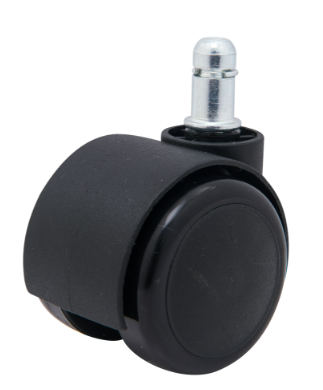
If you’re designing a mechanism and wondering if a low-friction system is right for your project, or if your current mechanism is underperforming (wasting energy, wearing out too fast, or working inconsistently), let’s talk. We’ve worked on everything from tiny medical components to heavy industrial conveyors, and we can help you design or modify a low-friction mechanism that fits your needs, budget, and environment. Whether you need a custom design or a standard off-the-shelf mechanism, we’ll make sure it operates smoothly, reliably, and without the hidden costs of poor friction management.
Bar Chair References
- Bhushan, B. (2013). Introduction to Tribology. John Wiley & Sons.
- Stambaugh, R. B. (2008). Linear Motion Mechanisms for Precision Applications. CRC Press.
- Hutchings, I. M., & Shipway, P. H. (2017). Tribology: Friction and Wear of Engineering Materials. Butterworth-Heinemann.
- American Society of Mechanical Engineers (ASME). (2020). Tolerancing and Geometric Dimensioning for Precision Mechanical Systems. ASME Press.
Zhejiang Zhenxing Furniture Technology Co., Ltd.
Zhejiang Zhenxing Furniture Technology Co., Ltd. is known as one of the most professional mechanism manufacturers and suppliers in China. Our factory offers high quality mechanism made in China with competitive price. Welcome to contact us for wholesale service.
Address: 1905#, Building 1, Financial Center Building, No. 61th South Of Fuyu Road, Lingfeng Street, Dipu town, Anji Country, Zhejiang, China
E-mail: andrew@zhenxingfurniture.com
WebSite: https://www.zxtopfurniture.com/
