As a supplier specializing in high pressure membrane (HPM) technology, I’ve spent the better part of the last decade collaborating with industrial partners across oil and gas, water reclamation, and pharmaceutical manufacturing. Every week, I get asked a version of the same question: “Why can’t your membrane do X faster, with less energy, or for cheaper?” It’s a fair question—HPM is a transformative tool, capable of separating molecules as small as 0.1 nanometers, desalinating seawater, and concentrating ultra-fine pharmaceuticals that standard filtration can’t touch. But after thousands of site audits, membrane tests, and customer conversations, I’ve learned that HPM has hard, often underdiscussed limitations that even the most impressive lab data rarely captures. High Pressure Membrane
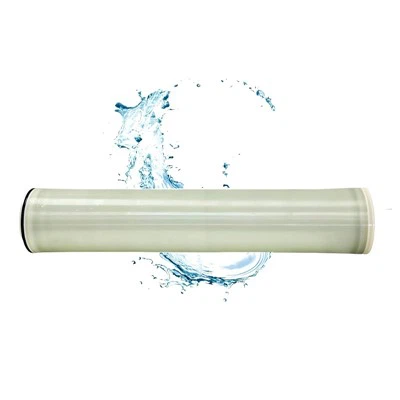
First, let’s ground this in what HPM actually is to avoid confusion. Unlike low-pressure membranes like microfiltration (MF) or ultrafiltration (UF), which operate at 1 to 10 bar, HPM systems work at 50 bar and up—most reverse osmosis (RO), nanofiltration (NF), and advanced gas separation membranes fall into this category. For context, 50 bar is roughly equivalent to the pressure of a car tire being inflated 20 times over, enough to push water through a membrane thin enough that a single gram can cover a 10-square-meter surface. That power is what makes HPM so effective, but it’s also the root of its biggest tradeoffs.
The most immediate, and often most frustrating, limitation is energy intensity. Every HPM system requires a high-pressure pump, and those pumps don’t just run on electricity—they run on large, consistent amounts of it. For a typical seawater desalination plant, HPM accounts for 40 to 50% of the total operational cost, most of which is energy. I remember a customer in the Middle East who installed a new HPM system three years ago, lured by a vendor’s lab test claiming 20% higher flux (water flow) per square meter. Once it was online, their electricity bills spiked 32%—enough to eat into 15% of their annual profit margin on desalinated water. The lab test had used pure, filtered lab water; their feedwater was mixed with sediment, organic compounds, and trace metals, which forced the pump to work overtime to maintain pressure. That’s a common gap: lab conditions are controlled, but real-world feedwater almost never is, and energy costs don’t exist in a vacuum. Even with new innovations like pressure exchangers that recover leftover pressure, the Department of Energy has noted that HPM systems still require 2 to 3 kWh per cubic meter of desalinated water—double the energy required for traditional thermal desalination in some small-scale setups.
Closely tied to energy is the issue of membrane fouling and scaling, and it’s a problem that only gets worse at higher pressures. When you force water or gas through a tight membrane, any small particle or dissolved salt that doesn’t pass through gets left behind on the surface. At high pressure, that concentration can build up exponentially in a matter of hours, creating a layer that blocks flow and requires either chemical cleaning or physical flushing. I’ve seen customers in the food and beverage industry switch to HPM to concentrate fruit juices, only to find that pectin from the juice begins to gel on the membrane within 12 hours, reducing flux by 60% before a clean is even needed. Scaling—where calcium, magnesium, or silica precipitate onto the membrane—can be even worse; I had a pharmaceutical client who ran their HPM system for a month without adjusting pH, and a layer of calcium carbonate formed so thick they had to replace 20% of their membrane elements, at a cost of $80,000. Unlike lower-pressure systems, fouling at high pressure is often irreversible because the pressure itself compacts the fouling layer into the membrane’s pores, making it much harder to remove with standard cleaning protocols. That’s not just a maintenance hassle—it directly impacts operational uptime. A 2023 industry survey found that HPM systems require 2 to 4 times more downtime for cleaning than UF systems, translating to 15 to 20% lost production annually for mid-sized facilities.
Another often-overlooked limitation is feedwater compatibility, particularly when it comes to harsh or variable streams. HPM membranes, especially polyamide RO and thin-film composite (TFC) variants, are sensitive to chlorine, a common disinfectant used in most water pre-treatment systems. Even small doses of chlorine (0.5 ppm) can break down the membrane’s polymer structure over time, leading to pinholes that let contaminants pass through. That means customers have to add expensive anti-scalants, dechlorination filters, or pre-treatment steps like activated carbon to remove chlorine—adding both cost and complexity. We had a mining customer who wanted to use HPM to treat acid mine drainage, which is highly acidic and has high levels of heavy metals like copper and iron. Their initial system failed in 18 months because the acidic water degraded the membrane’s protective coating, a problem that wasn’t obvious in lab tests because those tests used neutral pH water. For gas separation HPM, the issue is even more specific: certain gases like carbon dioxide can plasticize membrane polymers, reducing their selectivity over time, while heavy hydrocarbons can foul membrane surfaces so thoroughly that they lose separation capacity entirely. That means HPM isn’t a one-size-fits-all solution—many streams require extensive pre-treatment just to make the membrane usable, which erodes the efficiency advantage vendors often highlight.
Durability is a fourth limitation, and it’s one that only becomes apparent over years of operation. Most HPM membranes are made from thin, delicate polymer films, and the high pressure they operate under puts constant mechanical stress on these materials. I’ve seen membranes develop cracks from repeated pressure fluctuations—like when a pump turns on and off multiple times a day—leading to leaks that require immediate replacement. Even under steady pressure, polymer membranes can degrade: a 2022 study in the Journal of Membrane Science found that TFC membranes exposed to consistent high pressure lost 10% of their salt rejection capacity after 5 years of operation, compared to 3% in lab conditions. Ceramic HPM membranes, which are more durable, are an alternative, but they’re 5 to 10 times more expensive than polymer variants, putting them out of reach for most industrial and municipal applications. For small to mid-sized businesses, that means the upfront cost of HPM can be a barrier, and the long-term replacement cost is often higher than projected. I had a small brewery that installed a 10,000-gallon-per-day HPM system to recycle process water, and within 4 years, they’d already replaced half their membrane elements—costing them $35,000, nearly the initial purchase price of the entire system.
There’s also a less tangible but equally important limitation: scalability for low-volume applications. HPM systems are highly modular, but that modularity only works for medium to large streams. For a small business producing 500 gallons of water a day, a commercial HPM system might have a minimum size of 5,000 gallons a day, meaning they’re paying for 10 times the capacity they need. That leads to inefficiency—running a large HPM system at 10% of its capacity is not only a waste of money, but it can also increase fouling because the low flow rate allows contaminants to settle on the membrane surface. We’ve had a craft distillery reach out to us last year, asking to use a small HPM system to purify their gin distillate, but the smallest system we offer was too big, and retrofitting it would have cost more than their annual purification budget. For low-volume, high-value applications, HPM is often not economically viable, even if the technical performance would be ideal.
Now, I want to be clear: this isn’t to say HPM technology isn’t valuable. We’ve helped hundreds of customers reduce water usage by 70%, cut chemical consumption by half, and recover valuable products that would otherwise be lost to waste. But as a supplier, my job isn’t just to sell a product—it’s to set realistic expectations, and that means being honest about these limitations. Too often, vendors overpromise, highlighting lab-based flux rates or selectivity without acknowledging the real-world tradeoffs of energy, maintenance, and feedwater compatibility. That leads to disappointed customers, wasted capital, and systems that don’t deliver on their intended goals.
If you’re evaluating HPM technology for your operation, the first step is to work with a supplier that doesn’t just quote a price, but conducts a full feedwater analysis. Look closely at your energy costs—many customers don’t realize that the “low-cost” membrane with higher flux will cost more to run long-term, because it requires more pressure. Plan for fouling: build in extra downtime for cleaning, and invest in pre-treatment systems that are tailored to your specific feedstream, not a generic solution. And be realistic about scalability: if you’re working with a small volume, ask about alternative membrane technologies or modular systems designed for lower throughput.

At the end of the day, every technology has its limitations, and HPM is no exception. But when deployed correctly, with a clear understanding of its tradeoffs, it’s still one of the most powerful tools we have for solving complex separation challenges. If you’re interested in discussing your specific application, or want to learn more about how to address the limitations I’ve outlined here, feel free to reach out for a confidential conversation.
DTRO References
- Journal of Membrane Science. (2022). “Long-Term Mechanical Degradation of Thin-Film Composite High Pressure Membranes Under Variable Operating Conditions.”
- U.S. Department of Energy. (2021). “Energy Efficiency Benchmarks for Desalination Technologies.”
- International Desalination Association. (2023). “Global Survey of Membrane System Uptime and Maintenance Costs.”
- Food and Agriculture Organization of the United Nations. (2022). “Membrane Technology for Food and Beverage Concentration: Challenges in Real-World Applications.”
- Mining Engineering Journal. (2023). “Pre-Treatment Requirements for High Pressure Membranes in Acid Mine Drainage Treatment.”
Hangzhou Nanoimp Environmental Technology Co., Ltd.
With abundant experience, we are one of the most professional high pressure membrane manufacturers and suppliers in China. Welcome to wholesale high quality high pressure membrane in stock here and get pricelist from our factory. We also accept customized orders.
Address: Road 25, Baiyang Street, Qiantang District, Hangzhou City, Zhejiang Province
E-mail: keith.wang@nano-sepmer.com
WebSite: https://www.nanoimp-membrane.com/
