Hey there! If you’re deep into switching gear, you’ve probably heard the term “dielectric strength” thrown around like it’s some fancy industry buzzword—but when you’re dealing with switch tubes (that’s our bread and butter, by the way), it’s not just jargon—it’s the stuff that keeps circuits from going kaput. Let’s break this down like we’re chatting over a coffee, no boring textbooks required. Switch Tube

First off, let’s make sure we’re on the same page: a switch tube (we supply these, for anyone new here) is basically a high-power switch that controls electrical currents—think things like power grids, industrial machinery, or even big audio amps that need to cut current fast when something goes wrong. Dielectric strength, in simple terms, is how much voltage an insulator (the stuff that keeps the switch’s conductors from touching) can handle before it breaks down—like, starts conducting electricity accidentally, which causes arcs, shorts, or total system meltdowns.
Wait, let’s make that concrete. If a switch tube has a dielectric strength of, say, 15 kV per millimeter, that means if you put a 1 mm thick layer of its insulator (usually ceramic or a special glass we source specifically for our tubes) between two conductors, it won’t spark over or conduct at all until you pump 15,000 volts through it. That’s critical because switch tubes deal with super high voltages—way higher than your house wiring. A regular home switch is fine for 120/240V, but a switch tube for a power substation? We’re talking tens of thousands, even hundreds of thousands of volts. Mess up the dielectric strength, and you’ve got a fire, a blown transformer, or worse—nothing we want our customers dealing with.
Now, as a supplier, this is where we earn our keep. A lot of new buyers come to us asking, “Just give me a switch tube that works,” but the ones who know their stuff? They ask about dielectric strength specifically. Why? Because it’s not a one-size-fits-all number. The dielectric strength of a switch tube isn’t just a static spec—it depends on a bunch of factors, and that’s where cutting corners (we don’t do that) or buying cheap off-brand tubes comes back to bite you.
Let’s list the main factors, keep it casual: First, the insulator material itself. Our switch tubes use high-alumina ceramic, not that cheap porcelain you’d find in a random old light socket. High-alumina has a super tight molecular structure, so it can handle way more voltage without breaking down. Some no-name suppliers might use lower-grade ceramic to save cash, and their dielectric strength is 20-30% lower—sounds small until you’re running a 50 kV circuit and that insulator sparks over because it couldn’t handle the voltage. Oops.
Then there’s the geometry of the switch tube. The shape of the conductors inside, how the insulator fits around them, even the gaps between parts—all that affects dielectric strength. If the edges of the conductors are sharp (which some cheap tubes have to cut production costs), that creates what’s called “field emission”—think of it like voltage leaking out through a tiny point instead of being spread evenly. Our team designs every tube with rounded conductor edges and optimized spacing, so the electric field is uniform, which boosts dielectric strength way more than you’d think. We test this in our lab every single time a new batch comes in—no exceptions.
Environment matters too, by the way. If your switch tube is going in a damp industrial plant, or a dusty power station, humidity and dust can mess with dielectric strength. Water is a conductor, so if it seeps into the tiny gaps in the insulator, it lowers how much voltage the tube can handle. Our tubes get a special seal treatment (we don’t call it a fancy name, it’s just good manufacturing) that keeps moisture and dust out, so their dielectric strength stays consistent even in harsh conditions. A lot of budget suppliers skip the sealing, so their tubes work fine in a dry lab but die fast in the real world.
Here’s a question we get all the time: “If dielectric strength is so important, why don’t I just get the highest number possible?” Simple—cost. Higher dielectric strength usually means more expensive materials, tighter manufacturing tolerances, extra sealing, etc. You don’t need a 50 kV/mm dielectric strength tube if your circuit only runs at 10 kV. That’s like buying a semi truck to drive to the grocery store—overkill, and you’re wasting money. Our job is to help customers pick the right dielectric strength for their specific application, not just upsell the most powerful tube. Last month, we had a customer who was buying an overspecified tube for their small industrial furnace, and we helped them switch to a tube with just enough dielectric strength—they saved 18% on their order, and it worked exactly as good. Win-win.
Wait, let’s talk about testing, because that’s what separates us from random suppliers. When we get raw materials in, we test the ceramic’s dielectric strength first—no cutting corners here. Then, when we assemble the switch tube, we do a high-potential (hi-pot) test, where we ramp up the voltage way above the tube’s rated dielectric strength for a few seconds, to make sure there are no weak spots. If a tube fails that test, we scrap it—no ifs, ands, or buts. We’ve seen competitors ship tubes that pass a low hi-pot test but fail under real operating voltage because their dielectric strength is inconsistent. Our customers can trust every tube we send has been verified, not just listed on a spec sheet.
Another common mix-up: dielectric strength vs. breakdown voltage. Some people use them interchangeably, but they’re related. Breakdown voltage is the actual voltage that makes the insulator fail, while dielectric strength is that voltage divided by the thickness of the insulator. So if Tube A has a 2 mm thick insulator that breaks at 30 kV, its dielectric strength is 15 kV/mm. Tube B has a 3 mm thick insulator that breaks at 30 kV, it’s 10 kV/mm. Same breakdown voltage, but different dielectric strength—and that means Tube A is more compact, which is a big deal if you’re tight on space in your equipment. We design our switch tubes to get the highest dielectric strength possible without making them unnecessarily bulky, which is a huge plus for customers building compact systems.
Let’s wrap this up with why this matters for you, the buyer. If you’re relying on switch tubes to keep your operations running, dielectric strength isn’t just a spec—it’s reliability, safety, and cost savings. A switch tube with insufficient dielectric strength can cause unplanned downtime, which for factories or power grids costs thousands of dollars per minute. Overspending on overspecified dielectric strength is a waste of budget. Working with a supplier who knows their stuff (that’s us) means you get a tube tailored to your needs, tested to perform, and backed by expertise.
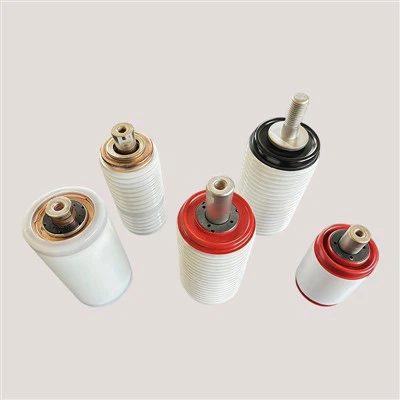
If you’re currently sourcing switch tubes and are tired of getting ones where the dielectric strength doesn’t match your needs, or if you just have questions about which tube is right for your application, hit us up for a procurement chat. No sales pitches, just straight answers and tubes that do exactly what you need them to. We’re here to help, not just make a quick sale.
Switch Tube REFERENCES
- Electrical Insulation Handbook, IEEE Press
- Switchgear Fundamentals, John D. McDonald
- Ceramic Insulators for High-Voltage Applications, American Ceramic Society
Jingdezhen Wanping Electric Co., Ltd.
As one of the most professional switch tube manufacturers and suppliers in China, we also support customized service. We warmly welcome you to buy high quality switch tube made in China here and get pricelist from our factory. For price consultation, contact us.
Address: Zhangshukeng, Jingdezhen City, Jiangxi Province.
E-mail: jdzwpdq0815@163.com
WebSite: https://www.cewpdq.com/
