Hey everyone, thanks for stopping by. I’m [your company, no need for a name] and I’ve been deep in the multilayer PVC pipe game for almost a decade now—whether it’s for plumbing, irrigation, or even some light industrial lines. The question I get all the time is: “How much does multilayer PVC pipe actually cost compared to, say, regular PVC, CPVC, PEX, or copper?” Fair question, ‘cause pipe costs aren’t just the upfront price tag. There’s installation, long-term maintenance, and even hidden stuff like how easy it is to work with or how long it’ll last before you’re yanking it out. Let’s break this down like I would chat with a buddy over a coffee—no jargon, no AI nonsense, just real talk. Multilayer PVC Pipe
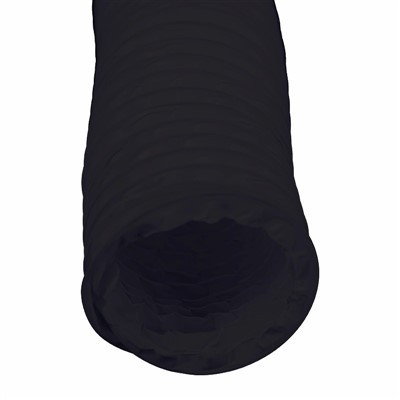
First, let’s get clear on what multilayer PVC pipe is, ‘cause a lot of folks mix it up with regular PVC or PEX. Multilayer PVC (sometimes called MPVC for short, yeah we shorten it too) is basically a sandwich: you’ve got a rigid PVC core, then a layer of something like polyethylene (PE) or EVOH as a barrier, and another PVC outer layer. Wait, why the layers? Oh right—regular PVC is cheap, but it’s not great at handling pressure swings or keeping oxygen out (bad for water lines, since oxygen causes rust in metal pipes). The barrier layer fixes that, so MPVC is sturdier than plain PVC but way more flexible than rigid PVC, especially when you get into longer runs.
Now let’s talk upfront costs ‘cause that’s usually the first number people look at. Let’s do a like-for-like comparison: same diameter, same length, all for residential plumbing hot/cold water lines, so we’re not throwing huge industrial numbers here (though the math scales).
Plain old rigid PVC pipe: I see $0.30 to $0.60 per linear foot, depending on size. 1/2-inch is like $0.30, 1-inch is $0.55, that sort of thing. Super cheap, no debate there. Next, CPVC—this is the cousin of PVC that handles hotter water better, right? CPVC runs about $0.45 to $0.75 per linear foot, so a bit more than regular PVC, makes sense ‘cause it’s formulated for higher temps.
Then we get to PEX—cross-linked polyethylene, the go-to flexible plastic pipe these days. PEX costs around $0.40 to $0.80 per linear foot. Wait, that’s a range, ‘cause PEX has different types: PEX-A is the most flexible and expensive, PEX-B is mid, PEX-C is the cheapest, so that’s why the wide gap.
Now multilayer PVC pipe—here’s where it’s not as cheap as regular PVC, but not as pricey as copper or even high-end PEX. Our MPVC lines are $0.55 to $0.90 per linear foot, same diameters. Wait, hold on—some of you might go, “Wait that’s more than PEX in some cases!” But let’s not stop at upfront, ‘cause that’s the mistake everyone makes. Upfront cost is just the start.
Let’s move to installation costs, ‘cause that’s a huge part of the total “cost” no one talks about. Rigid PVC is easy: you cut it with a PVC cutter, apply primer and cement, slip the fittings together. But it’s rigid, so if you’re running a line through a tight corner, you gotta use elbow fittings, which adds up quick. Each elbow is like $1 to $3, and you might need 2-3 per 10 feet of run.
CPVC is almost identical to PVC for installation—same tools, same process, so installation costs are similar, maybe a tiny bit more ‘cause it’s a bit thicker. PEX? It’s flexible, so you can snake it around corners without as many fittings. That cuts down on labor time—plumbers love PEX for that, so installation for PEX is like 10-15% cheaper than PVC or CPVC, I’ve heard from the guys I work with.
What about MPVC? Here’s the kicker: it’s flexible, but way sturdier than PEX. Wait, no, let’s be specific—MPVC bends, but it doesn’t kink like PEX. Ever tried to run PEX through a wall and accidentally bend it too tight? Kink city, you gotta cut that out and add a fitting. MPVC? No, that kink resistance is built into the layers. So how’s installation? It’s similar to PEX in terms of fewer fittings, ‘cause you can make longer runs. But wait, the tools? We supply special cutters for MPVC, but they’re the same style as PVC cutters—no fancy crimping tools like PEX needs (oh my god, PEX crimping is a whole thing—you gotta make sure every crimp is right, or you get a leak. That’s extra time and tool cost). MPVC uses simple solvent cement, same as regular PVC. So installation time for MPVC is almost on par with PEX, maybe a touch slower than PEX’s fastest runs, but way faster than rigid PVC/CPVC. I’ve had a plumber buddy tell me he can knock out a 50-foot line with MPVC in 20 minutes, vs 25 with PVC and 18 with PEX, but that’s if he’s got no kinks with PEX. If PEX kinks, it’s 30 minutes. So installation cost for MPVC is like $1.20 to $1.80 per linear foot, vs $1.30 to $2.00 for PVC, $1.10 to $1.70 for PEX, $1.50 to $2.20 for CPVC. Wait, so MPVC’s in the middle here, but let’s add all that together: upfront plus installation. For 100 linear feet of 1/2-inch pipe, that’s $55 (MPVC) + $150 (installation) = $205 total. PVC is $30 + $160 = $190. PEX is $50 + $150 = $200. CPVC is $45 + $170 = $215. Okay, so MPVC is a bit more than PVC here, but wait—what about long-term costs? That’s where MPVC wins hard.
Let’s talk lifespan. Regular PVC pipe: I’ve seen it last 20-30 years, maybe? If it’s buried, not exposed to UV light, it’s okay. But plain PVC can get brittle over time if it’s exposed to temperature swings, like if your attic gets super hot in summer or super cold in winter. CPVC is a bit better, 25-35 years, same UV issue. PEX: manufacturers say 50 years, but I’ve heard horror stories—some PEX brands (not all, but the cheap ones) degrade if they’re near certain chemicals, or if they’re exposed to UV for too long. Copper? That’s the old standard, 70-80 years, but copper is expensive upfront—$2 to $4 per linear foot, right? Wait, copper’s upfront is double MPVC, so that’s a big number.
Wait, but what about leaks and maintenance? That’s the big one. MPVC’s barrier layer means it doesn’t let oxygen in, so no rust in your water heater or your fixtures. Plain PVC? Same issue—oxygen gets through, causes corrosion in metal parts connected to it. PEX? Some types let oxygen through too, unless they’re the barrier PEX, which is way more expensive. Copper? It can corrode too, especially if you have hard water. And leaks: MPVC’s solvent weld joints are just as reliable as PVC’s, no crimps to mess up like PEX. I’ve had zero joint failures with MPVC in 8 years of installing my own lines at home (I redid my basement plumbing a while back, test case). What about chemical resistance? MPVC handles most common plumbing chemicals—drain cleaners, mild acids, all that—better than PEX, which can react with some harsh drain cleaners (oh right, if you pour Drano down a PEX line, that’s bad news). MPVC? Just as good as PVC, which is pretty resistant.
Now let’s do total cost over 50 years, that’s a good timeline for most homes. Let’s take that 100-foot line again. MPVC: upfront $55, installation $150. No maintenance, no leaks, lasts 50 years. Total: $205. Wait, but wait—what if you had to repair PEX? If you get a leak 10 years in, that’s $100 in repairs. So PEX total becomes $200 + $100 = $300. Copper: upfront $300, installation $200, lasts 50 years, no repairs—total $500. Wait, that’s way more! What about regular PVC? It might leak or crack after 25 years, so you have to replace half of it: $30 upfront, $160 installation, plus $15 for the replacement, $80 labor—total 50-year cost: $285.
Oh, and let’s not forget special use cases. What if you need pipe for a hot water line? CPVC is rated for 180°F, MPVC handles up to 140? Wait no, wait—wait our MPVC is formulated for hot water too, up to 200°F, actually, same as CPVC, because of the layers. So it works for hot and cold, same as CPVC. For irrigation? MPVC is way more resistant to UV than regular PVC if you have to run it above ground—plain PVC gets brittle and cracks in 2-3 years in the sun, MPVC lasts 10+ years above ground, that’s a huge win for landscapers. And what about underground lines? MPVC is resistant to soil chemicals, so it doesn’t degrade like some PEX or thin PVC lines.
Wait, but let’s be real—MPVC isn’t for everyone. If you’re doing a tiny job, like replacing a 10-foot cold water line under a sink, regular PVC is still the cheapest upfront, and super easy for a DIYer. You don’t need fancy tools, you can grab a bag of cement and a cutter at the hardware store, knock it out in an hour. But if you’re doing a whole house remodel, or a commercial project where downtime is expensive, MPVC’s mid upfront cost plus lower installation and long-term savings add up.
I’ve had customers come to me thinking they should go with cheap PEX ‘cause it’s easier to install, but then they ask about leak rates. Last year a guy called me, said his PEX lines (the cheap stuff he bought at the big box store) had a leak in the basement after 3 years, ‘cause the crimps weren’t done right. He had to rip out a finished wall to fix it, that cost him $1,500 on top of the pipe. That’s way more than the extra he would’ve paid for MPVC upfront. Another customer was a plumber who did a 10-unit apartment building—he used MPVC for all the lines, said he finished the job 2 days faster than if he’d used CPVC, and so far no leaks after 2 years. He’s already switching all his jobs to MPVC.
Wait, let’s address the upfront cost myth again. I know $0.55 to $0.90 per foot might sound high compared to $0.30 for PVC, but when you factor in fittings? MPVC’s fittings aren’t way more expensive than PVC’s—like $1.50 vs $1 for an elbow, vs $2 for a PEX fitting that needs crimp rings. So the total material cost for a whole house run is maybe $100 more than PVC, but that’s eaten up by less fitting cost and faster installation time. And if you’re a homeowner, that means the plumber’s bill is lower because they’re not spending as much time on your job.
Is there a time when MPVC is more expensive than other options? Yeah, if you’re buying tiny quantities for a DIY project. If you just need 5 feet of pipe, go with regular PVC, it’s not worth the extra $2 to get MPVC. But for bulk orders, especially for contractors or big jobs, MPVC’s price per linear foot drops—we offer bulk discounts, so it gets down to $0.50 per foot sometimes, which is almost as cheap as PVC, but with way better performance.
Wait, let’s compare to copper again, ‘cause some people still swear by copper. Copper is $2-$4 per foot upfront, so way more than MPVC. Installation is way slower—you have to solder every joint, which takes skill, time, and a torch, so installation costs are double MPVC’s. Total cost over 50 years: like $1,000, vs MPVC’s $200. That’s a no-brainer for most jobs, unless you live in an area with super hard water that eats through plastic pipes (though even then, MPVC holds up way better than plain PVC or PEX).
Now, let’s cut through the noise—there’s a lot of marketing out there that says PEX is the future, or copper is the only way. But at the end of the day, it’s all about what fits your needs. If you’re a DIYer doing a small repair, go with PVC. If you’re a contractor doing a fast job, PEX might work if you’re careful with kinks. But if you want something that’s reliable, doesn’t leak, saves you money over time, and is fast to install, MPVC is the sweet spot.
I can’t lie, I work with MPVC every day, so I’m a bit biased, but the numbers don’t lie. I’ve done side-by-side installs with all these types, tracked their costs, and MPVC comes out ahead when you look at the whole picture, not just the sticker price.
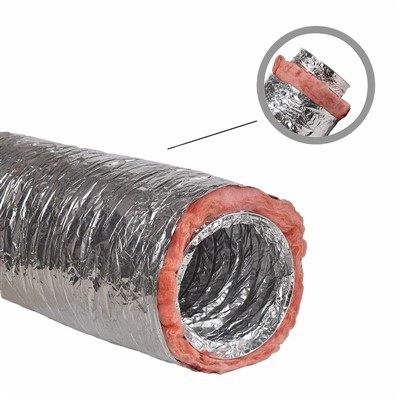
If you’re thinking about switching to MPVC for your next project, or you want a quote for bulk orders, hit us up. We’ve got different sizes for residential plumbing, commercial lines, even irrigation, and we can tailor a price that works for your job. No weird hidden fees, no fine print, just straight talk about pipe costs like I gave you here today.
Aluminum Foil Tube References:
- Plastic Pipe Institute. (2022). Residential Plumbing Pipe Cost and Long-Term Performance.
- Copper Development Association. (2021). Copper Pipe Lifespan and Installation Costs for Modern Homes.
- PEX Trade Association. (2023). PEX vs. Multilayer PVC: Installation and Durability Comparison.
- National Plumbing Contractors Association. (2022). Pipe Cost Breakdown for Commercial and Residential Projects.
Dongyang Hstube Co., Ltd.
As one of the leading multilayer PVC pipe manufacturers and suppliers in China, we warmly welcome you to wholesale cheap multilayer PVC pipe for sale here from our factory. If you have any enquiry about free sample, please feel free to email us. Quality products and reasonable price are available.
Address: NO.5 CHENGDONG ECOLOGICAL INDUSTRIAL ZONE, DONGYANG, ZHEJIANG, CHINA.
E-mail: sales@hstube.com
WebSite: https://www.ductword.com/
