Hey everyone, thanks for stopping by. I’m Jake, and I’ve been in the chilled cast iron parts game for over a decade now—running a small but tight operation that’s supplied everything from agricultural gear to industrial machinery with those super durable parts you guys rely on. A question I get all the time from new clients and even some folks I’ve worked with for years is: “How do you actually measure if a chilled cast iron part is good enough?” It’s not just about saying ‘it works’—it’s about hard, measurable stuff that keeps your machines running, your downtime low, and your investment worth it. No fancy jargon here, just what we actually use in our shop every single day. Chilled Cast Iron Parts
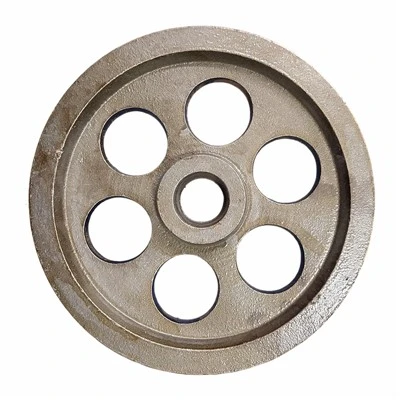
First off, let’s cut to the core of what chilled cast iron even is, for anyone who’s new here. Unlike regular cast iron that cools slow, we fast-cool the outer layer of the part to make it that hard, wear-resistant “chill zone”—that’s the whole point. If that chill zone is garbage, the part is garbage. So our first big check? Chill Zone Depth and Consistency. You can’t just guess this—we use a portable ultrasonic tester. Here’s how it works: we tap the part with a small probe, and it measures the time sound takes to travel through the hard outer layer vs. the softer inner core. The target? For most of the parts we make, that chill zone needs to be at least 2mm thick (3mm for heavy-duty stuff like tractor gears). But consistency matters way more than the number. If one end of a part has a 1mm chill zone and the other has 5mm, that part’s gonna wear unevenly—big problem when it’s spinning at 1000 RPM or pulling 10,000 lbs. Last month, we had a client reject a batch before we even shipped because their in-house check found spotty chill zones. We fixed that by tweaking our cooling water flow mid-cast, and now that same client comes back every quarter. Trust me, skip the “eyeball it” method—this test is non-negotiable.
Next up: Hardness Testing. That’s the big one for wear, right? Too soft, and the part gets scratched or ground down in a week; too hard, and it’ll crack under pressure. We use a Rockwell C scale tester for this—way easier than Brinell for small, precision parts. We test three spots: the chill surface, just below the chill layer, and the core. The chill zone should land between 58 and 62 HRC. If it’s below 58, that’s our fault—probably not enough cooling when casting. If it’s over 62, that’s too brittle; we’ve had a couple parts snap during installation because the chill was rock-hard and had no give. The core, by the way, should be 25 to 35 HRC—soft enough to absorb shock, hard enough to not crumple. We used to cut corners here years ago, testing only the surface, and we had a part break on a client’s conveyor line during a peak harvest season. Cost us a repeat order and a lot of explaining. Now, three tests minimum per part, and if we get a weird reading, we dig deeper with a cross-section cut.
Then there’s Tensile Strength. This is how much force a part can take before it pulls apart. Chilled cast iron is brittle by nature, but we still need it to handle stress from engines, gears, or heavy equipment. We don’t test every single part (that’d destroy them), but we take one test coupon from every batch—this is a small chunk of metal cast at the same time as the production parts, same cooling rate. We pull it in a universal testing machine until it breaks, and we want that tensile strength to be at least 220 MPa. For parts that handle heavy impact, we bump that up to 280 MPa. A few years back, a client told us their old supplier’s parts would crack when they connected them to a press, even though the hardness numbers looked right. We tested their coupons and found tensile strength was only 190 MPa—way too low. We adjusted our carbon content in the melt, got it to 240 MPa, and that client’s defect rate dropped to zero. Tensile strength is the silent hero here—if it’s off, even a “perfectly hard” part will fail under load.
Don’t forget about Porosity and Defects. This is the stuff you can’t always see, but it’ll ruin a part fast. Porosity is tiny air bubbles trapped inside the metal, right? If you have a bunch of them, the part is weaker, and it can break under pressure. We do two things here: first, a visual check with a magnifier for surface pores, and second, a pressure test. For parts that hold fluid (like hydraulic fittings), we pump water or air into them at 1.5 times their working pressure and hold it for 10 seconds—if any bubbles leak out, it’s scrap. For solid parts, we use a magnetic particle inspection—we cover the part in magnetic particles and run a current through it; any defects will show up as lines or spots on the surface. Last week, we caught a batch with hidden subsurface porosity using this method. If we’d shipped those, they might have leaked in the field, costing the client thousands in downtime. So much cheaper to catch it in our shop than at their facility.
Wait, what about Machinability? I know, chill cast iron sounds like it should be impossible to machine, but we need to drill holes, cut threads, or fit parts together. If it’s too hard, your tool bits will wear out in 10 minutes, and if it’s too soft, the edges will crumble when you machine them. We usually do a quick drill test on every batch: use a standard carbide drill, set to a specific speed and feed, and drill a 10mm hole. If the drill lasts at least 50 holes without breaking, that’s good. If it wears out faster, we adjust the alloy mix. A few months back, we had a client who switched suppliers because their parts were so hard, their drill bits were costing them $500 a day. We tweaked our silicon content, got the machinability right, and their drill bit cost dropped by 70%. That’s the kind of small, practical check that makes clients stick around.
Let me be real with you—we don’t do all these tests for every single part, because that’d be costly and slow. We batch parts by production run: 100 parts, we test 5 of them at random. If any fail, we test another 10, and if still fails, we scrap the whole run. That’s how we keep quality high without jacking up prices too much. I’ve heard some suppliers cut corners here—only testing one part per 1000, or skipping tensile strength entirely to save time. Don’t do that. It’s not good for your client, and it’s not good for your reputation.
Here’s the thing: I started this business because I was sick of getting parts that broke when I needed them most. I grew up on a farm, so I know what it’s like when a tractor part snaps at 2 a.m. during planting season—you lose acres, you lose money, you lose sleep. So when we make a chilled cast iron part, it’s not just metal to us. It’s the part that’s gonna help a farmer plant more corn, a factory run smoother, a construction crew build something that lasts. That’s why we’re so strict on these measurements—because at the end of the day, it’s not just our quality on the line, it’s the people who use these parts every day.

If you’re in the market for chilled cast iron parts—whether it’s gears, housings, rollers, whatever you need—we’ve got the experience, the tests, and the track record to back it up. We don’t just sell parts; we solve problems. Hit us up to talk through your specs, see our test results, or even get a sample to check for yourself. No pressure, just honest talk about what you need to get the job done right.
Alloy Cast Iron Parts References:
- ASM International. (2019). Chilled Cast Irons: Properties and Applications. ASM Handbook, Volume 1: Properties and Selection: Irons, Steels, and High-Performance Alloys.
- ASTM A43-18. (2018). Standard Specification for Chilled Cast Iron. ASTM International.
- Davis, J. R. (Ed.). (1996). Cast Irons. ASM International.
- Tensile Testing of Metallic Materials. (2020). NIST Handbook 133. National Institute of Standards and Technology.
- Magnetic Particle Testing for Defect Detection. (2021). American Society for Nondestructive Testing.
Sangroove (Jiangsu) Machinery Co., Ltd.
Sangroove (Jiangsu) Machinery Co., Ltd. is one of the most professional chilled cast iron parts manufacturers and suppliers in China, also supports customized service with low price. Please feel free to wholesale cheap chilled cast iron parts in stock here from our factory. Also, pricelist is available.
Address: No. 789, Hengyang South Road, Jinhu County, Huai’an City, Jiangsu Province
E-mail: quote@sangroove.com
WebSite: https://www.sangoh.com/
