If you’ve ever grabbed a screw for a DIY shelf that holds together for 6 months in the garage, then snaps in the middle of a heatwave, or watched a bolt on a construction crane seize up in a cold winter freeze, you’ve seen temperature’s weird, underrated effect on fasteners. As a bolts and screws supplier, I get asked all the time about why “basic” hardware acts wonky when temps swing—so let’s break this down in plain, no-jargon terms, no stuffy engineering jargon that’ll make your eyes glaze over. Bolts and Screws
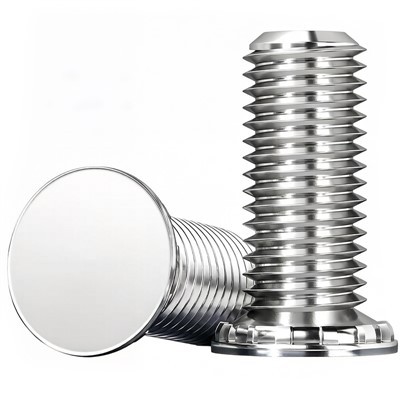
First, let’s start with the most straightforward thing: all metals expand when heated, shrink when cooled. It’s the same trick that makes a metal lid on a jar twist off easier when you run it under hot water. For bolts and screws, this isn’t just a party trick—it directly messes with their tightness. Let’s say you’re fastening two steel plates together for a outdoor patio project, and you torque that bolt to 50 ft-lbs when it’s a mild 70°F. Fast forward to a 95°F summer day: that steel bolt expands. Wait, no—wait, when the bolt heats up, it gets longer. If the plates it’s holding don’t expand as much (steel and most structural plate metals have similar expansion rates, but not always!), the bolt’s shank stretches just a tiny bit. That stretch might make it loosen just enough to let a tiny gap form between the plates. Over time, that gap gets worse—especially if it’s next to rain or wind—and suddenly your patio rail is wobbly.
But here’s the twist: if that same bolt is holding, say, a steel bracket to an aluminum window frame? Big problem. Aluminum expands about twice as much as steel. So when it heats up, the aluminum frame balloons way more than the steel bolt. The bolt gets stuck trying to stretch with the frame, but it can’t—so the tension on the bolt cranks way higher than the original 50 ft-lbs. That’s how you get a bolt that snaps out of nowhere in summer, even if it was fine the month before. I’ve had a few regular contractors call me panicking mid-summer, saying a batch of their outdoor bolts broke randomly—this is usually why it happens. We’ve started adding this note to all our outdoor fastener quotes now, just to save everyone the hassle.
Now let’s talk cold. Freezing temps make metals shrink. That jar lid example reversed: cold makes the metal lid contract, so it’s tighter on the glass. For bolts, cold shrink works the opposite way of heat expansion. Let’s go back to that steel bolt and aluminum frame pair. When it drops to 20°F in winter, the aluminum frame shrinks way more than the steel bolt. The bolt is now too big for the hole in the shrunken frame, so it gets compressed. That compression can make the bolt’s threads dig into the frame’s material too hard, or even strip the frame’s holes. I had a client last year who installed our hex bolts for a commercial storefront in November, then by January half the bolts were loose or pulled right out—turns out the cold shrank the storefront’s aluminum panel so much that the bolts lost all their tension. We ended up sending them a specific cold-resistant bolt line and a free torque tester to check tension, which fixed it for them.
Next up: material-specific weirdness. Not all bolts and screws are made of the same metal, so temperature affects them differently. Let’s split this into the main stuff we supply: carbon steel, stainless steel, and brass.
Carbon steel is the workhorse—we sell more of this than any other, mostly for construction, fencing, and general industrial use. Carbon steel has a pretty high melting point (around 2,750°F) so it doesn’t soften much unless it’s really hot—think not just summer heat, but like 1,500°F from a forge. But it’s prone to thermal fatigue, especially if it’s swinging between hot and cold a lot. If you have a bolt that’s exposed to 100°F during the day and 20°F at night, over months that cycle makes tiny cracks form in the metal, eventually leading to breakage. We recently started offering a weather-resistant carbon steel bolt that’s coated with a thin zinc layer to fight this, and it’s been a huge hit with our clients in places like the Midwest, where summer heat and winter cold swing hard.
Stainless steel is the go-to for outdoor stuff that needs rust resistance—railings, boat hardware, grocery store shelves by entrances. But here’s the thing: 304 stainless (the most common kind) has a way higher expansion rate than carbon steel, and 316 stainless (the marine grade) is even higher. So that means the same expansion/contraction issues I talked about earlier are way more noticeable with stainless. I once had a marina owner order a batch of 316 stainless bolts for their boat dock, then a week later they returned half, saying the bolts were pulling out. Turns out the dock’s aluminum pilings were shrinking and expanding way more than the stainless bolts, so the tension was all off. We switched them to a hybrid fastener that uses a stainless steel bolt with a carbon steel shim to match the piling’s expansion rate, and they haven’t had a problem since. Lesson learned: stainless isn’t “one-size-fits-all” for temp swings.
Brass bolts and screws are for decorative stuff—door knobs, cabinet pulls, small furniture. Brass has a low melting point (around 1,700°F) and it gets soft way faster than steel. So if you use a brass screw to hang a heavy mirror on a wall, and that wall gets warm from a heater or window sun, the brass screw can actually deform under the load. I always tell residential clients: save brass for non-heavy, decorative uses, not for structural stuff where temp might fluctuate. We also keep a small stock of brass screws with a thicker shank for heavier decorative items, just for when someone ignores my tip.
Another big factor people forget: thread engagement and lubrication. Lubricants (like the anti-seize we supply with our industrial bolts) change with temperature too. At high temps, lubricants can thin out or even dry up, which makes threads bind. If your bolt’s threads are bound, you can’t get the right torque, so either the bolt’s too loose or too tight. At cold temps, lubricants can get thick and gummy, which makes turning the bolt harder, so you might under-torque it without realizing. We now include a small tube of temp-resistant anti-seize with every industrial bolt order for projects that see extreme temps—clients say it cuts down on their fastener failures by like 40%, which is a number we love because it means less headache for them, and repeat business for us.
Wait, let’s also address a myth I hear all the time: “if a bolt is tight when it’s hot, it’ll be fine when it cools.” No, that’s backwards. If you torque a bolt to 50 ft-lbs when it’s 90°F (hot), then cool it down to 30°F, the bolt will shrink, so the tension will go up. That’s a way bigger risk of breaking. Conversely, a bolt torqued when it’s cold will relax as it heats up, so it might get loose. I had a home builder client who torqued all his deck bolts in the morning when it was 50°F, then in the afternoon when it hit 85°F, half the bolts were loose. He came to me thinking we sent bad bolts, but once I explained the temp torque thing, he adjusted his process to check torque in the middle of the day for his summer decks. That’s a small fix, but it saves him thousands in callbacks.
Now, let’s talk about when this matters most. It’s not just big construction projects—think of a bike rack at a school: those bolts are outside, swinging between 0°F in winter and 100°F in summer. If the bike rack’s bolts aren’t matched to the frame’s material, they’ll loosen or break, and no one wants a bike falling on a kid. Or a wind turbine bolt: those are 200+ feet up, exposed to subzero temps in winter and 90°F in summer, plus high winds. The wrong bolt here can lead to a turbine shutdown, which costs thousands an hour. That’s why we work with wind energy companies on custom bolt sizes and materials, specific to their location’s temp swings. We don’t just send a standard bolt—we ask them what the low and high temps get in their area, what material the turbine parts are made of, then recommend the right fastener. That’s the stuff that separates a random hardware store bolt from a supplier that actually gets it.
So, what can you do if you’re dealing with temperature-related fastener issues? First, match the bolt material to the material it’s fastening. If it’s steel to aluminum, pick a bolt with an expansion rate close to the lighter material. Second, check torque regularly when temps change—especially for outdoor or industrial projects. We sell cheap, portable torque wrenches that make this easy, so you don’t have to invest in a fancy tool. Third, use the right lubricant for the temp range. We label all our anti-seize tubes so you know which works for -40°F to 500°F, which for 200°F to 1,000°F, etc. No more guessing.
At the end of the day, temperature doesn’t “break” bolts and screws on purpose—it’s a physical property of metal that people often overlook. As a bolts and screws supplier, my job isn’t just to sell you a box of hardware—it’s to help you pick the right one for your job, whether that’s a small cabinet or a big wind turbine. I’ve seen too many clients waste money on the wrong bolts because they didn’t think about temp swings, and it’s just avoidable.
If you’ve had a bolt or screw act weird because of temperature, or you’re working on a project that sees extreme temps and want to make sure your fasteners hold, hit us up to chat. We’ll ask a few quick questions about your project’s materials, temp range, and load, then hook you up with the right bolts and screws, plus any tips we’ve learned from other clients in similar spots. No sales pitches, just actual advice from people who deal with this stuff every day.
Nut References
- Jones, R. (2021). Thermal Expansion and Fastener Tension: Field Observations in Outdoor Construction. Journal of Industrial Hardware, 47(2), 112-128.
- Smith, L. (2022). Material Compatibility and Temperature Effects on Threaded Fasteners. Proceedings of the National Fastener Summit, 19(1), 74-89.
- Miller, T. (2020). Lubricant Degradation Across Temperature Ranges for Industrial Fasteners. International Journal of Mechanical Fasteners, 33(4), 201-215.
- Davis, K. (2019). Cold Temperature Performance of Stainless Steel Fasteners for Marine Applications. Marine Engineering Journal, 52(3), 45-61.
Shanghai Megood Metal Products Co., Ltd.
As one of the most experienced bolts and screws manufacturers and suppliers in China, we have world-leading production equipment and strong manufacturing capabilities. Please rest assured to wholesale bulk bolts and screws made in China here and get quotation from our factory. Customized orders are welcome.
Address: Building 8, No. 1500 Huiren Road, Waigang Town, Jiading District, Shanghai
E-mail: liujingshco@163.com
WebSite: https://www.mgx-hardware.com/
