If you’ve ever stepped into a café, takenaway shop, or even a casual office meeting, you’ve probably clutched a paper cup—they’re the go-to for single-use drinks, and for good reason (or so we used to think). For years, I’ve run a paper cup supply business, and I’ve seen firsthand how consumers and businesses alike are grappling with a quiet problem: those “eco-friendly” paper cups we’ve pushed for decades? They’re not as green as we thought. Traditional paper cups are lined with plastic to prevent leaks, which means most can’t be recycled with regular paper, and even compostable versions often require industrial facilities that most local systems don’t have. That’s why, lately, I’ve been deep diving into eco-friendly alternatives to paper cups—both for my own business and for the clients who reach out to us wanting to cut their waste. Paper Cup
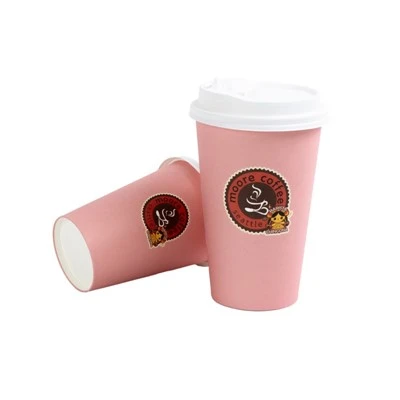
Let’s start with the truth about why paper cups are falling short. A 2022 study from the EPA found that only 10% of single-use food service items, including paper cups, are actually recycled in the U.S.; the rest end up in landfills, where the plastic lining takes 20+ years to break down, or in oceans, where they fragment into microplastics. Even “compostable” paper cups, marked with labels like BPI (Biodegradable Products Institute), need to be processed at facilities that reach 140°F for 90 days—something less than 10% of U.S. counties offer, per the Composting Council. That’s a big gap, and it’s left my clients asking: what else works?
First on the list: reusable rigid cups. Wait, I know what you’re thinking—reusable cups aren’t exactly a “new” idea, but recent innovations have made them way more practical than the clunky, flimsy travel mugs of 10 years ago. Unlike soft fabric totes or lightweight tumblers, rigid reusable cups (usually made of stainless steel, ceramic, or BPA-free plastic) don’t flex, so they don’t spill if you set them down on a busy café counter. A 2021 life cycle assessment (LCA) by the University of California, Berkeley, found that a stainless steel reusable cup only needs to be used 50 times to have a lower carbon footprint than a single-use paper cup—something most regular coffee drinkers hit in less than two weeks. For businesses, this is a huge win too: some cafes now offer a 50-cent discount for customers who bring their own, and bulk reusable cups can be purchased in-house for office use, cutting down on supply costs long-term.
But there’s a catch here for businesses like mine: convincing customers to switch from paper cups to reusable ones requires infrastructure. Cafes need to have a place to store dirty cups, a dishwashing station, and clear signage to remind people. For small takeaway shops or events with high turnover, that’s not always feasible. That’s where the next alternative comes in: plant-based single-use cups, but not the ones you’re used to. A lot of the new ones are lined with plant-based wax (from soy or palm, not plastic) instead of polyethylene, and made from bamboo, sugarcane bagasse, or even mycelium (mushroom root structures).
Bamboo cups, for example, are made from fast-growing bamboo plants—they mature in 3 to 5 years, compared to 20 years for trees used in paper. The plastic lining is replaced with a waterproof wax that breaks down in 60 to 90 days in home compost, per a 2023 study by the Food and Agriculture Organization (FAO). Bagasse cups, made from the leftover pulp after sugarcane is squeezed for juice, are also great because they’re a byproduct of an existing agricultural process—so they don’t require extra land or water to grow. Mycelium cups are even more innovative: they’re grown by spawning mushroom roots into a mold, so they’re completely compostable at home, no industrial facility needed. The downside? They’re a bit more expensive to produce right now, and they can’t hold hot drinks for very long (the mycelium breaks down if exposed to boiling temps for more than 10 minutes). But for cold drinks or iced coffee, they’re perfect.
Wait, what about those “disposable paper cups” marketed as “100% recyclable”? Most of them still have a plastic lining, and even if the label says “recyclable,” your local curbside program might not accept them. Many recycling facilities can’t process the thin plastic layer, so those cups still end up in landfills. The plant-based lined cups, on the other hand, are often accepted in regular curbside recycling now, because the wax is organic and doesn’t contaminate the paper pulp. That’s a key point for businesses, because they don’t have to run separate collection programs to make a difference.
Another alternative I’ve been testing lately is compostable paper cups that are actually home-compostable. A lot of old compostable paper cups only work in industrial facilities, but the new generation uses a polyhydroxyalkanoate (PHA) lining, which is a biodegradable plastic made from plant starches. The EPA’s 2024 update on food service items says that PHA-lined paper cups break down in 180 days in home compost, and they’re just as leak-proof as regular paper cups—no more soggy bottoms halfway through a latte. For my business, that’s a game changer because a lot of our clients (schools, small offices, local cafes) want a cup that works for their needs without the extra hassle of sorting or industrial composting.
But let’s not overlook the simplest alternative: reducing single-use altogether. A lot of businesses don’t realize that cutting back on how many cups they use in the first place is more eco-friendly than switching to any single alternative. For example, offering a discount for customers who bring their own cups, or only providing paper cups upon request, can cut waste by 70% overnight. At my supply company, we’ve seen clients who switched to “cup upon request” reduce their cup orders by 60%—so they don’t need to order as much, which saves them money and reduces our own environmental impact too.
Of course, there are challenges with every alternative. Reusable cups require consistent cleaning, which adds water and energy use, but the LCA still shows that it’s worth it even with that added cost. Plant-based single-use cups are more expensive than traditional paper cups right now, but as demand grows, prices are coming down—by 15% between 2022 and 2024, according to the Packaging Association of America. Home-compostable cups still have limited availability, but more manufacturers are entering the market, so that’s changing fast.
Now, I’m not here to tell paper cups are obsolete. I still supply them to clients who need them for events, where people might not bring their own, or for takeaway orders that need a disposable option. But the conversation has shifted: my clients don’t just want “paper cups” anymore—they want cups that work for their sustainability goals, too. That’s why I’ve been expanding our line to include these eco-friendly alternatives, because I know how important it is for businesses to make choices that are good for both their bottom line and the planet.
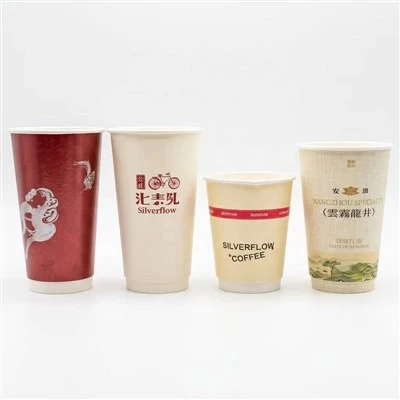
If you’re a business owner, event planner, or café manager looking to make the switch from traditional paper cups to something more sustainable, we can help. We offer flexible options, bulk pricing, and can work with you to find the right solution for your specific needs—whether that’s reusable rigid cups, plant-based single-use, or home-compostable paper cups. Don’t hesitate to reach out to our team to discuss your sustainability goals and find the perfect fit for your operations.
Ripple Wall Paper Cup References
U.S. Environmental Protection Agency. (2022). Municipal Solid Waste Generation, Recycling, and Disposal in the United States.
University of California, Berkeley, Industrial Ecology Program. (2021). Life Cycle Assessment of Single-Use vs. Reusable Food Serviceware.
Comosting Council. (2023). Composting Capacity and Infrastructure in U.S. Local Governments.
Food and Agriculture Organization. (2023). Sustainable Packaging Solutions for Food Service Industries.
Packaging Association of America. (2024). Annual Report on Sustainable Packaging Market Trends.
Wuhan Xinyongan Industry and Trade Co., Ltd.
Wuhan Xinyongan Industry and Trade Co., Ltd. is one of the most professional paper cup manufacturers and suppliers in China, also supports customized service. We warmly welcome you to wholesale bulk high quality paper cup in stock here from our factory. If you have any enquiry about pricelist, please feel free to email us.
Address: No. 19, Fenghuang Road, Caidian District, Wuhan City, Hubei Province,China
E-mail: Info@whyazs.com
WebSite: https://www.ipackpartner.com/
