Hey guys, it’s Jake here, and let’s cut to the chase: if you’re a brand owner that’s deep in the weeds of custom packaging bags, you already know one tiny mistake with labeling can tank everything. I’ve been in the custom packaging game for 7 years now, and I’ve seen it all— from a small snack brand that forgot to list allergens and got hit with a $12k fine to a skincare line that mixed up their “recyclable” claim and lost 20% of their eco-conscious customers. The worst part? Most of these issues weren’t from cutting corners on the bag material— they were from a half-assed labeling job that no one double-checked. Today, I’m walking you through exactly how I (and my team) make sure every custom bag we ship has labeling that checks every box, no surprises, no last-minute panic. Custom Packaging Bags

First off, let’s talk about the non-negotiables you can’t skip. I don’t care if you’re making custom bags for coffee, pet treats, or niche CBD products— there’s a baseline of legal stuff you have to nail down, and guess what? If you mess this up, even the best-looking custom bags are useless. Last quarter, we worked with a new craft beverage brand that wanted to skip listing “alcohol content” because they thought it’d clutter their sleek design. We flagged it immediately, and honestly? We saved them from a mandatory recall that would’ve cost way more than adjusting their label size. The rules here aren’t random— they vary by country, so don’t assume a label that works for your US customers will fly in the EU. For example, in the US, FDA requires allergen declarations (like nuts, dairy, soy) if you’re selling food, but in Canada, they need to be bilingual (English and French) too. We actually have a cheat sheet we send every new client that breaks down regional requirements by product type— no one likes scrambling to hunt down regulatory info at 2 a.m., trust me.
Then there’s product-specific labeling, which is where a lot of brands add a little personality. Wait, no— hold on, that’s not the vibe. Product-specific stuff is the details your customers actually need. If you’re doing custom stand-up pouches for freeze-dried snacks, you need to label the “best by” date clearly, not hidden under the zip lock. For retail custom gusseted bags for clothing, the size and care instructions (like “hand wash only”) need to be big enough to read on a store shelf, not tiny enough that someone has to squint. We had a client a while back that came back to us frustrated because their initial labels were so small that store workers were returning bags— turns out we didn’t push for a font size check, so we adjusted it for free, and that turned into a repeat order for 10x their original volume. The key here is: if your customer can’t read it, it doesn’t matter how cool the custom print is. We actually do a “human test” for every custom bag label before shipping— we print a tiny prototype and hold it 18 inches away (the average distance someone stands to look at a shelf product) to make sure text isn’t blurry or too faint.
Now, the stuff that makes or breaks your brand: marketing and sustainability claims. This is where so many brands go wrong, and it’s not even intentional. I can’t tell you how many times a client will come to us and say “we want to put ‘100% recyclable’ on our custom paper bags”… only for us to fact-check it and realize their bag uses a thin plastic liner that can’t actually be recycled. That’s a huge no-no. The FTC (in the US) has specific rules for environmental claims— you can’t say something is recyclable if it has a mixed material that messes up recycling streams, and “compostable” only applies if it’s certified to break down in a commercial compost facility, not just your backyard. We had a skincare brand try to put “backyard compostable” on their custom mailer bags a year ago— we talked them down from that, and instead helped them use a certified compostable material that let them say “certified home compostable” (no fines, no miscommunication, and they still got the eco cred they wanted). For marketing labels, we also make sure brand logos and slogans are placed where they pop, not crammed into a corner where they get cut off during printing. We always send a digital proof first, and we don’t ship anything until the client signs off on that proof— no exceptions. One time a client tried to rush us and skipped the proof, and the bag’s logo was cut right through the middle, so we reprinted it for free because that’s what good custom packaging suppliers do.
Wait, let’s talk about the printing part itself, because that’s where labeling can go sideways fast. A lot of brands forget that the way a label looks on your computer screen doesn’t always translate to the actual custom bag material. For example, if you’re using a matte custom kraft paper bag, light-colored text won’t show up— you need a dark ink that contrasts, not the light gray you picked on your laptop. If you’re using a glossy plastic bag, metallic ink might look amazing on screen but can smudge if it’s handled a lot. We test every ink color and text combination on the exact material your custom bag is made of before printing a full order. Last month, a client wanted a bright pink text on a matte black custom bag— on screen it looked neon, but on the actual material it was too faint. We adjusted the ink concentration and printed a sample first, so they didn’t end up with 500 bags that were impossible to read. That sample step is non-negotiable for us, even if it adds an extra day to the timeline. Most clients are willing to wait because it’s way better than a bad batch.
Another thing I see a lot: barcode and UPC labeling. If you’re selling your custom bag product in stores, you need a scannable barcode— no ifs, ands, or buts. We have a barcode specialist on our team that checks every single barcode we put on a custom bag to make sure it’s scannable by standard retail scanners. A few months back, a small beauty brand came to us with their own barcode, and it was too small and had the wrong spacing— our guy adjusted it for free, and they were able to get their products on shelves without a huge delay. We also make sure barcodes are placed in a flat, unwrinkled area of the custom bag— if it’s on a gusset or a curved part, the scanner can’t pick it up. That’s a small detail but it’s one that makes all the difference for retail clients.
Now, let’s get real about common mistakes that are avoidable. I get it, when you’re launching a new brand or scaling up, you’re busy and want to move fast. But skipping the double-check? That’s how you mess up. We actually have a three-step review process for every custom bag label: first, our design team checks for legal and product requirements, then our quality control team does the human test and barcode scan, then we send the proof to the client and wait for written approval. No shortcuts. I once had a client say “just skip the proof, I trust you”— and when we shipped the order, they realized they’d wanted to change a product name that was misspelled. We fixed it fast, but it taught me that even when clients trust you, you have to document every step. Also, don’t copy another brand’s labeling— that’s how you get hit with a trademark lawsuit. We’ve had clients come in with a label design they swiped from a big brand, and we have to tell them no way, that’s a risk they can’t take. We work with clients to create original label designs that fit their brand without stepping on anyone’s toes.
Wait, what about custom bags that are used for shipping? A lot of e-commerce brands focus on the label with their logo and forget the shipping labels. Wait, no— hold on, I mean the combined custom bag and shipping label. If you’re using custom mailer bags for online orders, you need to make sure your own brand label isn’t covering the shipping address, and vice versa. We always make sure there’s a designated spot on every custom mailer bag for the shipping label— usually the bottom third of the bag, so it doesn’t interfere with your brand design. We also use a clear window for shipping labels sometimes, so you don’t have to stick a separate label on, which reduces waste and makes unboxing faster. A lot of our e-commerce clients love that because it saves them time on packing.
Let’s circle back to why this matters for your business. At the end of the day, good labeling on custom packaging bags isn’t just about rules— it’s about building trust with your customers. If your label is clear, easy to read, and honest, people will trust your brand more. If it’s messy, misleading, or hard to understand, they’ll move to a competitor. I’ve seen brands go from zero to six figures in sales just because their packaging (and proper labeling) stood out on shelves, and I’ve seen brands fold because they cut corners on this part. That’s why our team at Custom Packaging Bags doesn’t just make bags— we make sure every label on those bags works for your brand, your customers, and the law.
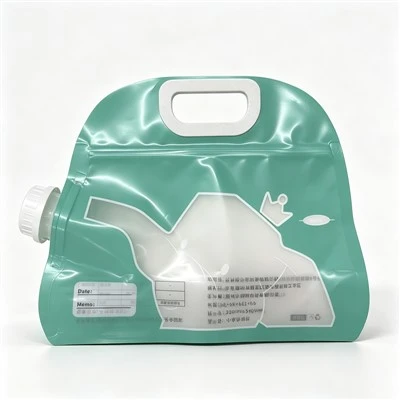
Now, if you’re working on new custom packaging bags and want to make sure your labeling is on point, or you have questions about anything I talked about today (regulatory stuff, barcode checks, sample labels), hit us up to chat. We don’t do pushy sales talks— we just want to help you get the right packaging for your brand. Whether you need custom paper bags, plastic pouches, gusseted bags, whatever, we can walk through every step of labeling with you.
Vacuum Bags References:
- U.S. Food and Drug Administration (FDA) Food Labeling Guide
- Federal Trade Commission (FTC) Green Guides: Environmental Marketing Claims
- Health Canada Food and Drug Regulations for Bilingual Labeling
- GS1 US Barcode Specification Manual for Retail Products
- Sustainable Packaging Coalition Guide to Eco-Labeling Claims
Dongguang County Sansheng Plastic Packaging Co., Ltd.
Dongguang County Sansheng Plastic Packaging Co., Ltd. is one of the most professional custom packaging bags manufacturers and suppliers in China, also supports customized service. Welcome to buy advanced custom packaging bags made in China here and get quotation from our factory. Quality products and low price are available.
Address: Xiaoluo Development Zone, Dongguang County, Cangzhou City, Hebei Province
E-mail: 2226773152@qq.com
WebSite: https://www.sanspackagingbags.com/
