If you’ve ever stood under the hood of a modern car—whether it’s a family sedan, a work truck, or a high-performance EV—you’ve probably noticed a random pump or two tucked behind hoses and wires that don’t scream “star of the show.” For me, as someone who’s been in the gear pump game for almost 15 years, that’s the stuff I live and breathe. I’ve talked to enough auto engineers and shop foremen to know gear pumps aren’t just random parts—they’re make-or-break for everything from keeping the engine lubricated to making sure the power steering doesn’t seize up mid-turn. And if you’re an automotive gear pump buyer, skipping the specific requirements of this industry is like trying to change a tire with a butter knife: it’ll work… maybe, but you’ll end up stuck. Let’s break down what the auto sector actually needs from gear pumps, straight from the supplier side of the desk. Gear Pump
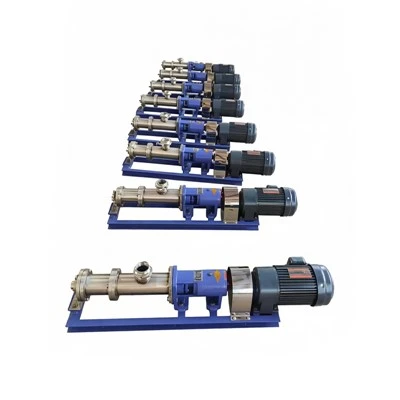
First off, let’s get one thing out of the way: not all gear pumps are created equal. Sure, the basic design—two interlocking gears that trap and move fluid—hasn’t changed much in decades, but what’s inside those gears, how they’re machined, and how they perform under auto-specific stress? That’s where the rubber meets the road. Let’s start with pressure. Automotive systems run on a way tighter pressure window than, say, a hydraulic press for construction equipment. I’ve seen old industrial pumps rated for 3,000 PSI get tossed in a car for oil delivery and blow a seal by 1000 PSI. Why? Engines idle at 600 PSI on average, and at wide-open throttle, that jumps to 1800 PSI—sometimes more for turbocharged models. A gear pump that can’t handle that consistent, cyclic pressure isn’t going to last 10,000 miles, let alone the 150,000 a modern car is supposed to hit. We had a client a couple years back who tried to go with a cheaper pump from a non-auto supplier; their test units blew seals at 1200 PSI, and they ended up eating the cost of 2000 defective units. Lesson learned: auto-grade gear pumps need to be rated for at least 2000 PSI continuous pressure, with a 3000 PSI peak safety buffer. That’s non-negotiable.
Next up, flow rate accuracy. Auto engineers don’t just want oil flowing—they want exactly the right amount of oil flowing, right when they want it. Too little, and a cam bearing seizes; too much, and you’re wasting fuel and gunking up the catalytic converter. Here’s where precision manufacturing comes in. The gear teeth on an automotive gear pump have to be machined to tolerances of 0.001 inches—like, smaller than the diameter of a human hair. If the gap between the gears and the pump housing is even a hair wider, fluid leaks back into the inlet, and your flow rate drops off. We use CNC grinders for all our auto pump gears, not just standard mills. It’s more expensive upfront, but our clients’ flow rate variability is under 2%—that’s the kind of consistency that makes engineers sleep easy. I’ve had one transmission maker tell me that their entire assembly line downtime dropped by 12% after switching to our pumps, because they didn’t have to toss units with flow rate errors. That’s the kind of metric you can’t fake.
Then there’s fluid compatibility. Cars don’t run on one fluid forever. Oil gets additized with detergents, anti-wear agents, and friction modifiers that eat through cheap pump components. Power steering fluid has its own mix, and even brake fluid (though that uses different pumps sometimes) has to stand up to high heat and moisture. We used to test pumps just with standard hydraulic oil back in the day, but then an EV client came to us last year testing their new silicon-based coolant system—their old pump cracked after 500 hours because the silicon broke down the cast iron housing’s surface. Now, every auto pump we make gets compatibility testing for at least three common automotive fluids, plus whatever specialty fluid the client is using for their new tech. For EVs, that’s even trickier—coolant for battery packs is often glycol-based with extra corrosion inhibitors, and pumps have to handle that at temps up to 180°F, not just the 120°F old gas car pumps were built for. If your pump can’t handle the fluid it’s moving, you’re not just replacing a part—you’re risking a $10,000 battery failure. That’s why we won’t touch an auto contract without full disclosure of the fluid specs first.
Heat resistance is another big one, especially now with more start-stop systems and EVs. A traditional gas engine’s under-hood temp can hit 250°F, but start-stop cycles mean the pump is turning on and off every few minutes, so it heats up and cools down fast—thermal cycling that makes cheap pumps crack or warp. EVs? They don’t have a big gas engine under the hood, but their motors and inverters run hot, so their auxiliary pumps for cooling are sitting in temps just as high, and they run almost constantly. We use heat-treated alloy steel for our pump gears, not plain carbon steel, and the pump housings are either aluminum for lighter weight or cast iron for heavy-duty use. Our pumps can handle temp swings from -40°F (for work trucks in Alaska) up to 300°F for racing applications—no warping, no seized gears, no weird expansion that throws off flow. I once had a NASCAR client call us in a panic because their old pump seized during a practice lap at Daytona; we had a new prototype pump on their truck in 48 hours, and it made it through the race without a hiccup. That’s the kind of reliability auto folks need.
Weight and packaging, too, are huge now. Years ago, auto engineers just bolted the biggest pump that fit, no questions asked. Now, every pound counts for fuel efficiency, and EVs are all about reducing unsprung weight to extend range. You can’t have a 10-pound gear pump taking up space in a compact EV’s frame when the goal is to keep total vehicle weight under 3000 pounds. Our engineers design every pump to be as compact as possible without sacrificing performance—we trim 2-3 ounces off standard models by using precision machined housings instead of overbuilt castings, and we do 3D modeling to fit exactly into the client’s available space. One compact car maker told us that switching to our smaller, lighter pump added 0.8 mpg to their highway rating—small number, but over 100,000 cars, that’s $1.2 million in fuel savings for their customers. Packaging also means fitting into weird, tight spots—some pumps have to work with offset inlets and outlets, or mount directly to the engine block, so we make our pumps adaptable with custom flange options, not just one-size-fits-all connections.
Durability and lifecycle testing are non-negotiable for auto, too. Consumers don’t want to replace a power steering pump at 60,000 miles, and manufacturers don’t want warranty claims coming back because a pump failed. We put every single auto pump through 1,000 hours of cycle testing before it even gets near a client’s line—that’s thousands of start-stop cycles, pressure spikes, and temp swings to simulate 5 years of driving. We track every pump’s performance: flow rate, pressure, seal wear, all that data goes to the client so they can see exactly how the pump will hold up in their system. We also do field testing with beta units—last year, we put 500 of our transmission pumps in fleet trucks in Texas, and after 8 months, only 2 failed, and that was from operator error, not pump quality. That’s the kind of real-world data auto manufacturers need to sign off on a new pump.
Wait, and let’s not forget noise. Modern cars are designed to be quiet—no one wants a whiny power steering pump that’s louder than the radio on the highway. Old gear pumps used to be notoriously loud because their gear teeth meshed at the same point, causing pressure pulsations. We fix that with helical gears instead of straight-cut gears—they mesh gradually, so pressure spikes are smoothed out, and noise is cut by 15-20 decibels. That might not sound like a big number, but in a quiet EV cabin, that’s the difference between a smooth ride and one where you hear every little mechanical noise. We had a luxury car maker test our pumps against their old ones, and their cabin noise level dropped by 3 decibels on idle—they said that was enough to choose our pumps over a more expensive competitor. Noise isn’t just a comfort thing, either—excessive noise can be a sign of internal wear, so helical gears also mean longer pump life, double win.
Now, what about the shift to EVs? A lot of new gear pump requirements are coming from the rise of electric vehicles, and that’s a whole new ballgame. Traditional gas cars use gear pumps for oil lubrication, power steering, and fuel delivery. EVs don’t have a transmission with a torque converter, so they need gear pumps for cooling the battery pack, lubricating the electric motor bearings, and even for the braking system’s hydraulic actuation. Those pumps have to be electric, not engine-driven, so they need to be efficient—battery range is everything, so a pump that draws too much power cuts into range. We’ve designed our new line of brushless DC gear pumps specifically for EVs; they’re 85% efficient, way higher than the 60-70% efficiency of old engine-driven pumps, and they can be controlled remotely via the car’s ECU, so they only run when needed, not 24/7. One EV startup told us their range increased by 4% after switching to our pumps—for a car that gets 250 miles per charge, that’s 10 extra miles, which is a big deal for customers.
Let’s be real, though—cost is always a factor. Auto manufacturers are always looking to cut costs, but here’s the thing: skimping on gear pumps costs more in the long run. We’ve seen clients switch to cheaper pumps, only to deal with warranty claims, downtime, and recalls that end up costing way more than the extra they would have paid for a quality pump. Our clients pay a bit more upfront, but their total cost of ownership drops by 18-20% because of fewer failures and longer pump life. We work with clients to tailor pumps to their specific needs—we don’t sell a one-size-fits-all pump that’s overkill for a compact car or underkill for a heavy-duty truck. For a work truck, we offer a reinforced pump housing and extra wear parts, while a compact car gets a lightweight, low-cost pump that still meets all the performance specs.
I don’t want this to sound like a sales pitch, but here’s the truth: if you’re an automotive engineer or a procurement manager looking for gear pumps, you can’t just Google “gear pump for cars” and pick the first one that comes up. You need a supplier that understands the specific pressures, temps, fluids, and packaging of auto systems, that does the testing to back up their claims, and that’s willing to work with you on custom solutions if your car has a weird, new design. We’ve been in this game long enough to know that every car is different, every client’s needs are different, and there’s no “perfect” pump, only a pump that fits your exact requirements.
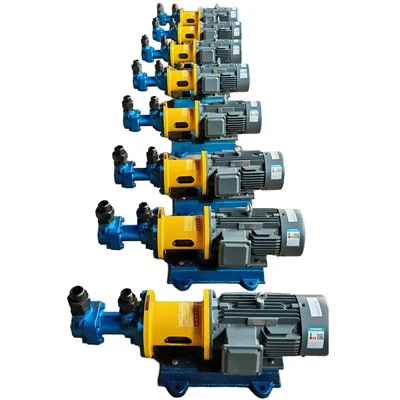
If you’re tired of dealing with pumps that fail too early, waste fuel, or mess up your warranty numbers, hit us up to talk through your project. We can walk you through our testing processes, share field data from similar clients, and work with you to design a pump that fits your exact needs—no generic parts, no hidden fine print, just a gear pump that works as hard as your car does.
Diaphragm Pump References
- Society of Automotive Engineers (SAE) International. “Hydraulic Fluid Compatibility Requirements for Automotive Gear Pumps,” 2022.
- Automotive News Data Center. “Global Light Vehicle Demand for Gear Pumps, 2020-2030,” 2021.
- Electric Drive Transportation Association (EDTA). “Auxiliary Pump Requirements for Battery Electric Vehicles,” 2023.
- Machining Design Magazine. “Precision Manufacturing Tolerances for Automotive Fluid Power Components,” 2022.
Botou Hengyang Pump & Valve Co., Ltd.
With abundant experience, we are one of the most professional gear pump manufacturers and suppliers in China. Please feel free to buy high standard gear pump made in China here and get pricelist from our factory. All customized pumps are with high quality and competitive price.
Address: No. 159, Road 1, Development Zone, Botou City, Cangzhou, Hebei Province, China
E-mail: bthdbf@163.com
WebSite: https://www.hyoilp.com/
